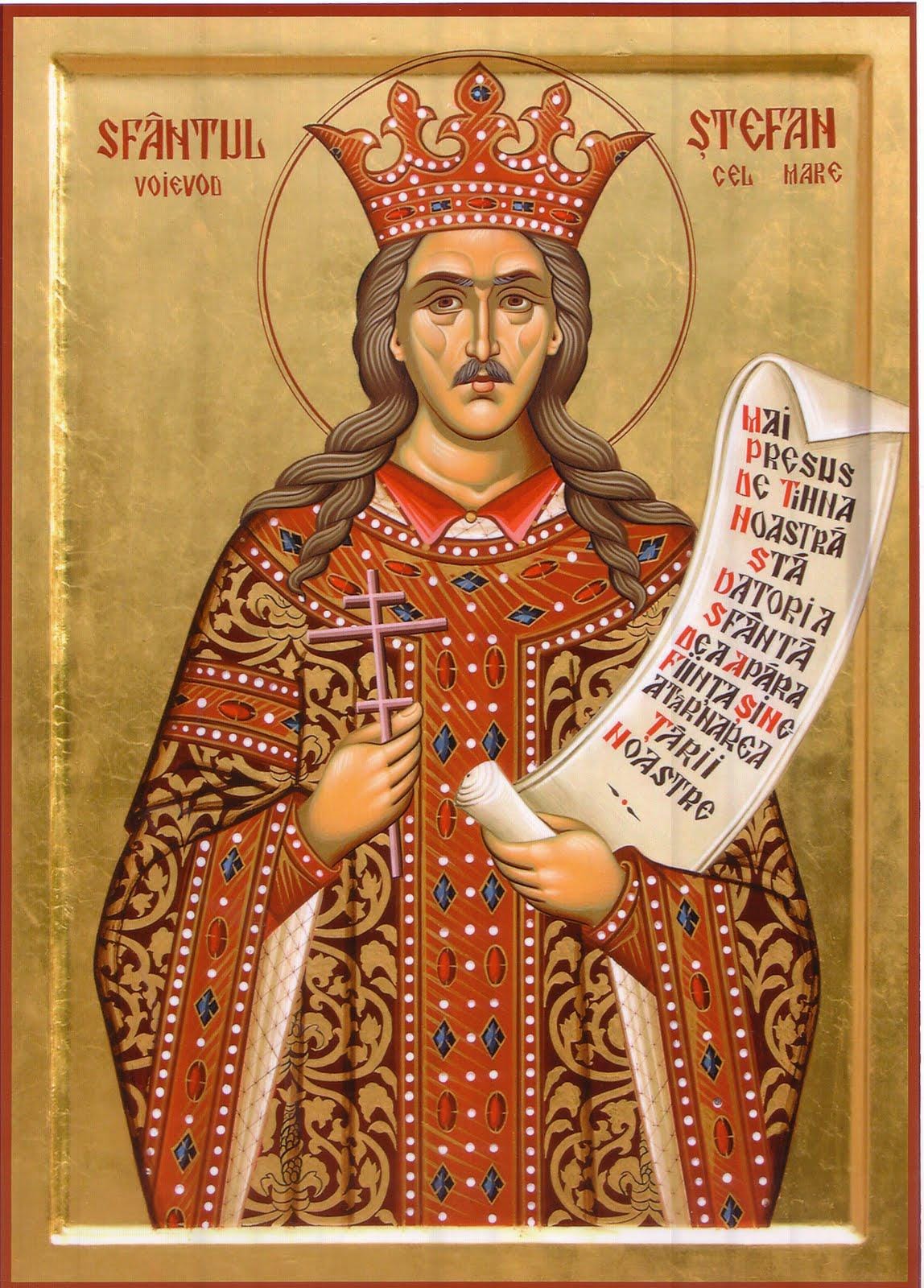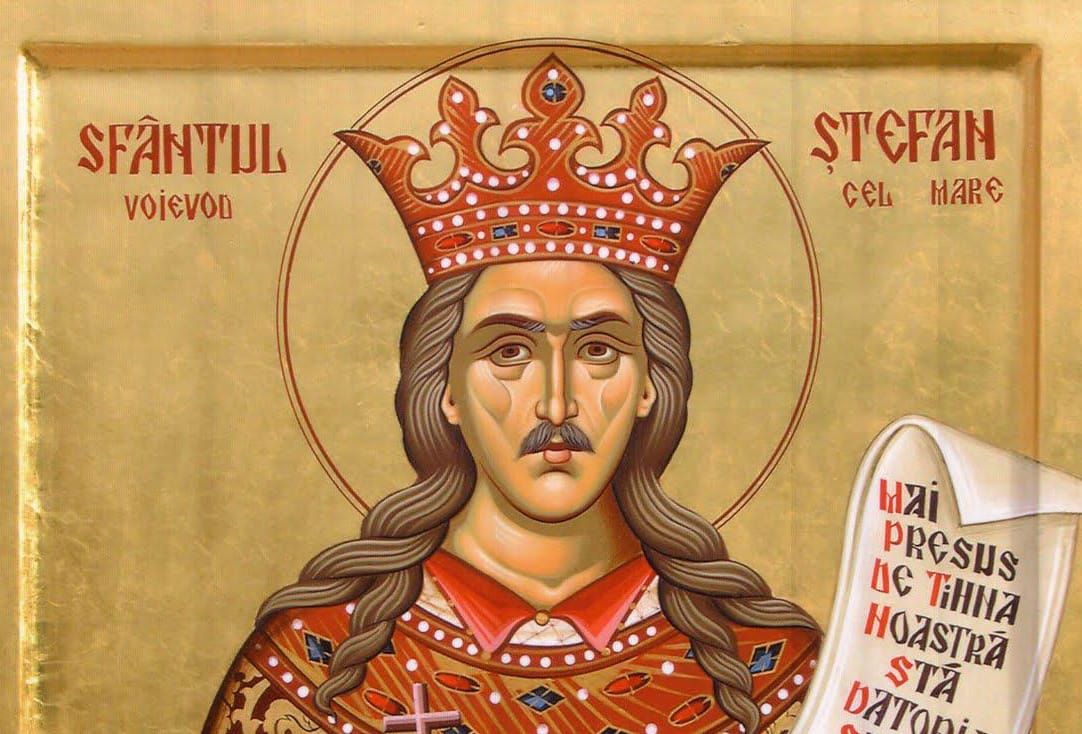
Saint Stephen the Great, also known as Stephen III of Moldavia, was the Voivode of Moldavia from AD 1457 until his death in AD 1504.
Renowned as one of the most significant rulers in Eastern European history, his reign of 47 years was characterised by a staunch defence of Christian Europe against the expansion of the Ottoman Empire.
He is celebrated for his military genius, diplomatic acumen, and prolific religious patronage, which earned him canonisation by the Romanian Orthodox Church in 1992.
Early Life and Accession
Born roughly between 1433 and 1440, Stephen was the son of Bogdan II and Maria Oltea. His lineage connected him to the Mușatin dynasty of Moldavia and the Basarab dynasty of Wallachia, making him a cousin to the infamous Vlad III Dracula.
Stephen's early life was marked by dynastic turbulence. His father, Bogdan II, was betrayed and assassinated by his own brother, Petru Aron, in 1451. following this regicide, Stephen fled into exile, seeking refuge initially in Wallachia under the protection of Vlad III and later with John Hunyadi in Transylvania.
In 1457, with military assistance provided by Vlad III, Stephen returned to Moldavia to claim his birthright. He defeated Petru Aron in battle, subsequently executing the usurper and securing his position as Voivode.
His coronation was sanctified by Metropolitan Teoctist, underscoring the Orthodox belief that his authority was divinely sanctioned.
Military Campaigns and Strategy
The geopolitical context of Stephen's reign was defined by the Fall of Constantinople in 1453, which left Moldavia as a frontline buffer state for the Orthodox faith against the Ottoman Turks.
Throughout his rule, Stephen fought 36 battles, emerging victorious in 34 of them. His military success relied heavily on asymmetrical warfare tactics, including the scorched earth policy, poisoning wells, and destroying resources to starve invading armies.
One of his most significant triumphs occurred at the Battle of Vaslui in January AD 1475. Facing an Ottoman army estimated at up to 120,000 troops under Suleiman Pasha, Stephen commanded a much smaller force of approximately 40,000.
Utilising the marshy terrain and thick fog to his advantage, Stephen employed psychological warfare by positioning buglers and drummers to create a cacophony that confused the enemy regarding his army's location.
The Ottoman forces were routed, resulting in over 40,000 casualties. This victory was celebrated throughout Christendom, leading Pope Sixtus IV to bestow upon Stephen the title Athleta Christi or Champion of Christ.
Despite his successes, Stephen suffered defeats, notably at Valea Alba in 1476 against Sultan Mehmed II. However, following this loss, Stephen sought counsel from the hermit Saint Daniel the Hesychast, who urged him not to surrender but to continue fighting, prophesying that God was on his side.
Relations with Wallachia and Poland
Stephen's foreign policy was a complex balancing act involving Hungary, Poland, and the Ottoman Empire. His relationship with his cousin Vlad III was intricate.
While they were early allies, their interests diverged over the strategic port of Kilia. Stephen besieged the Hungarian-held port in 1462 but was repelled and sustained a leg injury that would plague him for the rest of his life.
He successfully captured Kilia in AD 1465, alienating Wallachia and Hungary. Later in his reign, Stephen reconciled with Vlad III, helping restore him to the Wallachian throne in AD 1476 to secure a loyal ally against the Turks.
Polish ambitions also threatened Moldavian sovereignty. In AD 1497, King John Albert of Poland invaded Moldavia. Stephen defeated the Polish forces at the Battle of the Cosmin Forest, employing ambushes within the dense woods to negate the advantage of the Polish heavy cavalry.
Religious Patronage and Cultural Legacy
Saint Stephen viewed his military victories as divine favour and dedicated himself to the construction of religious edifices as acts of thanksgiving.
Tradition credits him with founding or restoring approximately 40 churches and monasteries throughout Moldavia. Notable among these is the Putna Monastery, referred to as the Jerusalem of the Romanians, which serves as his royal necropolis. He also established the Voroneț Monastery, famous for its vivid frescoes.
Under his patronage, a unique Moldavian architectural style emerged, fusing Byzantine elements with Gothic influences. He extended his support beyond his borders, sending significant financial aid to the monasteries of Mount Athos, specifically Zographou. His piety was deeply influenced by Saint Daniel the Hesychast, who functioned as a spiritual father to the Prince.
Final Years and Death
Towards the end of his life, Stephen's health declined, exacerbated by his unhealed leg wound. The geopolitical situation deteriorated as the Ottoman Empire, under Bayezid II, captured the vital Black Sea ports of Kilia and Cetatea Albă in 1484.
The loss of these ports was arguably the greatest regret of his reign, as it granted the Ottomans total control over the Black Sea trade routes.
Saint Stephen the Great died on July 2, 1504. He was succeeded by his son, Bogdan III, whom he had prepared to navigate the perilous political landscape. In recognition of his defence of the faith and his pious life, the Romanian Orthodox Church formally canonised him as Saint Stephen the Great in July 1992.