
The emergence of Islam in the 7th century marked a pivotal shift and set back in world history, yet its earliest beginnings are shrouded in historical uncertainty.
Traditional Muslim accounts assert that God sent a prophet, Muhammad, established an empire. However, historical evidence from the 7th century is notably absent, with no contemporary Muslim testimonies, inscriptions, or coins mentioning Muhammad for nearly 60 years after his death in 632 AD. The earliest biographies of Muhammad were written approximately 200 years after his lifetime, and omitted many inconvenient details that show Muhammed in an embarrassing light.
Context of Emergence
The 7th century Near East was a complex geopolitical landscape dominated by the Byzantine Empire and the Persian (Sasanian) Empire.These ancient powers, locked in centuries of conflict, engaged in a devastating war in the early 7th century, akin to a world war. This conflict, coupled with a devastating plague in the mid-6th century that decimated populations and tax bases, left both empires weakened and financially depleted.
The Romans, for example, mothballed fortifications and subcontracted frontier defence to Arab mercenaries, who were already deeply embedded in the imperial fabric, often forming their own kingdoms. This period of chaos, marked by war, plague, and financial collapse, fostered an apocalyptic outlook among people in the Near East, who believed that events occurred by divine will.
The Quran and its Setting
The Quran, the earliest source for Islam, is traditionally believed to have been revealed to Muhammad in Mecca, an arid, pagan city in the Arabian desert, devoid of Jewish or Christian presence, and with an illiterate prophet.
This traditional narrative implies a miraculous origin given the Quran's sophisticated cultural references. However, the Quran features numerous biblical characters, including Moses (mentioned 137 times) and the Virgin Mary (featured more prominently than in the New Testament), as well as Roman historical episodes and a mention of Alexander the Great.
All of this content suggests the Quran emerged from cultures steeped in biblical monotheism, not a pagan isolation. The Quran's description of Muhammad's opponents as agriculturalists who kept cattle and grew olives and vines also does not align with Mecca's barren environment.
Early Islamic mosques sometimes faced east, not Mecca, and early Christian writers reported Arab conquerors praying towards a northern direction. A single, ambiguous mention of Mecca exists in the Quran, and the earliest datable external reference to Mecca (741 AD) places it in the deserts of Iraq, not Arabia. A Quranic passage referencing the city of Sodom implies its audience passed by the site daily, placing the location of the revelations near the Dead Sea, approximately 1,000 kilometres from Mecca. These clues point to an origin for the Quran north of Mecca, along the desert frontier of Roman Palestine, where ancient Jewish and Christian traditions were preserved.
Conquests and the Shaping of Islam Armies of Arabs swept out of the desert in the 7th century, conquering vast territories from North Africa and the Middle East to Persia and parts of Europe. Contemporaries were deeply confused about the conquerors' religion, with some suspecting a form of Judaism or Christianity, or a new religion altogether. Early Arab rulers, such as Muawiyah (hailed as leader of the new Arab empire 30 years after Muhammad's death), made no mention of Muhammad on their coins, inscriptions, or documents.
The idea that the Arab empire gave birth to Islam, rather than Islam giving birth to the empire, is supported by the historical record. During a civil war in the late 7th century, Abdullah ibn al-Zubair, a claimant to the empire, struck the first coin (685/686 AD) to bear the inscription "Muhammad is the prophet of God". His rival, Abdul Malik, further fashioned a distinct Islamic identity.
After an initial period in Mecca during which he gained followers and preached tolerance, Muhammad migrated to Medina in 622 AD. In Medina, he assumed roles as a political and military leader, and his revelations shifted to advocating warfare against non-believers. Despite this, Muhammad is held up as an excellent example for Muslims to imitate, with all his actions being considered good and worthy of emulation.
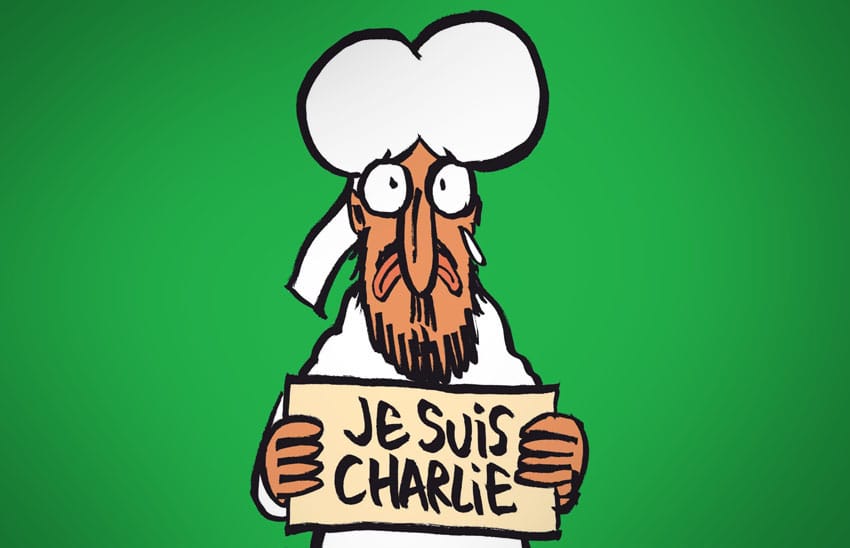
Muhammed Was Not A Holy Man
Muhammed's failings in his personal conduct are famously exhibited by his marital practices, marrying Aisha (his child-bride) when she was six years old, and consummated the marriage when she was nine. Given her age, she had no means to refuse consent. Another of his wives Zainab, was 'taken', she was already married - to his own adopted son - but the 'holy' prophet was overcome by her beauty, took her and subsequently outlawed adoption.
Muhammad would engage in sexual relations with multiple wives in a single night, taking only one bath afterwards. Records show that his garments were frequently soiled with semen, which his wife Aisha would scrape or wash off, with water spots often remaining visible even when he went to prayer.
Muhammad encouraged followers to lick their fingers after eating, or to have others lick them, to obtain a hidden blessing from Allah within the food. It is also recorded that Muhammad would put his tongue in the mouths of little boys and suck on their tongues and lips, ensuring they would never be tormented by hellfire.
Muhammad’s conduct also included actions such as beheadings, as the Quran directs, "when you meet the unbelievers strike the necks". He reportedly beheaded between 600 and 900 Jews of the Qurayza tribe. Sex slavery involving non-Muslim women captured in war is also sanctioned, as documented in Quranic verses and demonstrated by Muhammad's actions, such as his marriage to Safiyya bint Huyai immediately after her husband and father were killed.
The Quran further advises believers not to take unbelievers as friends and protectors unless necessary, to guard yourselves against them - a concept allowing for concealment of true intent. The command whoever changes his religion, kill him also stems from Muhammad’s teaching.
Jihad
Jihad, often translated as "struggle," is as a fundamental and enduring aspect of Islamic history and theology. Its history, from the death of Muhammad in 632 to modern times, reveals a consistent pattern of state warfare waged by Islamic entities against non-Muslims solely because they were non-Muslim.
Historical Continuity
Immediately after Muhammad's traditional death date, armies from Arabia conquered the Middle East, North Africa, and Persia, and attacked the Byzantine Empire, reaching central France by 732.
This expansion into India was particularly brutal, as Hindus, unlike People of the Book, were generally given the choice to convert or be killed. All major Islamic states throughout history, including the Rightly Guided Caliphs, Umayyads, Abbasids, Ottomans, and Mughals, waged jihad based on Islamic imperatives.
Throughout 14 centuries of jihad, there is no evidence of any large Muslim organisation opposing jihad violence or theological basis for any such opposition. While most Muslims today may not wage jihad, the idea that they are democratic pluralists who accept the principles of human rights lacks historical antecedents.
With the abolition of the Ottoman Caliphate in 1924, Sunni Islamic theology lost the authority for offensive jihad, as only the Caliph is authorised to declare it. Consequently, all jihad since 1924 has been justified as "defensive". This involves leaders like Osama bin Laden articulating a list of grievances (e.g. US troops in Saudi Arabia) to frame their actions as defensive responses to invasions of Muslim lands. Even 9/11 and the 30,000 jihad attacks since (as of 2024) are couched in this defensive justification, regardless of their offensive nature.
The Quran contains verses that explicitly command fighting non-believers, such as "make war on them, Allah will punish them by your hands and will humiliate them" and "fight against those who do not believe in Allah and the last day... even if they are of the people of the book until they pay the jizya with willing submission and feel themselves subdued".
These verses form the theological foundation for the persistent subjugation and discrimination against non-Muslims under Islamic rule. Jihad is thus fundamentally a theological war.
Throughout history, non-Muslims have inadvertently or knowingly aided jihad efforts, often due to their own grievances or short-sighted political calculations. Examples include Count Julian of Ceuta who aided Tariq ibn Ziyad in the conquest of Spain, and Byzantine Emperor John VI Kantakouzenos who invited the Ottomans into Eastern Europe.
More recently, the British Empire's bankrolling of the Wahhabi movement against the Ottomans in the 18th and 19th centuries contributed to the spread of a more virulent violent form of Islam globally after the Saudis gained control of Arabia and struck oil.
Treatment of Non-Muslims (Dhimmis)
Under Islamic rule, non-Muslims, particularly "People of the Book" (Jews, Christians, Zoroastrians), were afforded the option to live as Dhimmis (protected people) but were subject to humiliating and discriminatory regulations, most notably the jizya tax . This tax, specified in the Quran (Chapter 9, verse 29), meant that non-Muslims had to pay to be "protected" and be made to feel themselves subdued.
While churches and synagogues might be tolerated, building new ones or repairing old ones was often forbidden, leading to a perpetual decline of non-Muslim communities. Dhimmis could not hold authority over Muslims, limiting them to menial jobs and ensuring their second-class status.
Life as a Dhimmi was often so difficult that many converted to Islam over time to escape the constant harassment and humiliation. Egypt, for instance was 99% Christian when conquered, but now is only about 10% Christian due to widespread conversion. In some instances, conversion was forbidden by Caliphs if the jizya from non-Muslims formed the foundation of the economy.
The history of jihad in India against Hindus, who were not considered "People of the Book," was especially bloody and especially violent, with the choice often being only convert or be killed. Tens of thousands of Hindu temples were destroyed without the protection afforded to churches and synagogues.
Any notion of Muslim Spain (Al-Andalus) as a paradise of tolerance and proto-multiculturalism is a historical myth. Historical accounts from Muslim chroniclers themselves detail mass executions of non-Muslim prisoners and the 1066 Granada pogrom, where 4,000 Jews were killed in response to a Muslim ruler appointing a Jew to authority over Muslims, a violation of Islamic law.
The Quran permits believers to "take unbelievers as your friends and protectors in preference to Believers only to guard yourselves against them". This verse is interpreted by mainstream Islamic scholars to mean that a believer in danger may conceal their faith and create the impression of being on the same side as their enemies. This is used to explain instances where Muslim entities receive aid from Western nations while simultaneously funnelling money to groups considered enemies.
Muslims are enjoined to look to Muhammad as "the best example for mankind". This encompasses every aspect of his life, requiring emulation of his actions and sayings, many of which are preserved in the Hadith.
Many daily Islamic practices are derived from Hadith. Examples include snorting water in and out of the nose three times in the morning to expel Satan, believing Satan farts loudly to avoid hearing the call to prayer, and Satan urinating in people's ears to make them oversleep for morning prayers. Some Hadith even describe food glorifying Allah as it is eaten by Muhammad.
The Quran permits men to marry up to four wives and to take "slave girls you possess from Among The Spoils of War" as sex slaves. This practice is still carried out by groups like the Islamic State and Boko Haram, rooted in core Islamic principles.
Islam is largely iconoclastic, in contrast to the biblical tradition which embraces rich imagery, and iconography. This divergence raises further questions about Islam's claim to be in continuity with earlier Abrahamic traditions, which depict God creating a beautiful world and expecting beautiful, icon-rich worship.
Islam's theological framework itself contains internal inconsistencies. For instance, the demand for absolute divine unity clashes with the necessary distinctions made for Allah's attributes and actions.
While Muslims critique The Trinity for internal distinctions (many Muslim populations lack the intellectual faculties to understand it), they employ similar distinctions within their own concept of Allah (e.g. attributes not identical to essence, yet not other than essence) - a clear double standard.
Our ancestors would be bewildered to see Western leaders and institutions misunderstanding and misdiagnosis of Islam and its motivations.
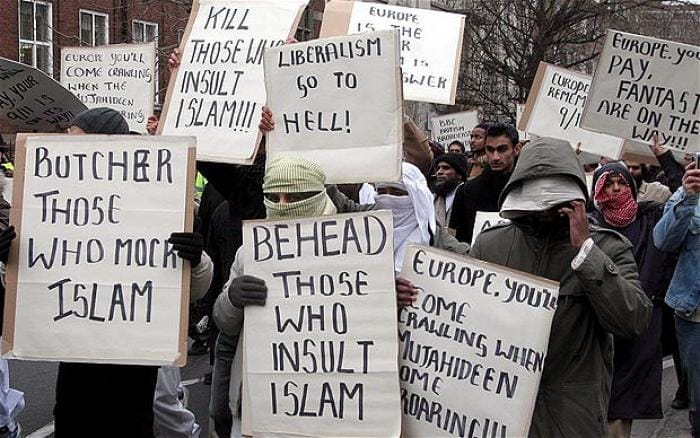
Writing the "Religion of Peace" Narrative
Declarations by Western leaders, such as George W. Bush and Tony Blair proclaimed "Islam is a religion of peace" after September 11th Attacks!
This effectively enables jihad by foreclosing any honest examination of the motivating ideology. This political narrative, dismisses the clear theological justifications for violence found in Islamic texts.
The Obama administration's mandate in 2011 to scrub any mention of Islam and jihad from counter-terror training is an elaborate exercise in pretending that the Islamic problem doesn't exist, hindering effective threat assessment.
Western universities and media are essentially a one-party state, suppress critical views of Islam, and instead inverting the narrative to suggest that it's not Islam which is problematic, it's Islamophobia that is the problem. This is exacerbated by foreign funding, such as Saudi money influencing institutions like Georgetown and Harvard, to fight "Islamophobia" rather than critically examine Islamic tenets.
Parasitic Strategies
Muslim interest groups have mastered tools and strategies to exert disproportionate influence on local and institutional policy, shielded by a legal and cultural "Islamophobia" framework that pathologises any criticism.
Muslim bloc voting in UK local and parliamentary seats vote for the candidate promising most patronage or alignment on Muslim issues. This turns 20-40% demographic pockets into decisive majorities in ward-level politics. Labour selections have repeatedly been captured this way; biradari networks stack membership lists and nominations.
Once bloc power secures council seats, school governors, or community liaison roles, influence flows into institutions. The Trojan Horse scandal (Birmingham, 2014) is the textbook case: anonymous letters and subsequent inquiries revealed coordinated campaigns by conservative Muslim networks to install sympathetic governors and headteachers in state schools with majority-Muslim intakes.
Tactics included parental complaints about Christianity in schools; pressure to adopt prayer rooms, gender segregation, halal-only catering, and curricula downplaying critical topics. Inquiries documented systematic attempts to shift school ethos toward conservative Islamic norms and "Islam-friendly" policy in public institutions. Similar patterns appear in local government: demands for sharia councils' influence, Friday prayer accommodations, or avoiding "Islamophobic" speakers.
Police community engagement often prioritises mosque leaders over evidence-based policing. In high-density areas, this creates de facto parallel governance on issues like blasphemy sensitivities or gender norms. All protests and criticisms are hidden behind the non-sensical term "Islamophobia"- acting as a legal blanket to act as an effective suppression mechanism.
The All-Party Parliamentary Group (APPG) definition—"Islamophobia is rooted in racism and is a type of racism that targets expressions of Muslimness or perceived Muslimness"—has been adopted by Labour, dozens of councils, universities, and police forces.
These are tools that can - and are - used to stop any data-driven discussion of cousin marriage rates, honour-based violence, FGM prevalence in 'certain communities', or rape and grooming patterns. Whistleblowers, journalists, or officials face career threats, investigations, or social ostracism.
It functions as a "heckler's veto" or soft blasphemy shield: to pressure institutions, prevent and criticism of Islamic theology, and the scriptural attitudes toward non-Muslims/kafirs.
The Alexis Jay Independent Inquiry into Rotherham (2014) documented ~1,400 victims (mostly White working-class girls) abused by networks of Muslim men, who targeted the girls because they were White. Their key finding was "There was a widespread perception that messages conveyed by some senior people in the Council and also the Police, were to 'downplay' the ethnic dimensions of CSE [child sexual exploitation]."
Staff feared being labeled racist; community cohesion trumped child protection. The "Islamophobia" blanket was the explicit mechanism: fear of the label (and career ruin) led police/social workers to dismiss victims as "promiscuous," ignore patterns, and prioritise relations with Muslim community leaders who sometimes pressured against action. Thousands of girls sacrificed on the altar of political correctness. Later inquiries (Casey, IICSA) confirm this was not isolated incompetence but systemic risk-aversion tied to race/religion taboos.
Misunderstandings of Christianity
The Quran presents a profoundly distorted image of Christianity, one shaped by historical distance and unfamiliarity with core Christian tradition. It misconstrues the Trinity itself, depicting it, for instance, as Allah, Jesus, and Mary in a triadic relationship. This early unfamiliarity persisted: Muslim communities and later scholars routinely equated mainstream Christianity with long-condemned heresies such as Nestorianism, Modalism, or Arianism, revealing a persistent gap in theological understanding, and - in many cases - the lack of intellectual capacity to understand how three can be one.
Failure to Recognise the Danger
Western foreign policy has compounded these internal Islamic dynamics through repeated strategic blunders. Governments have approached Islamic states as if they were conventional nation-states governed by secular realpolitik, rather than entities animated by an underlying jihad imperative that transcends borders and treaties. Alliances with Pakistan and Turkey, for example, have been maintained despite clear signals of divergent priorities, while even seemingly benign cultural gestures, such as Western participation in Eid al-Adha, are misinterpreted through an Islamic lens in which Abraham’s sacrifice is framed as a model of unrelenting hostility toward non-believers until they submit to Allah.
An Abrahamic Faith?
At its root, Islam’s claim to stand in seamless continuity with prior Abrahamic revelations collapses under scrutiny. The discrepancies run far deeper than surface ritual.
In Zechariah 13 and Jude 3, and on Jesus’ own declaration - John the Baptist closed the line of Old Testament prophets - divine revelation ended with the death of the last Apostle.
The Messianic age renders the old prophetic model obsolete. The con-man Muhammad’s appearance as a new prophet delivering fresh public revelation therefore stands in direct contradiction, aligning Islam theologically with cults, such as Mormonism.
The rupture is equally stark in liturgical worship. The Torah mandates a rich, embodied system of priesthood, sacrifice, altars, and sacred iconography centred on the Temple, an order repeatedly reaffirmed in the New Testament, where Christ fulfils its types in the Eucharist and the Church perpetuates liturgical worship through sacraments and icons. Yet Islam, while professing to uphold the divine origin of the Torah, contains none of these elements, marking a decisive break with the worship of the law and the prophets.
Muslim apologists frequently compound the problem by misrepresenting early Christian Fathers. Justin Martyr and Tertullian are cited as though they denied the Trinity or Christ’s eternal deity, yet a contextual reading shows the opposite. Justin identifies the Yahweh who appeared to Moses in the Old Testament as the pre-incarnate Son; Tertullian, in his treatise Against Praxeas, explicitly distinguishes the persons of the Godhead while affirming one divine substance, furnishing one of the earliest clear articulations of Trinitarian doctrine.

A Talmudic Counterfeit Cult
Even more telling is the extensive dependence of Islamic theology and practice on earlier Jewish and Christian sources, above all the Babylonian Talmud.
Structural parallels in prayer rituals and an overarching legalism are unmistakable: Islam frames salvation as a meticulous ledger of merit points earned through outward acts, sitting while drinking water, for instance, counts as a good deed, such that paradise is secured when merits outweigh demerits (with the caveat that certain individuals may be excluded regardless).
The Quran itself reproduces Talmudic material almost verbatim. Surah Al-Ma’idah 5:32 declares that killing one soul is like killing all humanity, an exact echo of the Sanhedrin tractate. A Hadith records God saying His mercy prevailed over His wrath, mirroring a passage in which God prays for mercy to overcome anger.
For a text presented as the uncreated, eternal speech of God, pre-existing the cosmos, the incorporation of post-Torah human writings that Islam itself does not regard as revelation is logically fatal to its own claims of timeless perfection.
This highlights a deeper disjunction between ritual and intention. Islam demands robotic adherence to outward ordinances, often at the expense of the inward transformation emphasised in Christian teaching.
Saint Paul contrasts the circumcision of the heart with that of the flesh; Christ fulfils the moral spirit of the Old Testament while rendering its ceremonial law obsolete. Islamic practice, by contrast, requires precise imitation of the degenerate Muhammad, washing a bowl a prescribed number of times because the Sunnah records him doing so - because the Quran commands obedience to the messenger in every detail.
Public prayer and charity, performed visibly in communal spaces or announced for social credit, stand in sharp contrast to Jesus’ insistence on secret devotion judged only by the Father. The faith thus becomes performative, a public tally of points rather than a private encounter with grace.
The Quran’s own theological inaccuracies further expose its limited geographical and historical horizon. Composed in the seventh-century Hijaz, it addresses local Jewish and Christian groups rather than the mainstream traditions of the wider world. It claims Jews believe Ezra is the son of God and that Christians worship the Virgin Mary as a goddess, a charge God will supposedly level against Jesus on the Day of Judgment.
These assertions reflect fringe sects such as the short-lived Collyridians rather than normative Christian doctrine, which distinguishes veneration of saints from the worship due to God alone and affirms Jesus as God incarnate, not a separate deity. Any such error - historical, textual, or doctrinal, fatally undermines the Islamic assertion that the Quran is the infallible, eternal word of God.
Finally, the elevation of Arabic as a sacred language has imposed a relentless process of Arabisation on non-Arab Muslim populations. In Pakistan and elsewhere, converts adopt Saudi dress, pepper their speech with Arabic phrases, and jettison native customs, often in forms that bear little resemblance to seventh-century Arabian reality, modern white head coverings being a case in point.
Unlike Christianity’s organic cultural development, Islam enforces a rigid linguistic and aesthetic uniformity that requires believers to distance themselves from their ancestral identities. In the end, the faith functions less like a living encounter with the divine than like a ledger in a counting-house: meticulous records of outward actions take precedence over the internal state of the soul.