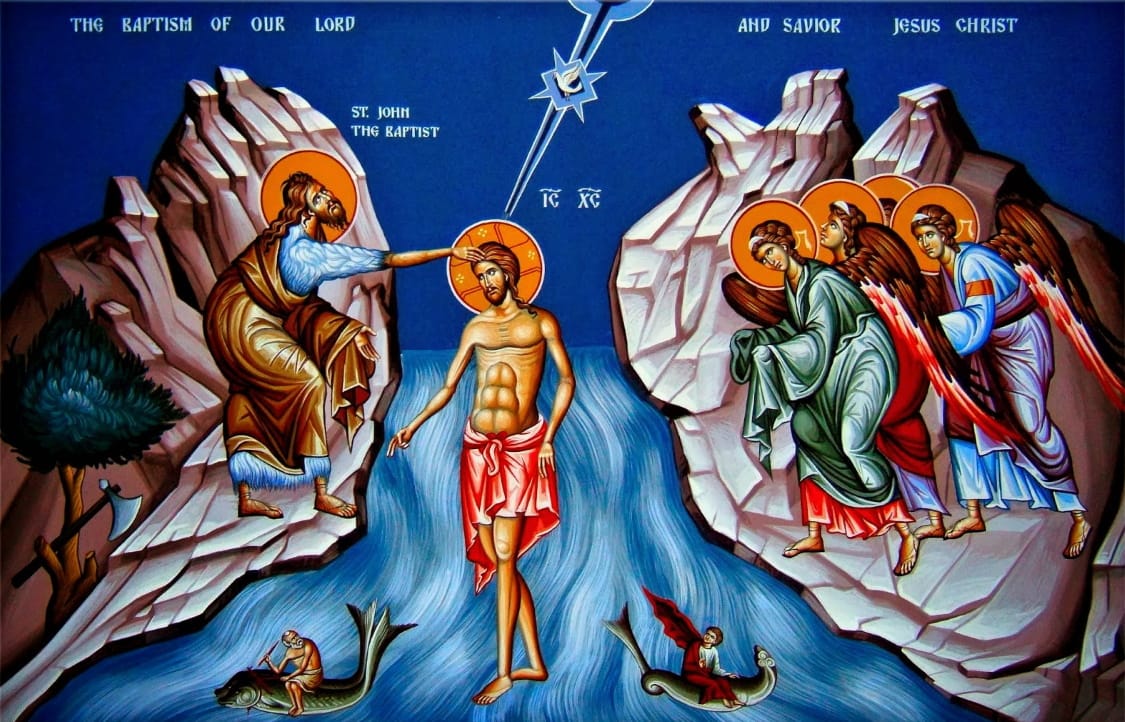
Theophany, celebrated annually on 6 January, marks the Baptism of the Lord Jesus Christ in the Jordan River and the inaugural public manifestation of the Holy Trinity.
The term itself signifies a manifestation of God, derived from apostolic witness concerning the appearance of divine grace for the salvation of the human race. In this event, the Son is revealed as the radiance of the glory of the Father, while the Holy Spirit descends in the form of a dove and the Father bears witness from heaven.
Historical Development and the Feast of Lights
In the ancient Church, the Nativity and the Baptism of Christ were celebrated as a unified feast on January 6th.
These celebrations were divided in the fourth century, with Christmas transferred to December 25th to focus specifically on the Incarnation of the Word. The feast is also traditionally designated as the Feast of Lights or the Holy Lights, a name referencing the baptism and illumination of catechumens.
Saint Gregory the Theologian identifies the origin of this celebration in the purification of the human person through Christ, the True Light who assists the internal light darkened by sin. It is considered a season of new birth and reformation, where the faithful are called to put away darkness and become children of perfect Light.
Theological Purpose of the Baptism
Orthodox theology maintains that Christ, being sinless and the Spring of all purity, had no inherent need for the baptism of repentance. Rather, His submission to John the Forerunner served to bury human sin by water, fulfill the requirements of the Law, and offer a form and example for human Baptism. By entering the Jordan, Christ identified with the fallen condition of humanity to bring it to an end and create a new state of being for the world.
This act was also an act of spiritual warfare, intended to crush the heads of the dragons believed to dwell in the waters, symbolising the cleansing of nature from demonic influence. Through this kenosis, Christ became naked to clothe humanity in an incorruptible garment, restoring the "open" relationship with the Father that had been severed by the disobedience of the first Adam.
Iconography and Symbolic Vision
The iconography of Theophany conveys a spiritual understanding of the restoration of creation rather than a mere historical setting. At the top of the icon, a gray-blue semicircle representing the heavenly realm opens to reveal a beam of light and a dove, signifying the voice and presence of the Father and the Spirit.
Christ is depicted in the centre of the Jordan River, often naked or having a white cover around His hips, to emphasise the divine economy of His Incarnation. He is flanked by Saint John the Baptist, whose gaze is directed upward in witness, and by ministering angels bowing in attitudes of worship and obedience. In the lower portion of the image, marine creatures or female allegories of the sea are sometimes present, referencing the Red Sea crossing as a prefiguration of Baptism.
Sanctification of Water and the Cosmos
A central liturgical feature of the celebration is the Great Blessing of Waters, occurring on both the eve and the day of the feast. Through the descent of the Spirit, the presence of evil is expelled from nature and the water is sanctified, becoming a spring of living water and a cleansing for the soul.
This rite affirms that material creation has once again become "very good," as it was in the beginning, being reconnected with the source of eternal love. Following this sanctification, the priest visits the homes of the faithful to sprinkle them with Holy Water, a practice that renews their baptismal life and sanctifies the spaces they inhabit. These actions demonstrate a larger sacramental vision where humanity is redeemed not from the created order, but with it.
Patristic Contrast with Paganism
In his Oration on the Holy Lights, Saint Gregory the Theologian contrasts the divine mystery of Theophany with the dark invention of demons found in Hellenistic error.
He characterises pagan myths, such as the births of Zeus and Dionysus or the mysteries of Aphrodite, as disorderly, obscene, and figments of an unhappy mind.
Orthodoxy understands that grace has been given to flee these superstitious errors and to rise above a creation subject to time and motion. The feast is thus a lofty and divine mystery, where the unmingled is mingled and the Immortal assumes the corruptible nature of man to defeat the deceiver. By participating in the Mystery of Holy Baptism on this day, the believer is purified through fear and illumination, receiving the One Ray from the One Godhead.