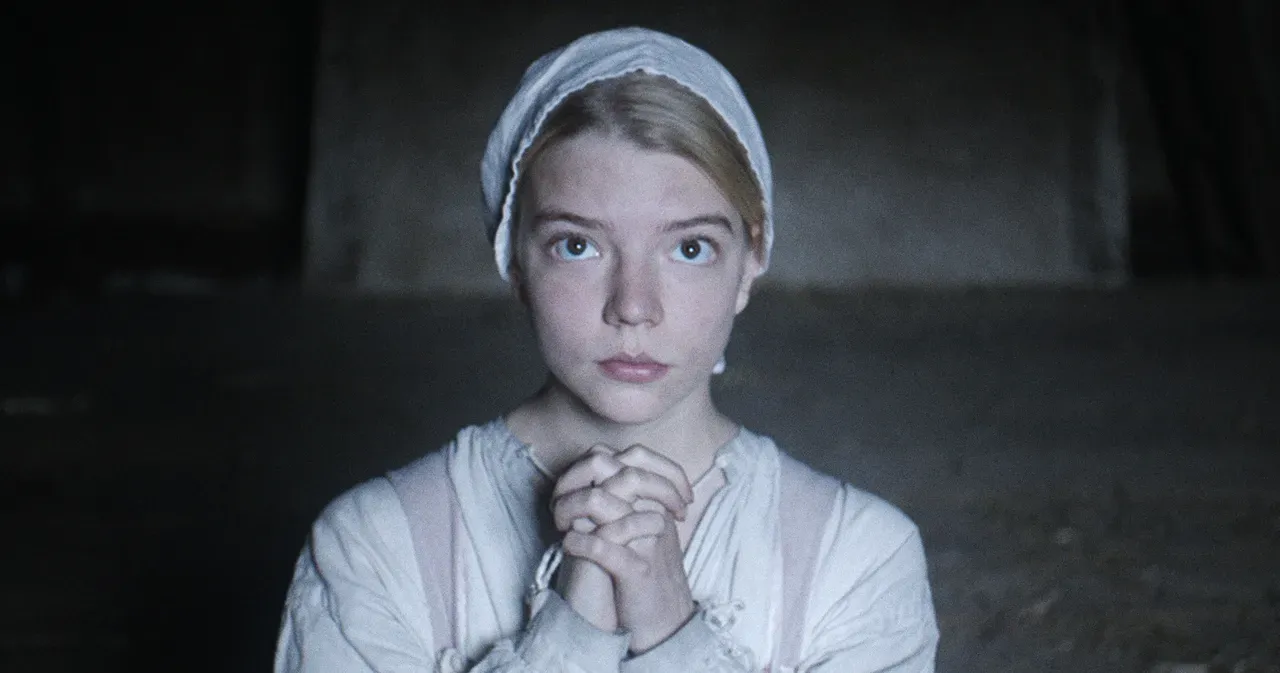
2015 film by Robert Eggers
The Witch, a 2015 cinematic entry in the new horror genre, critically reshaping the landscape of film by offering a revelatory glimpse into the occult and esoteric through aesthetic data.
Set in 17th-century New England, the film is subtitled A New-England Folktale. It meticulously crafts a narrative centred on a Puritan family, too rigid even for their contemporary Puritan community, who are cast out or voluntarily depart from their plantation and establish a homestead in the untamed wilderness.
The film plunges this isolated family unit into a harrowing confrontation with perceived external evil and their own internal corruption, ultimately leading to their disintegration.
Setting and Initial Conflict
The film opens with the family—comprising a mother, father, the eldest daughter Thomassin, a younger brother, and a pair of Gemini twins, alongside an infant—carving out a precarious existence on the frontier.
Their daily life is depicted through the sounds of nature and their industrious activities, reflecting 17th-century New England. The initial catalyst for the family's descent into horror occurs when Thomassin, while playing peekaboo with the infant, removes her hands to find the child vanished. A rustling sound in the distant crisp leaves and woodland suggests an unknown entity.
This event immediately introduces ambiguity: is the evil an external entity, or is it a product of the family's internal hysteria, drawing them into a conflict that turns them against one another? This deliberate ambiguity is characteristic of the new horror genre.
Familial Decay and Supernatural Infiltration
The disappearance of the infant precipitates a blame game, with the mother accusing Thomassin. This initial conflict underscores the family's internal wickedness and pride, which, despite their self-proclaimed apostolic succession and Old Testament-style rectitude, causes them to turn on each other.
The father, attempting to be the patriarchal figure, is revealed as a facade of weakness, carrying the guilt of having stolen and sold a silver cup belonging to his wife, allowing Thomassin to bear the blame for the lost child.
His ineffectiveness as a leader is further highlighted during a hunting scene where his flintlock misfires, humbling him in his son's eyes without truly humbling his spirit. The family unit, intended to be intertwined and self-sufficient for survival in the wilderness, instead alienates its members, allowing an "outside force" to exploit their deepest fears.
The film introduces increasingly disturbing elements that manifest the external supernatural. The soundscape is crucial, filling the void in consciousness and imagination, with otherworldly music signaling evil infiltration.
The appearance of familiar spirits, such as a hair (rabbit), marks the growing presence of malevolent forces. The familiar is an old name for a rabbit, and its frequent breeding often alludes to sexual implications, linking to the boy following the rabbit and his subsequent encounter with the "Scarlet woman". The raven, a bird automatically associated with evil, is also present.
In Shakespeare's Macbeth, the raven's croak signals Duncan's fatal entrance. Similarly, in The Witch, a raven is seen preying on the mother, plucking at her breast, symbolising a first blood sacrifice.
The Witch Figure and Black Phillip
The emergence of the physical witch is depicted in a horrifying sequence: a haggard, disgusting old Baba Yaga applies a red paste to herself and her broom, then ascends into the moon, signifying an inversion of spiritual ascension into a form of "proto-transhumanism" through earthbound, age-defying witches.
This act, explicitly termed impure Satanism, involves coating herself in the blood of the Innocence and rising into the lunar Spirit. This mirrors the historical figure of Elizabeth Báthory (1560-1614), the "blood countess," who was obsessed with bathing in blood to retain youth, a practice that led to the torture, bleeding, and murder of numerous serving girls.
The smearing with blood in The Witch directly correlates with the sustenance of vampires and the belief that blood, as the river of life, can be used in magical charms and spells to acquire power or bring others under one's control. The drinking of blood is an inversion of the Christian Eucharist, offering living forever on Earth through living blood as opposed to the blood of Christ.
Black Phillip, the family's black goat, becomes a central figure. The father, Ralph Ineson, is specifically cast to resemble Black Phillip, with Black Phillip as the Baphomet goat and the Devil himself, speaking to Thomassin and offering her the taste of butter, a pretty dress, and the desire "to live deliciously". This offers a stark contrast to the barrenness and austerity of the Puritan religion.
The devil is the conqueror goat, promising freedom, lust, and sensuality, opposing the iconoclasm and barrenness of the Puritan faith.
Thomassin's Initiation and the Black Sabbath
Thomassin's journey culminates in her full initiation into a witch's coven. After the death of her remaining family members, she is drawn by the tempting sound of bells, reminiscent of Lucifer's belled shoes, to Black Phillip.
She actively conjures him, asking, "Dost thou not understand my English tongue?". Black Phillip, representing Satan, responds, "What dost thou want?". Thomassin requests "the taste of butter, a pretty dress," and the desire "to live deliciously". She agrees to sign her name in the Black Book of death, symbolising the transfer of her soul to the devil. Unable to write, her hand is guided by the devil.
This leads to a Black Sabbath where Thomassin, naked, walks into the wilderness and joins a group of witches dancing Goya-style around a bonfire, speaking in Enochian. They levitate, and she joins them, smiling and laughing, covered in blood, signifying her apotheosis and ecstatic fall into hell.
This climax embodies the deterioration of the family, questioning religion, questioning oneself, destruction of Innocence, slaughter of the first blood sacrifice, and the animation of animals by spirits. Her decision represents a complete inversion of Christian salvation, embracing living forever as gross disgusting creature being, through pride and hubris.