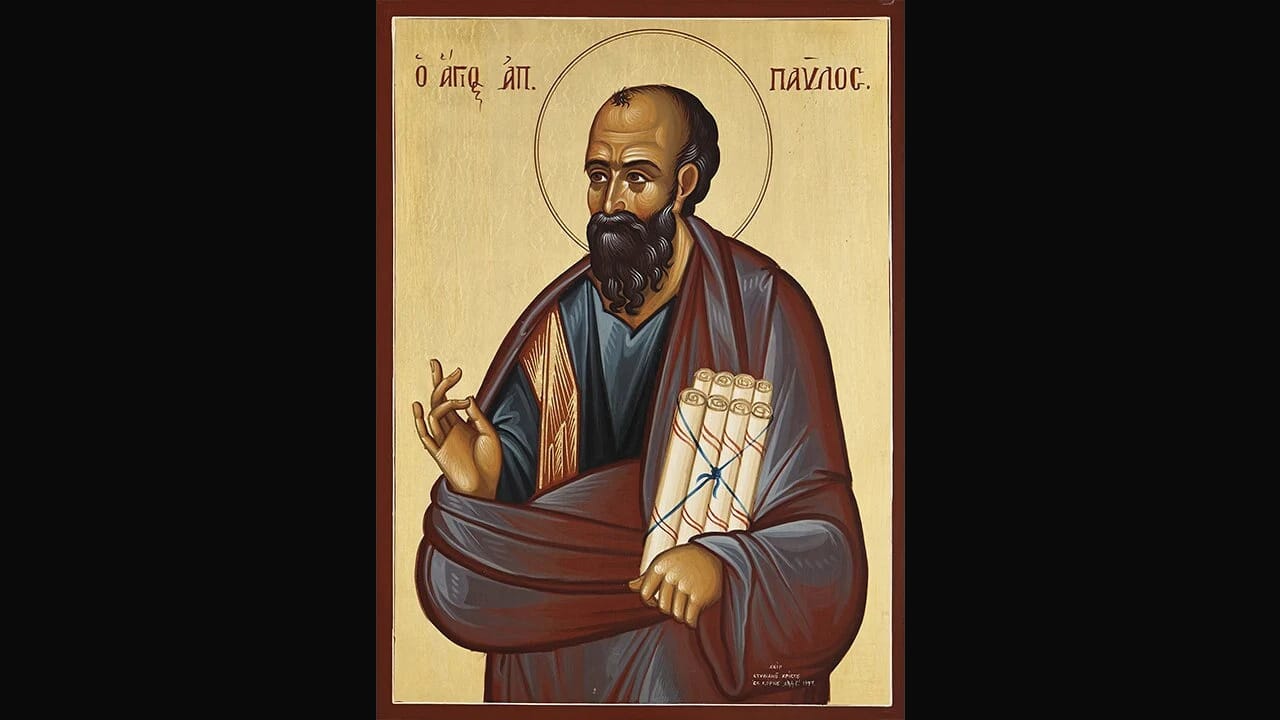
Saint Paul the Apostle
Saint Paul, originally named Saul, was born in the city of Tarsus as a member of the tribe of Benjamin. He was a Pharisee who studied under the Rabbi Gamaliel and became a prominent persecutor of the early Christian community.
His life changed following a vision of the risen Christ on the road to Damascus in approximately 35 AD. This event is a prophetic call to service rather than a conversion between separate religions.
Following his baptism by Saint Ananias, he spent three years in the desert of Arabia engaged in prayer and asceticism before beginning his public ministry.
Anthropology and the Nature of Sin
Saint Paul employs a Hebraic anthropology where the terms flesh and soul denote the entire living person. Sin is a personal power that entered the world through the first man, leading to the reign of death over all creation.
Death is an active enemy and the power of the devil, which subjects humanity to corruption and vanity. Humanity inherits the consequences of death and corruption rather than the specific guilt of the first man. This state of mortality creates a condition of fear and self-preservation that prevents a life of selfless love.
The body is the dwelling place of the Holy Spirit and is destined for resurrection. Mortality is a parasitic element that exists within the good creation originally intended by God. Humanity possesses the will to do good through the inner man but lacks the power to execute it because of the indwelling of sin in the flesh. Only the renewal of the spirit through union with the Spirit of God allows for the rejection of the desires of the flesh.
The Theology of the Law
The Law of Moses is holy and spiritual. It serves a temporary pedagogical function to guide humanity toward Christ. The Law is incapable of granting life or overcoming the internal conflict between the human will and the power to do good.
Righteousness is attained through faith in the sacrificial death and resurrection of Christ rather than through the observance of legal ordinances. This justification by grace establishes the Law by writing it upon the heart through the Holy Spirit.
Christ acts as the New Adam whose obedience provides the remedy for the disobedience of the first man. The Law remains a guide for those who are lawless, but those led by the Spirit are no longer under its ritual requirements.
Adoption into the family of God occurs through Christ, the singular seed who receives the promises made to Abraham. This new covenant is characterised by the Law existing within the person and being written upon the heart.
Christology and the Divine Image
Saint Paul identifies Jesus Christ as the icon of the invisible God. Through the incarnation, the divine nature assumed human nature to facilitate the deification of humanity.
Salvation is the restoration of the divine image, moving from the static image of creation to the dynamic likeness of God. This process requires the cooperation of human effort and divine grace. The final goal of this path is the transformation of the mortal body into a body of glory.
Christ emptied Himself by taking the form of a servant and becoming obedient unto death on a cross. This self-emptying provides the model for the Christian life and the basis for his exaltation by God.
In Christ, the whole fullness of deity dwells bodily. He is superior to all angelic powers and has disarmed the principalities and powers through the cross. He is the pioneer and perfecter of faith who tasted death for everyone to destroy the one who has the power of death.
The Church and the Life in the Spirit
The Church is the Body of Christ, a community joined by a common baptism into the death and resurrection of the Lord. Baptismal death signifies a departure from the ways of the world and the beginning of a life guided by the Holy Spirit.
Members of the Church receive various spiritual gifts for the edification of the community, though all gifts are secondary to the primacy of love. Love is patient and kind, never insisting on its own way.
The Church is the household of God and the pillar and bulwark of the truth. Sound doctrine must be preserved and propagated, especially in times of defection from the faith.
Leaders in the Church must rightly handle the word of truth and meet specific moral requirements. The liturgical life of the Church incorporates these teachings, particularly through the use of the pastoral epistles to define the requirements for bishops, deacons, and priests.
Missionary Activity and Martyrdom
Saint Paul served as the Apostle to the Gentiles, establishing churches across a geographic range extending from Arabia to Spain.
His ministry involved significant physical suffering, including imprisonment, floggings, and shipwrecks. He maintained an ascetic lifestyle and often worked as a tentmaker to avoid being a burden to the communities he served. His fourteen epistles provide the doctrinal foundation for the early Church, addressing ethical behaviour, liturgical order, and the resurrection of the dead.
He was martyred by beheading in Rome during the reign of Nero, traditionally on the same day as the Apostle Saint Peter. His martyrdom is the culmination of a life of spiritual warfare and unceasing noetic prayer.
His sound has gone forth into all the earth, and his words reach the ends of the world. He remains a model for the acquisition of internal peace and spiritual maturity through the hesychastic way of life. His letters continue to edify the faithful toward salvation through their inclusion in the liturgical lectionary.