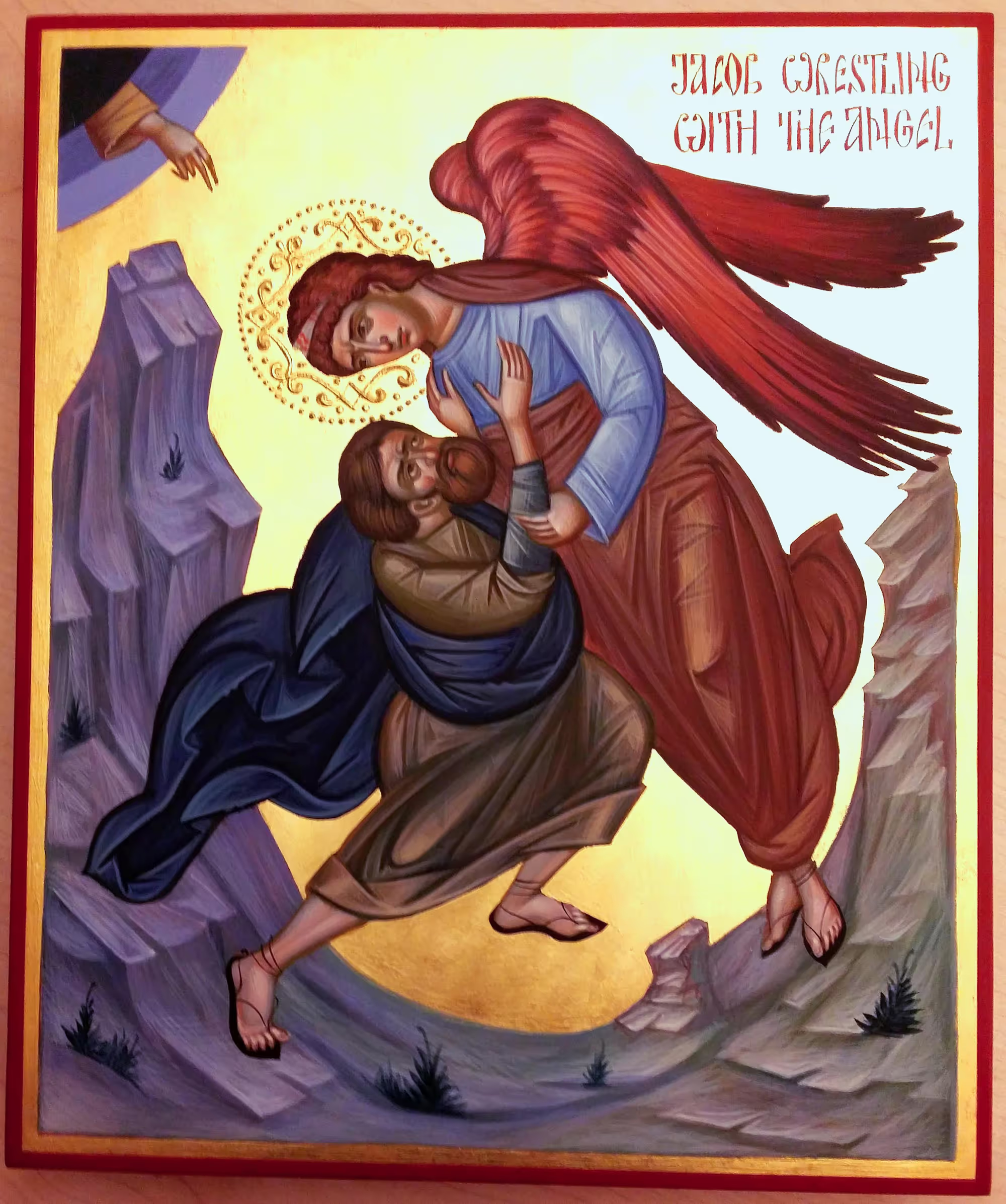
Jacob is a patriarch whose life is recorded in the Book of Genesis between chapters 25 and 50. He is the son of Isaac and Rebekah and the twin brother of Esau. His narrative constitutes a sequence of divine interventions that establish the foundation for the nation of Israel. Every assertion regarding his life illustrates the intersection of human action and divine purpose.
Divine Election and Early Conflict
The election of Jacob over Esau was established prior to their birth. God declared to Rebekah that two nations were in her womb and the older child would serve the younger. This divine choice defines the character of Jacob as a chosen vessel for the fulfilment of promises made to his ancestors.
Early life for Jacob was marked by the acquisition of his brother's status. He obtained the birthright of Esau in exchange for food and later secured the paternal blessing through deception. These actions led to a period of self-imposed exile as he fled the anger of his brother.
Conflict between the brothers represents the struggle of two distinct peoples. The name Jacob means supplanter or deceiver. This identity persists until his encounters with the divine presence transform his character and mission.
The Vision of the Ladder at Bethel
During his flight from Esau, Jacob encountered a location where he experienced a dream of a ladder reaching to heaven. Angels were ascending and descending upon this structure while the Lord stood above it. This event marks a primary intersection between the earthly and heavenly worlds.
Jacob identified the site as the house of God and the gate of heaven. He established a stone pillar to mark the location and anointed it with oil. This ritual act designated the space as a centre of identity and divine interaction.
The ladder serves as a prefiguration of the Theotokos, Mother of God. Saint Mary provides the bridge by which God entered the human world through the Incarnation. She is the heavenly ladder connecting earth to heaven through her consent to become the birth-giver of the Messiah.
Christology also locates the meaning of the ladder in the person of Jesus Christ. He is the mediator between God and humanity. The Gospel of John confirms this identification when Christ refers to angels ascending and descending upon the Son of Man.
The Wrestling Match at Peniel
Jacob engaged in a physical struggle with a man at Peniel that lasted until daybreak. This competitor was God appearing in human form. Jacob refused to cease the struggle until he received a blessing.
The struggle resulted in a physical injury to Jacob. The divine figure touched the hollow of his hip, causing a dislocation. This injury signifies that the blessing was earned through physical and spiritual perseverance.
A new identity was granted to Jacob following this event. His name was changed to Israel, which means one who struggles with God. The name transition denotes a shift from the deceiver to a prince who has power with God and men.
Jacob named the location Peniel to record that he had seen the face of God. He expressed amazement that his life was preserved after such an encounter. This event is a type of the struggle and victory over death achieved by Christ.
Reconciliation and Restoration of Brotherly Love
Jacob sought to return to his father Isaac after years of hardship in the desert. He faced the risk of death from Esau, who approached with an army. Jacob prepared for the meeting through intense prayer and humility.
The meeting between the brothers resulted in a restoration of brotherly love. Jacob approached Esau with seven prostrations to the ground. Esau responded by embracing Jacob and weeping upon his neck.
The strength found through God allowed Jacob to be strong with men. He perceived the face of his brother as the face of God. This reconciliation serves as a foundation for the smoothing of human relationships.
Jacob eventually returned to his home and was reunited with his family. His life of suffering and eventual triumph mirrors the redemptive cycle of the Messiah. The reconciliation with Esau points toward the universal reconciliation offered through the work of Christ.
Typology and Liturgical Commemoration
Jacob functions as a type of Christ in several distinct capacities. His election mirrors the choice of Christ as the beloved of the Father. His suffering during the loss of his son Joseph corresponds to the grief of the man of sorrows.
Marriages involving Jacob are interpreted as figures of the Church. His blessings over his sons in his final days prefigure the universal blessing Christ imparts to all nations. Jacob is an innocent sufferer whose life foreshadows the Passion.
Liturgical traditions within the Orthodox Church commemorate Jacob on 17 December. Readings from his life are used during the Feast of the Annunciation to explain the mystery of the Incarnation. The Akathist Hymn incorporates his ladder as a poetic image of the Virgin Mary.
The Orthodox Church sees Jacob as a model of virtue and progress through spiritual contemplation. Byzantine hymnography develops his portrayal as an example for believers. His name remains a permanent designation for the people of God.
Jacob is listed among the fathers of Israel alongside Saint Abraham and Saint Isaac. God is frequently identified in Scripture as the God of Jacob. This title confirms his enduring status within the history of salvation.