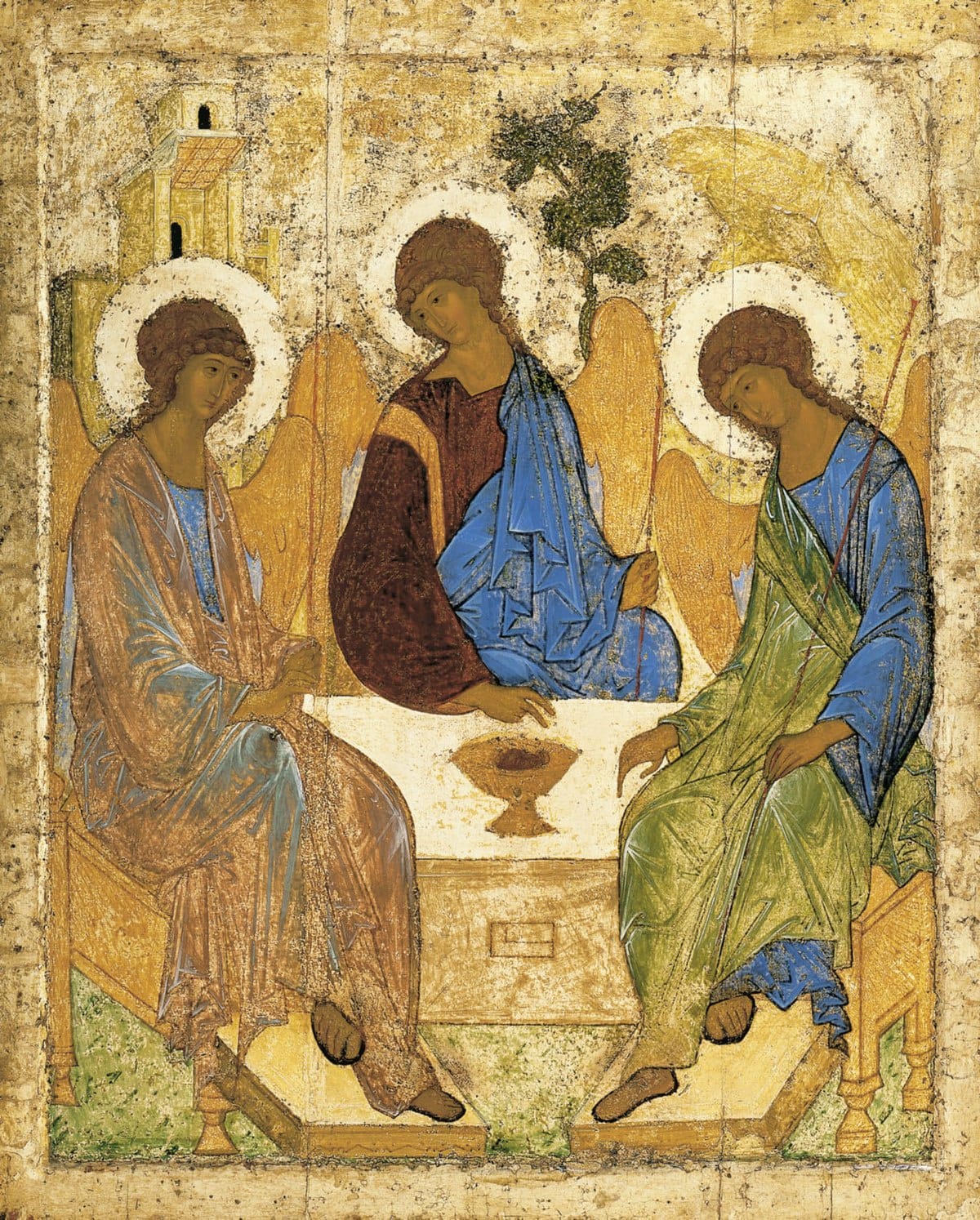
Christian theology defines the Trinity as one God in three distinct persons: the Father, the Son, and the Holy Spirit. This doctrine establishes that the three persons are consubstantial and co-eternal.
Each person possesses the entirety of the divine nature without division. The mystery of the Trinity remains inaccessible to human reason and is known through revelation. This belief distinguishes the Christian faith from other monotheistic traditions. Orthodoxy holds that God is both one and three simultaneously in a manner surpassing human comprehension.
The Monarchy of the Father
The person of the Father is the sole principle and cause within the Godhead. He is the fountain and source from which the Son and the Holy Spirit derive their existence. The term one God in the Nicene Creed refers primarily to the hypostasis of the Father. He is the unoriginate one who communicates his entire essence to the other persons. This monarchical structure ensures the unity of the Trinity. The Father possesses unbegottenness as his unique personal property.
The Father generates the Son from his essence. He produces the Holy Spirit through the act of spiration. These internal acts are works of nature and differ from the external work of creation. The Father is eternally Father and must eternally possess a Son. He is not prior to the Son in time because the divine essence is uncreated and eternal. Cause in the Trinity does not necessitate temporal precedence. The Son and Spirit are originate but share the same uncreated nature as the Father.
Dependence on the Father for existence does not result in ontological subordination. To be God does not require possessing aseity in the sense of not coming from another. A carnivore remains in the class of meat-eaters even if it is an omnivore with additional properties. The Son derives his entire hypostasis from the Father but remains fully divine in nature. Misinterpretations of these relations lead to errors such as Arianism and Sabellianism. Arius asserted that the Son was a perfect creature and not consubstantial with the Father. Sabellius taught that the persons were merely different names or functions of a single person.
Heresies and Conciliar Definitions
The development of trinitarian doctrine occurred in response to various theological errors. Sabellius taught that God is a single person who operates in different modes or roles. This position was condemned as Patripassianism because it identified the Father with the suffering of the Son. Arius of Libya maintained that the Father alone is eternal and that the Son is a created being. The Council of Nicaea in AD 325 established the Son as consubstantial with the Father. This homoousion signifies that the Son possesses the same divine essence as the Father.
The Eunomian heresy asserted that the divine essence is entirely knowable through human reason. Saint Basil and Saint Gregory of Nyssa defended the unknowability of the essence. The Council of Constantinople in AD 381 refined the doctrine of the Holy Spirit as fully divine and proceeding from the Father. Later disputes involving the Filioque addressed whether the Spirit proceeds from the Son as well as the Father. Photinus of Sirmium erroneously denied the distinct persons of the Word and Spirit. Paul of Samosata claimed the Spirit was merely grace bestowed upon the apostles.
Councils in the 14th century confirmed the distinction between God's essence and energies. These synods excommunicated those who denied the reality of this distinction. They established that the energies are uncreated and distinct from the divine essence. The Hagioritic Tome of 1341 defended the experiences of the Hesychasts as encounters with God. These conciliar decisions clarified the relationship between the inner life of God and his manifestation in history. Adoption by the Heavenly Father occurs through participation in these uncreated actions.
Intellectual Processions and Analogies
Divine processions are understood on the analogy of intellectual operations in the human mind. God is the supreme mind who possesses goodness as his substance. The generation of the Son corresponds to the procession of a word from an intellect. This Word is the innate knowledge that exists perpetually within the divine mind. The divine Word exists as a perfect and eternal act of understanding and excludes discursive reasoning from potentiality to actuality. The divine Word is truth and wisdom itself.
The human mind serves as a created image of the Trinity through its own intellectual processions. This image consists of memory, understanding, and will or love. A word proceeds from the mind as its innermost expression of rational structure. This word is always present to the mind habitually and actually. It serves as the principle by which all other things are judged. The Word in God is the expression of his perfect knowledge of all things. This knowledge is identical to the divine essence itself.
The Holy Spirit proceeds as the ineffable love of the Begetter toward the begotten Word. This love rests naturally in the Son and is common to both Father and Son. The Spirit represents the pre-eternal joy and mutual intimacy of the two persons. This analogy of love indicates the personal and relational character of the Spirit. The human spirit provides an image of this love in its insatiable desire for knowledge. This intellectual love unites the soul and body in the human person.
The Procession of the Holy Spirit
The Holy Spirit receives his hypostatic existence from the Father alone. This eternal procession is the Spirit’s unique hypostatic property. The Son does not cause the Spirit’s existence or hypostasis. Teaching that the Spirit proceeds from two distinct principles introduces division into the Godhead. The Father is the sole cause and fountain of the Spirit's being. The Spirit is the Spirit of the Word and accompanies him eternally.
A distinction exists between the eternal procession of the Spirit and his temporal mission. The Father sends the Spirit timelessly and without cause. The Son sends the Spirit in time for specific purposes in the economy of salvation. In the energetic order, the Spirit is manifested through the Son. This eternal manifestation or radiance flows from the Father through the Son. The Spirit is called the Spirit of the Son because he rests naturally in the Son from eternity.
The Spirit brings the Father and the Son into a unity of love. He is the bond of love existing between them. The Son possesses the Spirit differently from the Father. The Father’s love is initiative while the Son’s love is receptive and responsive. The Son is the beloved on whose account love proceeds from the Father. This eternal relation does not make the Son an efficient cause of the Spirit. The Spirit manifests the divine depths through the Word.
Essence and Uncreated Energies
God is distinguished into essence, hypostases, and energies. The divine essence is the inner being of God which remains absolutely hidden and unknowable. No creature can participate in or perceive the divine essence. Energies are the uncreated operations and actions through which God reveals himself to creation. These energies are God himself in his dynamic manifestation and do not exist as autonomous entities. They are shared by all three divine persons and flow from the Father through the Son in the Holy Spirit.
The uncreated light manifested on Mount Tabor at the Transfiguration is an energy of God. This light is the eternal glory of the divinity which the disciples were granted to see. This experience was a prelude to the glory of the second coming of Christ. Such energies are multiform and numerous while the essence remains one and simple. They are like the rays of the sun which are many but come from one source. Every energy is a full and complete presence of the whole Trinity.
Participation in these energies constitutes the deification of the human person. The distinction between essence and energy does not divide the simple nature of God. This distinction is real and exists independently of human thought. Essence and energy are two modes of divine existence rather than two parts of God. They are inseparable and eternally coexist without confusion. God possesses his energy as an essential motion of his nature.
Simplicity and Interpersonal Unity
The divine nature is entirely simple and excludes the composition of opposites or change. God is active only and is not acted upon by any creature. His simplicity means that wisdom, life, and goodness are not distinct qualities but are embraced in unity. God does not admit the composition of potentiality and act. He is simplicity itself and surpasses all created complexity. This simplicity is maintained despite the distinction of three persons.
The divine hypostases are distinct but not separate in substance. They are essentially and integrally contained in each other through mutual interpenetration. This perichoresis ensures that they act with one motion and one energy. The relations in God are subsistent relations where each person is the one divine essence. One person is distinct from the others as a relation and each is identical with the divine reality. They are three objective presentations of one identical being.
The unity of the Trinity is an interpersonal unity of mutual love. This unity is not the indistinguishable monad of philosophical systems. The tri-hypostatic nature of God is the primary attribute of his supreme existence. Human participation in the Trinity occurs through the indwelling of the persons in the soul. This indwelling is a personal presence where the known is in the knower and the beloved is in the lover. The Trinity blesses all reality with his own relational imprint.