Early Life of Saint Constantine
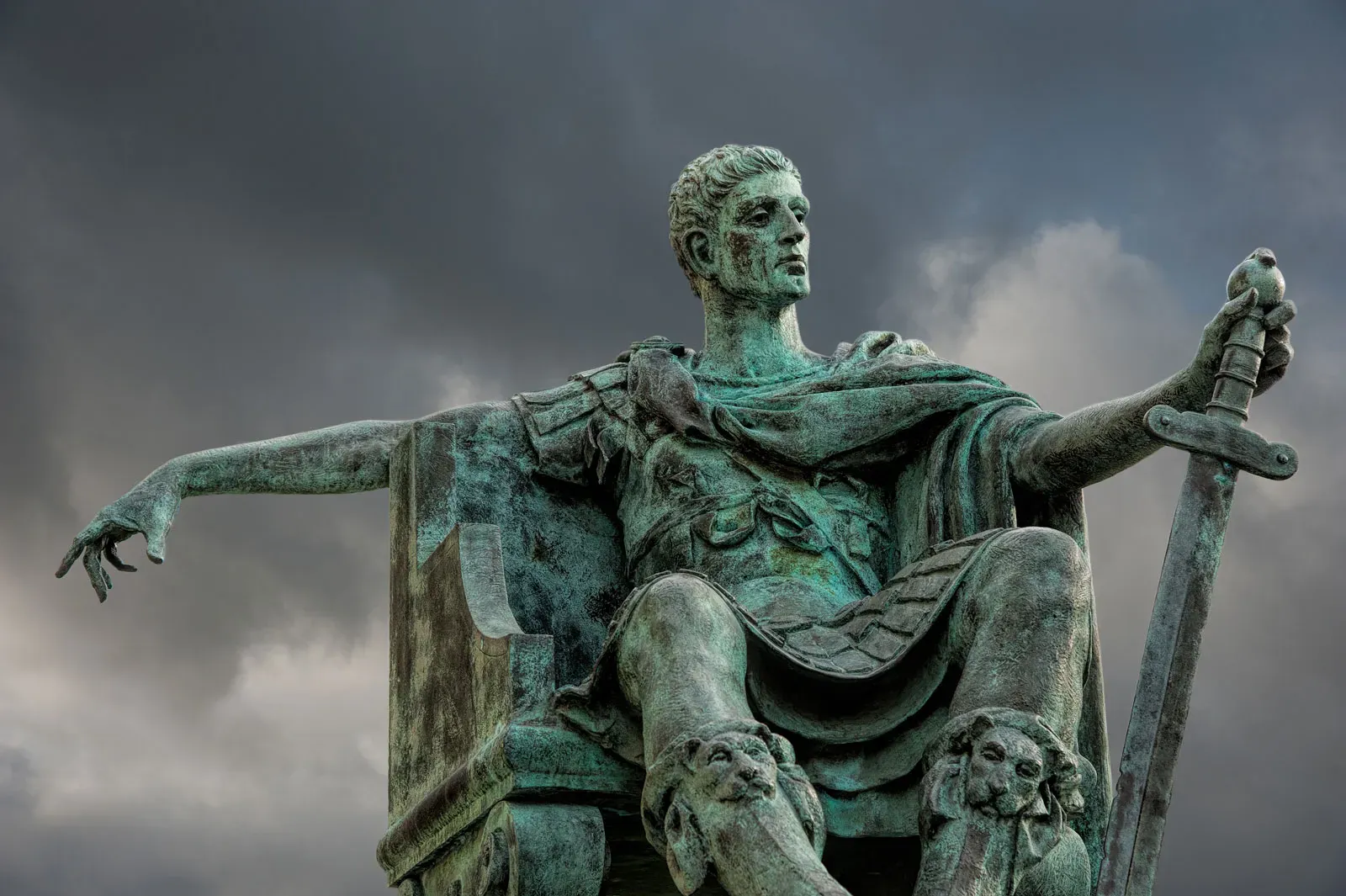
Saint Constantine the Great was born in 272 AD in the region of modern-day Serbia. His father, Flavius Constantius, served as a Roman military officer and later as Caesar within the tetrarchy established by Diocletian.
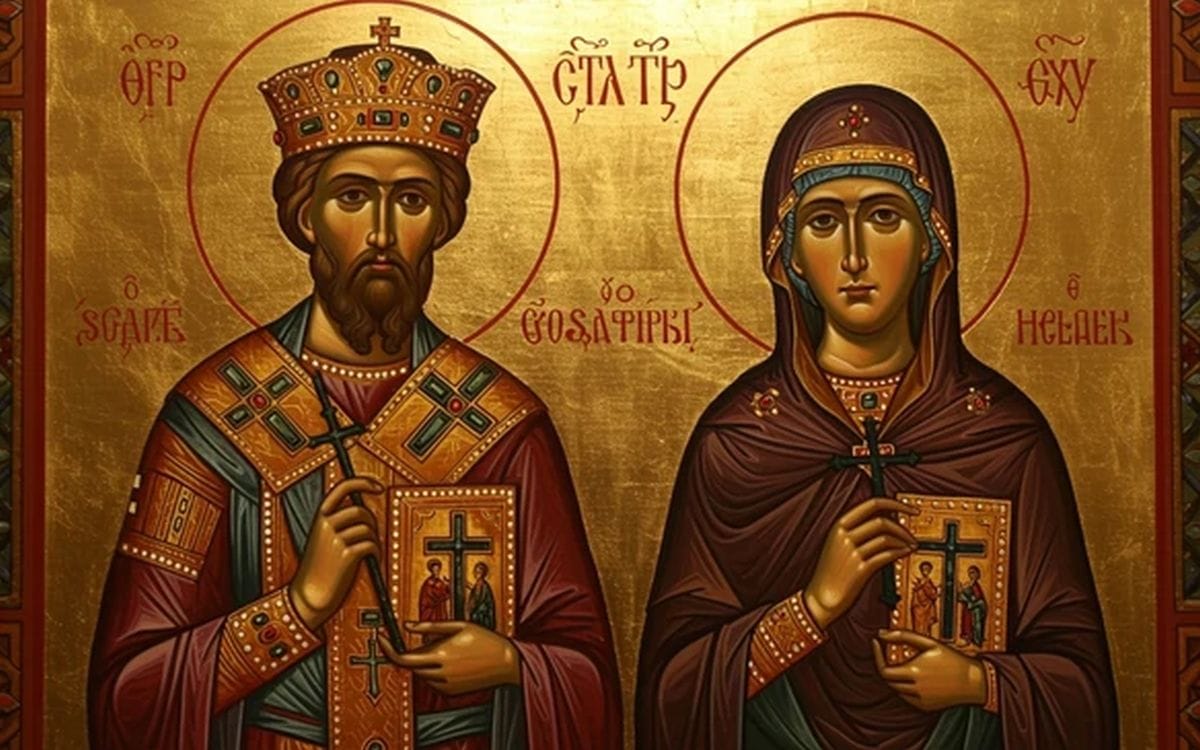
His mother, Saint Helena, was a woman of humble origins who worked at an inn when she encountered Constantius. According to historical tradition, Saint Helena raised Saint Constantine as a single mother for approximately ten years after his father left a garment with his initials as proof of the child's lineage.
The young Saint Constantine was later reclaimed by his father and brought into a life of luxury and military education after Saint Helena demonstrated his paternity to Roman officials. Despite the later political divorce of his parents, Saint Constantine remained within the imperial court, where he served under the Emperors Diocletian and Gallerius.
During this period, he witnessed the brutal persecution of Christians, including notable martyrs such as Saint George and Saint Catherine of Alexandria. This environment of violence against the faithful is a significant influence on his later religious policy.
Military Ascendancy and the Milvian Bridge
Upon the death of his father in 306 AD at York, Saint Constantine was proclaimed Augustus by his loyal troops. This elevation marked the beginning of a civil war to consolidate power over a fragmented Roman Empire. The most decisive moment of this conflict occurred in 312 AD at the Battle of the Milvian Bridge against his rival Maxentius.
Prior to the engagement, Saint Constantine experienced a transformative divine vision. He observed a cross of light in the sky above the sun, accompanied by a message stating that in this sign he would conquer. Following a subsequent dream in which Christ appeared to him, Saint Constantine ordered his soldiers to emblazon the Chi-Rho symbol upon their shields.
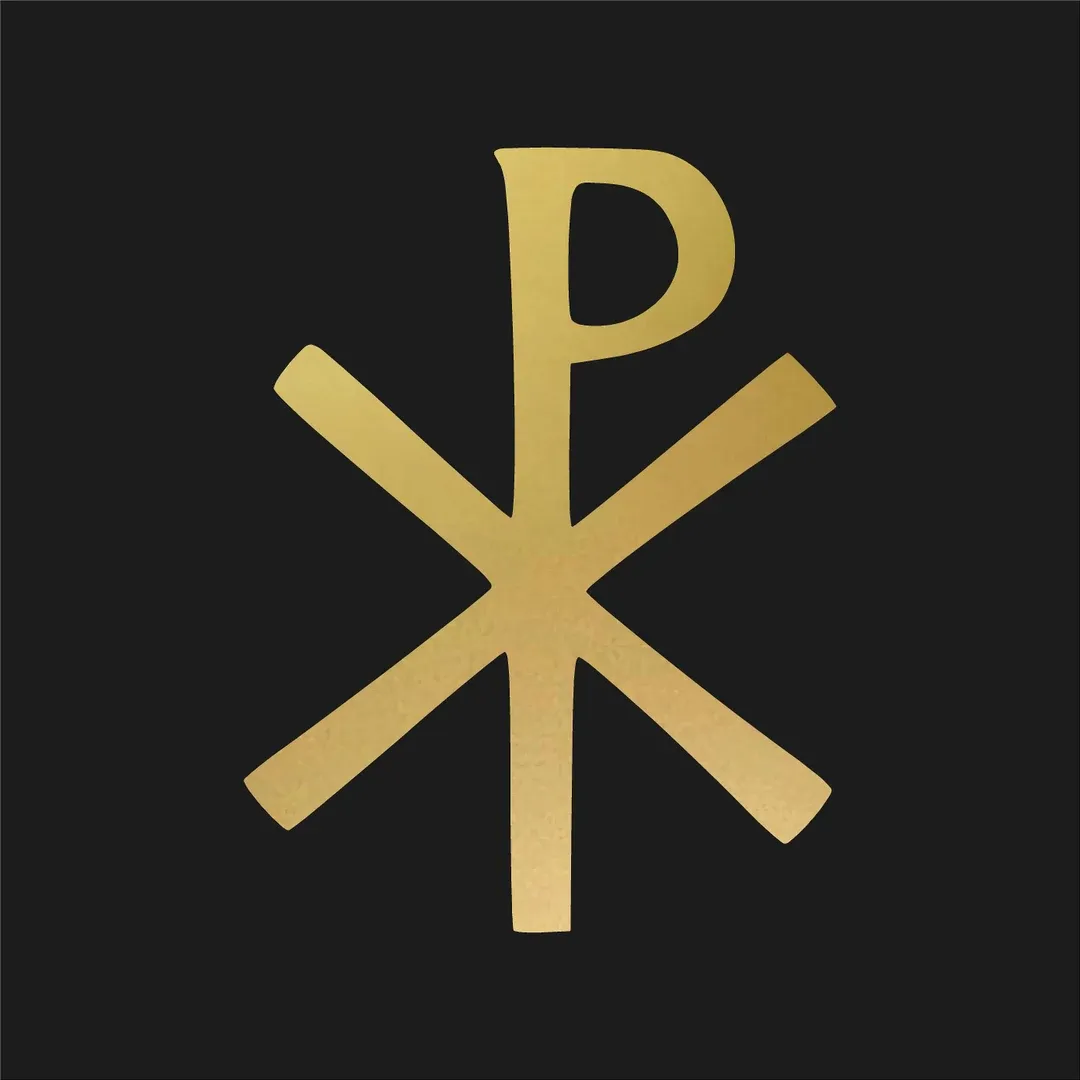
His subsequent victory, which saw Maxentius drown in the River Tiber, was attributed directly to the intervention of the Christian God. This triumph is considered one of the most important military events in history, as it fundamentally altered the trajectory of Western civilisation and ended the age of Christian martyrdom.
Ecclesiastical Policy and the Council of Nicaea
In 313 AD, Saint Constantine issued the Edict of Milan, which legalised Christianity and mandated the restoration of confiscated church property. Although he delayed his formal baptism until the end of his life, his reign was marked by a consistent and heartfelt devotion to the Christian faith.
He established the principle of Symphonia, a harmonious cooperation between the state and the church, which defined Byzantine political theology for centuries.
To address the internal divisions caused by the Arian heresy, which denied the full divinity of Christ, Saint Constantine convened the First Ecumenical Council at Nicaea in 325 AD. He personally presided over the assembly, covering the travel expenses of over 300 bishops and urging them toward unity.
The council resulted in the formulation of the Nicene Creed, affirming that Christ is of one essence with the Father. Saint Constantine acted as the protector and enforcer of this orthodox doctrine, banishing those who refused to accept the creedal foundation.
The Founding of Constantinople
Recognising the decline and deep-seated paganism of old Rome, Saint Constantine decided to establish a new capital at the site of ancient Byzantium. This city, renamed Constantinople, was dedicated in 330 AD as a purely Christian capital, devoid of pagan temples and adorned with magnificent churches. The emperor saw the city as a New Jerusalem, guided in its layout by divine inspiration and angelic command.
Saint Constantine's architectural legacy extended to the Holy Land, where he empowered his mother, Saint Helena, to identify and sacralise important biblical sites. During her expedition, Saint Helena is credited with discovering the True Cross of Christ. Together, they commissioned the construction of the Church of the Holy Sepulchre in Jerusalem and the Church of the Nativity in Bethlehem, effectively Christianising the Roman concept of space and time.
Domestic Tragedy and Final Repentance
The life of Saint Constantine was not without profound personal tragedy. In a series of events involving his second wife, Fausta, and his eldest son, Crispus, the emperor was led to order their executions. Fausta, motivated by jealousy, falsely accused Crispus of sexual harassment to ensure her own sons would inherit the throne. After the execution of Crispus, Saint Constantine discovered the deception and ordered Fausta to be killed in a heated bath.
These events deepened the emperor’s spiritual struggle and his eventual quest for total repentance. In 337 AD, sensing the approach of death, he sought baptism near Nicomedia. He reportedly stated that being a follower of Christ was more important than his imperial status, and after his baptism, he refused to wear the imperial purple, remaining in his white baptismal garments until his death.
Spiritual Legacy
Saint Constantine is venerated in the Orthodox Church as Equal to the Apostles, a title reflecting his monumental role in spreading the Christian faith throughout the known world.
His reign reoriented the Roman Empire toward a Christian identity, laying the groundwork for the Byzantine Empire, which remained the longest-lasting empire in history. By legalising the faith and convening the first councils, he ensured the survival and doctrinal clarity of the church.
He was buried in the Church of the Holy Apostles in Constantinople, surrounded by twelve sarcophagi representing the apostles, symbolising his role as the thirteenth among them. His legacy is the transition of Christianity from a persecuted cult to the foundational pillar of Western society, a transformation that remains a central pillar of Christian providence.