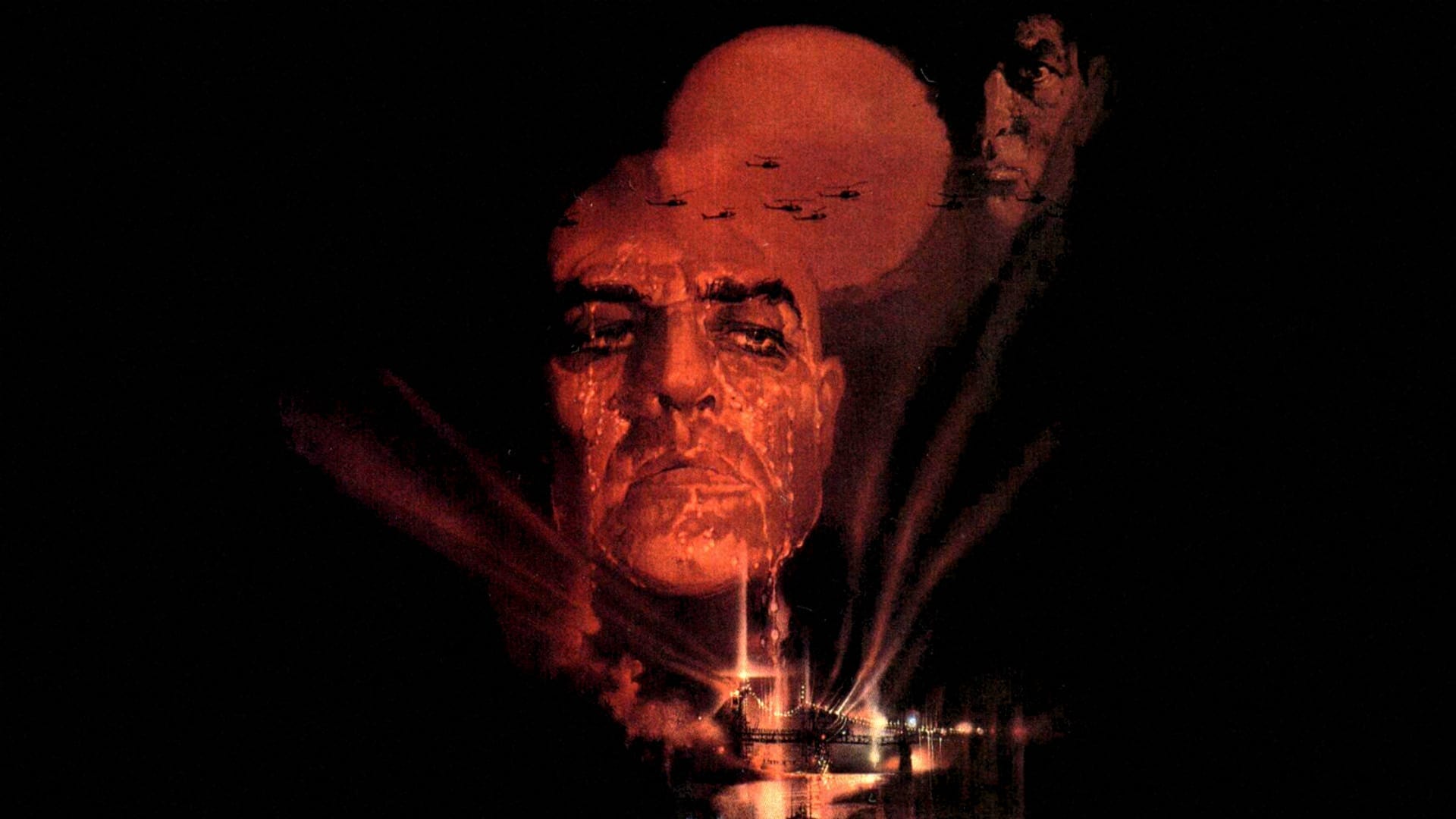
Francis Ford Coppola | 1979
The Descent into Production
Apocalypse Now is not merely a war film; it is a celluloid hallucination, a documentary of its own chaotic creation. To understand the film, one must understand that the production itself was a Vietnam War-like descent into the underworld.
George Lucas was originally the chosen vessel for this project, with a script that envisioned a vérité-style documentary approach, but Lucas opted for the escapism of Star Wars instead. This left Francis Ford Coppola, fresh from the dynastic triumphs of The Godfather and The Godfather Part II and the scriptwriting of Patton, to undertake the mission.
It was a gamble of Promethean proportions. Coppola severed his ties with the studio system, leaving Warner Bros. and liquidating his personal assets, including his home and summer estate to finance the purchase of European sound mixing and editing equipment.
He effectively bet his entire existence on a film that the industry had already rejected.
Warner Bros, having sponsored Coppola’s American Zoetrope studio, demanded the return of all development funds after rejecting a slate of projects from Milius and Lucas. Coppola paid the ransom, securing total ownership of the Apocalypse Now script.
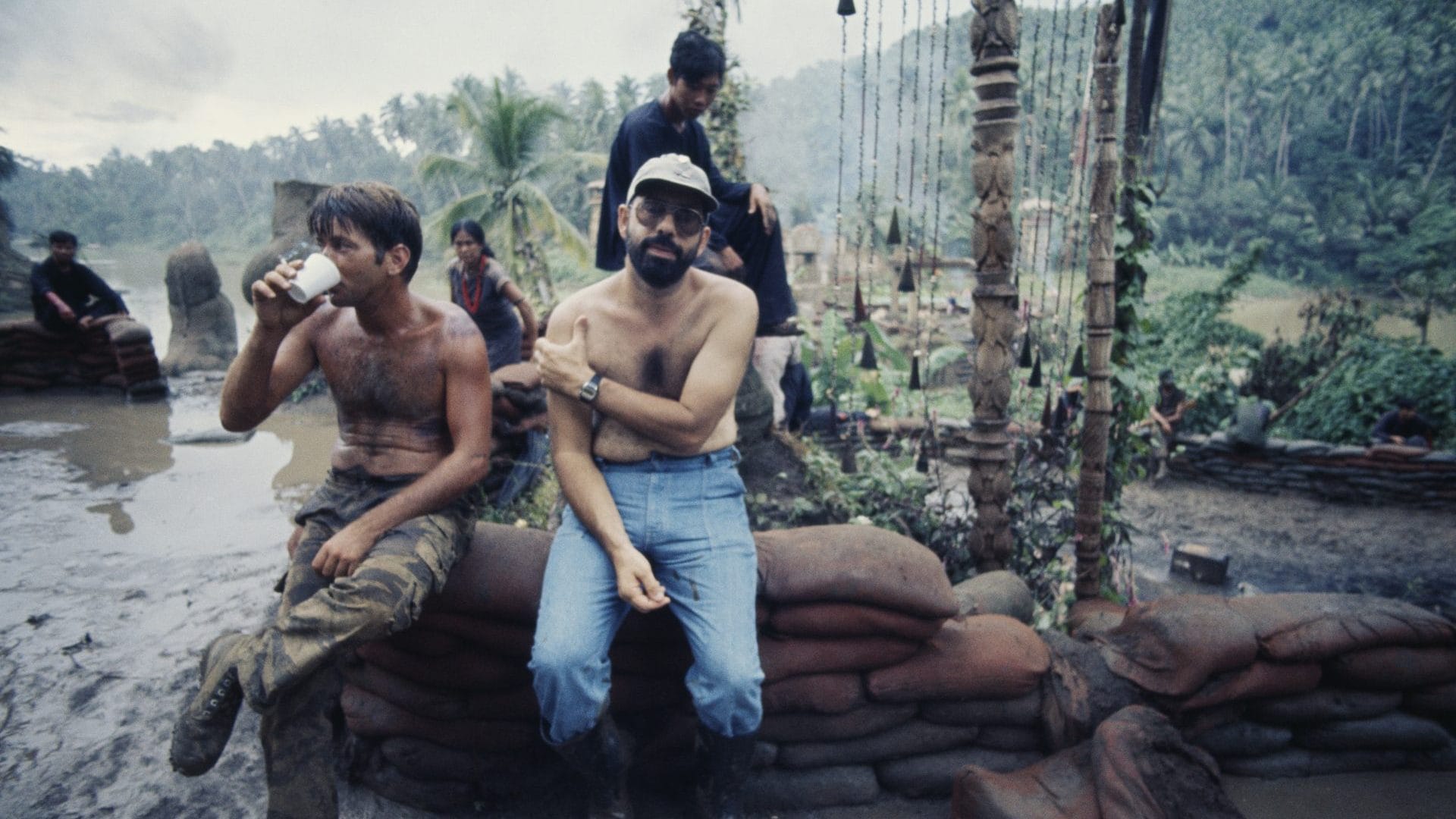
The shoot in the Philippines was a three-year war of attrition.
Coppola struck a deal with President Ferdinand Marcos for the use of the Philippine army and helicopters, meaning the film’s props were active military hardware often recalled for actual combat against insurgents.
The physical toll was biblical. A typhoon decimated the sets. The casting process was brutal; Harvey Keitel was fired after weeks of shooting, replaced by Martin Sheen.
Sheen, 37, was himself disintegrating. Battling alcoholism and smoking heavily, he suffered a severe heart attack during the opening sequence. The footage of Willard breaking the mirror, bloody, drunk, and weeping was real.
Sheen was bleeding, and Coppola, capturing the raw disintegration of a human soul, commanded, "Keep rolling, keep rolling, this is beautiful." While Sheen recovered, his brother Ramon Estevez stood in as a body double, maintaining the illusion of a protagonist who was physically present but spiritually absent.
The cast mirrored the madness of the narrative. Sam Bottoms (Lance) was fuelled by speed; Dennis Hopper was consumed by his own chemical demons. It was a production where the line between the actor and the role, the war and the movie, dissolved completely.
Narrative Architecture: The Eternal Loop
The film is structured as a closed circuit, an Ouroboros of violence. It fades in and fades out with the same visual language, lacking opening credits and, in the Redux version, closing credits. This circularity suggests that the war, and the human condition it exposes, is not a linear event with a resolution, but an eternal state of being.
The narrative spine is grafted from Joseph Conrad’s 1902 novella Heart of Darkness.
Conrad’s indictment of King Leopold’s private fiefdom in the Congo is transplanted to Vietnam, but the core remains: a journey by a civilised man to find a rogue agent (Kurtz) who has "gone native."
However, Coppola layers this with the structure of Dante’s Inferno. The river is the Styx; the journey is a progression through concentric circles of hell, becoming increasingly absurd and detached from reality the further upriver they travel.
The Bridge scene represents the crossing of the abyss into the heart of the heart of darkness. It is a place of total nihilism, built by day and destroyed by Charlie at night, a Sisyphean loop where nobody is in charge.
The film’s central philosophical tension is the duality of man, the Jungian split between the civilised mask and the shadow. Milius’s original concept of the psychedelic surfer with "Born to Kill" on his helmet and a peace button on his flak jacket visualises this schizophrenia.
As the French plantation owner tells Willard: "There are two of you: one that kills and one that loves." The film opens with Willard’s inverted face and ends with a superimposition of Willard, Kurtz, and a Cambodian idol. They are the same entity at different stages of decomposition.
The Dramatis Personae
Captain Benjamin L. Willard (Martin Sheen)
Willard is an assassin for the Special Operations Group (SOG), a man crafted by the CIA’s dark arts. We meet him in a Saigon hotel room, hungover and praying for a mission.
He is not a soldier in the traditional sense; he is an instrument of the state. His mission is handed down by military intelligence to terminate Colonel Kurtz "with extreme prejudice."
Willard acts as the observer, his internal monologue narrating the descent. He is a mirror to Kurtz, realising that his mission is a replica of a previous failed attempt by another officer, Colby.
By the end, Willard undergoes an inverse baptism in the mud, rising not as a cleansed man, but as the new Kurtz, executing the old god with a ritualistic machete blow as the indigenous tribe sacrifices a water buffalo.
Lieutenant Colonel Bill Kilgore (Robert Duvall)
Kilgore represents the "Techno-War", the American sublime. He is a cavalryman in a helicopter, blasting Wagner’s Ride of the Valkyries to psychologically shatter the enemy while his men surf six-foot peaks.
He is invulnerable, strutting through mortar fire because he is the avatar of war itself. His love for his men is inextricably linked to his willingness to lead them into the meat grinder for the sake of a good wave.
He embodies the absurdity that Kurtz despises: the American military that bombs a country into the Stone Age but worries about the morality of writing profanity on the side of the airplane.
Colonel Walter E. Kurtz (Marlon Brando)
Kurtz is the film's center of gravity. A highly decorated Green Beret, he represents the apotheosis of the Phoenix Program. Based on real-life figures like Colonel Tony Poe, who utilised psychological terror and collected enemy ears in Cambodia. Kurtz realised that the bureaucratic war led by the Pentagon was a lie.
Kurtz’s downfall was his "Commitment and Counterinsurgency" report. He argued that the war could be won only through absolute, crystalline terror, shattering the population's will without the restraint of judgment.
This threatened the military-industrial complex (referenced via the RAND Corporation in his dossier), which preferred a long, profitable, managerial war over a quick, brutal victory.
Brando’s performance is iconic. arriving grossly overweight and unprepared, he forced Coppola to read Heart of Darkness to him on set. They shrouded him in shadow, turning his obesity into the looming presence of a demigod.
His improvisation produced the film's most haunting dialogue, including the "snail crawling on the edge of a straight razor" and his disdain for the "stench of lies."
The Deep State and The Phoenix Program
The film is a direct commentary on the Phoenix Program, the CIA’s counter-insurgency initiative designed to neutralise the Viet Cong infrastructure via assassination, torture, and terror.
Kurtz is the Phoenix Program incarnate. The real-world program, led by William Colby (the namesake of the officer who defected to Kurtz in the film), utilized data from the RAND Corporation to create kill lists.
It was technocratic slaughter. Kurtz, however, rejects the technocracy for the primal. He speaks of an incident where he inoculated children for polio, only for the Viet Cong to hack off the inoculated arms. Kurtz wept, not out of pity, but in awe of the genius of that act—the will to do what is necessary.
Kurtz demands "men who are moral... and at the same time who are able to utilise their primordial instincts to kill without feeling... without judgment."
This is the friction point of the film: The Pentagon wants a war managed by statistics and "civilised" rules; Kurtz wants a war won by the supremacy of the will. The system must kill Kurtz not because he is crazy, but because he has revealed the hypocrisy of their moral war.
The French Plantation: The geopolitical Ghost
The Redux edit restores the French Plantation sequence, a crucial didactic interlude. The French colonists, entrenched in the jungle, represent the Old World colonial power. They argue that they are fighting for their soil, their home, and their family, creating "order out of chaos."
They view the Americans as fighting for "the biggest nothing in history." It highlights the shift from colonial possession to ideological abstraction. Here, Willard is offered opium, connecting the war to the Golden Triangle and the deep politics of the drug trade that financed so much of the conflict in Indochina.
Technical Mastery
Visually, Apocalypse Now remains the gold standard. Vittorio Storaro’s cinematography uses light and shadow not just for exposure, but for theology, Kurtz is never fully seen, only fragments of him emerging from the darkness.
The sound design was revolutionary, winning an Academy Award. But it is the score by Carmine Coppola (Francis’s father) that provides the film’s nervous system. The synthesised, discordant soundscape creates an atmosphere of unease that predates the celebrated synth scores of Blade Runner or Chariots of Fire. It is the sound of a modern mind snapping.
The Horror
The film concludes with Kurtz’s final whisper: "The horror... the horror."
This is not a confession of guilt. It is a judgment. It is Kurtz looking back at the civilised world, the world of generals, the RAND Corporation, the lie of the "moral war" and condemning it.
Willard leaves the temple, the savages bowing to him, the new god who refused the throne. He takes Lance and vanishes down the river, fading to black.
There are no credits. There is no closure.
There is only the lingering scent of napalm and the knowledge that the heart of darkness is not in the jungle, but in the systems we built to conquer it.