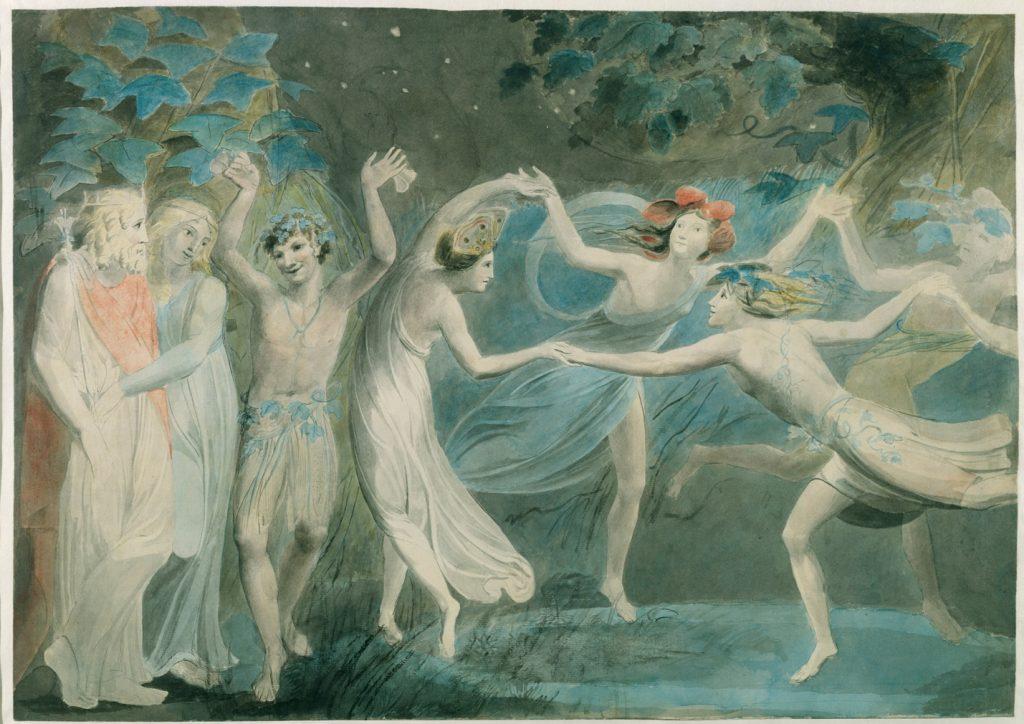
The symbolic structure through which Anglo-Saxon Christianity integrated pre-existing beliefs and traditions offers a sophisticated framework for understanding the nature of supernatural agencies, including the origins of entities such as fairies. Unlike a dualistic view that limits agencies to being solely from heaven or hell, or purely good or bad, Anglo-Saxon thought acknowledged an intermediate space of agency. This approach allowed for a coherent account of experiences with agencies that do not align with simple polarities. The study of Germanic philology, particularly Anglo-Saxon and Old Norse literature and languages, provides a crucial entry point into understanding medieval thought and the complex integration of these diverse traditions.
Universal History and Apocryphal Traditions
A central text in the understanding of universal history for these cultures was The Apocalypse of Pseudo-Methodius. This text drew upon an even earlier Syriac work, _The Cave of Treasures_, which preserved ancient Syrian and early Christian/late Jewish traditions concerning figures such as Adam and Eve and the Garden of Eden. These texts were fundamental to the Anglo-Saxons' construction of their world view.
A distinctive feature of The Apocalypse of Pseudo-Methodius is its witness to the tradition of a fourth son of Noah. In Greek and Syriac texts, this figure is often named Yonaton or Yonitus. The exact circumstances of his birth are debated in ancient and medieval authors; some posit he was born on the Ark, while others suggest after disembarkation. A widely attested tradition in ancient Syriac texts states that Noah lived celibate until The Flood, conceiving this fourth son with his wife while on the Ark. This conception on the Ark, understood symbolically as the seed for a new world or a holy place amidst chaos, signifies new beginnings born from exceptional circumstances. There are also ancient associations between flooding and menstruation, and taboos about reproduction during menstruation, which add to the unusual nature of this birth. This fourth son is thus conceived in a 'weird liminal marginal space'.
Although not part of canonical scripture, this tradition of a fourth son was widely known in the Middle Ages, despite being an obscure tradition today. In The Apocalypse of Pseudo-Methodius, this son travels far to the East, to the 'Land of the Rising Sun', where he receives esoteric wisdom from God. Nimrod, a problematic figure who introduced the worship of fire, learns divination and astronomy from Yonaton, though Yonaton eventually distances himself from Nimrod's path. This fourth son is ultimately associated with the concept of Eastern wisdom, embodied by figures like the Eastern philosopher or gymnosophist.
There is a significant and only recently understood connection between Old Testament pseudepigrapha, such as The Book of Enoch or The Life of Adam and Eve, and Anglo-Saxon Christianity. This transmission largely occurred via the Syriac tradition. Historically, the academic specialisation in Syriac or Ethiopian studies was siloed from Anglo-Saxon studies, contributing to this delay in recognition.
A crucial figure in this transmission was Saint Theodore of Tarsus, who served as Archbishop of Canterbury from 668 AD. Born in Tarsus, raised in Constantinople, and having visited Edessa, Saint Theodore was fluent in Syriac and deeply steeped in Byzantine and Syrian theological traditions.
After learning Latin in Rome, he was sent to Canterbury where he established the School of Canterbury. Evidence from chronicles and surviving book lists from this school indicates access to texts such as _The Apocalypse of Pseudo-Methodius_, confirming awareness of these traditions.
Another important route of transmission was through Irish monasteries, which held extensive collections of pseudepigraphal texts, often translated first into Latin and then into Old Irish. The Irish monastic movement played a significant role in the conversion of the Anglo-Saxons from the north, complementing the Roman push from the south. Although many of these Irish manuscripts were destroyed during the Viking Age, extant works like the Old Irish _Saltair na Rann_ (Psalter of the Quatrains) exemplify this tradition.
This collection of 150 poems provides an integrated universal history of the world, from Adam and Eve to the present, by weaving together pseudepigraphal material with Genesis and other scriptural books. Crucially, _Saltair na Rann_ was intended for lay people, written in Old Irish to easily transmit the tradition of Christian belief concerning the origins of humanity, angels, demons, and fairies.
Theories on the Origin of Fairies
In the Middle Ages, there were typically two or three main theories concerning the nature and origin of fairies. A prevalent question in Irish folklore, related to these theories, was whether fairies could be saved.
- The Unwashed Children of Eve: This theory, also found in rabbinic literature, said fairies are the descendants of Eve's unwashed children. After the Fall, God or the Archangel Michael sought to bless Eve and her children. Eve, observing it was 'washing day', hid the dirty children behind her back, thus preventing them from receiving the blessing. While blessed children became the ancestors of humanity, those who did not receive the blessing became the ancestors of fairies, jinns, and other intermediary, ambiguous spirits.
- Angels Neutral in the War in Heaven: This was arguably the most common theory for the origin of fairies in the Middle Ages. It suggests that fairies are the descendants of angels who maintained a neutral stance during the War in Heaven. These angels neither fought against Lucifer nor sided with God. Consequently, they were cast out, but not all the way down to Hell like Lucifer and his angels. Instead, they were cast halfway down to Earth, becoming 'earthy spirits' or 'in-between spirits of the air'. This concept closely resembles the Jinn tradition. Their intermediate status explains the question of their potential salvation, as they were not entirely damned.
- The Nephilim: The third theory identifies fairies with the Nephilim. The Nephilim were understood as either the descendants of Cain or the offspring of the 'sons of God' and 'daughters of men', depending on the interpretation. These different readings were not necessarily viewed as mutually exclusive in the Middle Ages, particularly by authors such as the _Beowulf_ poet. Both interpretations suggest an unholy pairing or a 'movement down the mountain' within the ontological hierarchy, invariably involving the lineage of Cain. The result of this unholy union is a race of monsters. This version of fairy origin is, for instance, found in the poem Beowulf. Early Christian thinkers, such as Saint Cyril of Alexandria in his work Against Julian, also refer to this understanding of Genesis chapter 6, even if to refute arguments against Christian dogma.
The Integration in Anglo-Saxon Literature: Beowulf
The Beowulf poem stands as a testament to the sophisticated integration of diverse traditions within Anglo-Saxon Christianity. Composed by a Christian monk, likely in the early 8th century, it interweaves older Germanic pagan narratives with elements from biblical apocrypha. Far from being a pagan story with a Christian veneer, _Beowulf_represents a seamless fusion of these influences. It is considered a 'Rosetta Stone' for understanding how various Old Norse and apocryphal traditions converge.
An example of this integration is the portrayal of dragon slayers. The poem incorporates language and themes from the stories of Sigmund, the renowned Germanic dragon slayer, and Saint Michael, the archetypal Christian dragon slayer, into the narrative of Beowulf's monster-slaying feats.
Beowulf specifically integrates the tradition of the fourth son of Noah through the figure of Shield Sheafing. The Beowulf poet combines the apocryphal Noahic figure (Sheaf) with an existing Old Norse pagan character, Shield, the mythical ancestor of Danish kings. The Anglo-Saxon Chronicle, a work compiled during the time of Alfred the Great, explicitly states that Sheaf was born on the Ark. Sheaf, according to legend, washes ashore in Northern Europe as a glowing, beautiful young boy, his head resting on a sheaf of wheat, from which he derives his name. He becomes a culture hero, a 'corn king', who imparts the secrets of agriculture to the Scandinavian people.
The funeral of Shield Sheafing in Beowulf further illustrates the poem's complex symbolism. After his death, he is given a ship burial, laden with treasure, and pushed out to sea. The text states he was sent back "to those plural who had sent him," despite earlier assertions that God had sent him to the Danish people. This plurality in the 'senders' suggests an awareness of a divine counsel or angelic orders, a concept incompatible with a purely monotheistic perspective often adopted by 19th-century German interpretations of Christianity, but fully consistent with the Anglo-Saxon theological framework. The poet's deliberate choice of language, rather than an oversight, indicates the artistic and theological depth of the work.
The poem's monsters, such as Grendel, are also directly linked to these deep-seated traditions. There is a strong scholarly case to be made that Grendel's name derives, at least in part, from _The Book of Enoch_, highlighting the widespread influence of Enochian traditions in Anglo-Saxon England.
The Anglo-Saxon Homiletic Tradition
The dissemination of these complex ideas to the general populace occurred through the Anglo-Saxon homiletic tradition. Homilies, or sermons, were compiled into 'homiliaries', books arranged according to the liturgical year. These were frequently copied, ensuring their survival and providing valuable insights into the religious beliefs taught to lay people.
Anglo-Saxon homilies freely incorporated Old Testament pseudepigrapha, such as _The Life of Adam and Eve_, _Visio Pauli_(The Vision or Apocalypse of Saint Paul), and _The Life of Peter and Paul_. These apocryphal works were used to explain concepts about the afterlife. _Visio Pauli_, for instance, is one of the earliest detailed descriptions of the torments of hell, a direct precursor to works like Dante's _Inferno_. A notable example within this tradition, also found in Third Ezra, is the idea of Herod eternally imprisoned in Hell on a burning throne, a punishment linked to his misuse of kingship and, by subtext, his role in the slaughter of innocents. Significantly, these homilies and their descriptions of hellish torments were directly quoted and paraphrased in _Beowulf_ to describe the infernal marsh where Grendel's mother resides.
Alfred the Great and Universal History
The reign of Alfred the Great (871-899 AD) marked a significant period of literary renewal and revival in Anglo-Saxon England. Alfred's patronage was instrumental in the preservation and collection of much of the extant Anglo-Saxon literature. He undertook translations himself, notably of Saint Gregory the Great's _Pastoral Care_ and Boethius's _The Consolation of Philosophy_. His translations were not mere literal renderings but involved significant enlargement and adaptation to his audience's understanding. For example, in his translation of Boethius, Alfred expanded on a brief reference to the Titans of myth, explaining to his Anglo-Saxon audience that these were, in fact, the Giants of Genesis chapter 6. This demonstrates Alfred's commitment to creating a coherent 'universal history' that connected classical and biblical narratives.
A major part of Alfred's project was to explicitly trace the lineage of the Anglo-Saxon kings, particularly his own, back to Noah and ultimately to Adam and Christ. The Anglo-Saxon Chronicle, compiled during his time, presents a genealogy of Alfred's father that goes back through figures such as Sheaf (the fourth son of Noah, born on the Ark) and then to Noah, Methuselah, Enoch, and eventually to Adam, identified as 'the first man and our father, that is Christ'. This echoes the genealogy in Saint Luke's Gospel, which traces Christ's lineage back to Adam to demonstrate Christ's universal salvation, not just for the Jews but for all humanity. By doing so, Alfred sought to position the Anglo-Saxons within the grand narrative of Christian redemption. This practice was highly unusual; while other European peoples, such as the Welsh, French, and Germans, typically traced their ancestries back to Japheth, the Anglo-Saxons, and later the Scandinavians upon their conversion, consciously emphasised their descent from Noah's fourth son. Despite changing his name and disregarding Eastern associations, this connection was paramount for establishing their place in universal history.
The Anglo-Saxon Chronicle itself serves as a work of universal history. Though often studied for its accounts of wars, it commences not with insular British history, but with events predating the Incarnation of Christ, specifically mentioning Julius Caesar's arrival in Britain and the birth of Christ under Octavius's reign. This opening statement underscores the Anglo-Saxons' belief that their history was inextricably linked to the broader Christian and Roman historical narratives.
Upon conversion, the Northern Germanic peoples, possessing strong memories of their own gods, heroes, and ancestors, sought to integrate these figures into the Christian universal history. They aimed to tie themselves back to Noah and the Christian story, to Rome, and simultaneously to their indigenous traditions. This process, differing from the Britons or Gaelic peoples who had lost much of their pre-Christian spiritual leadership by the time of their conversion, was intensified by the relatively late conversion of the Northern Germanic peoples. This necessitated a sophisticated weaving together of their own robust narratives with Christian theology, creating a rich and unique tapestry of myth and history.