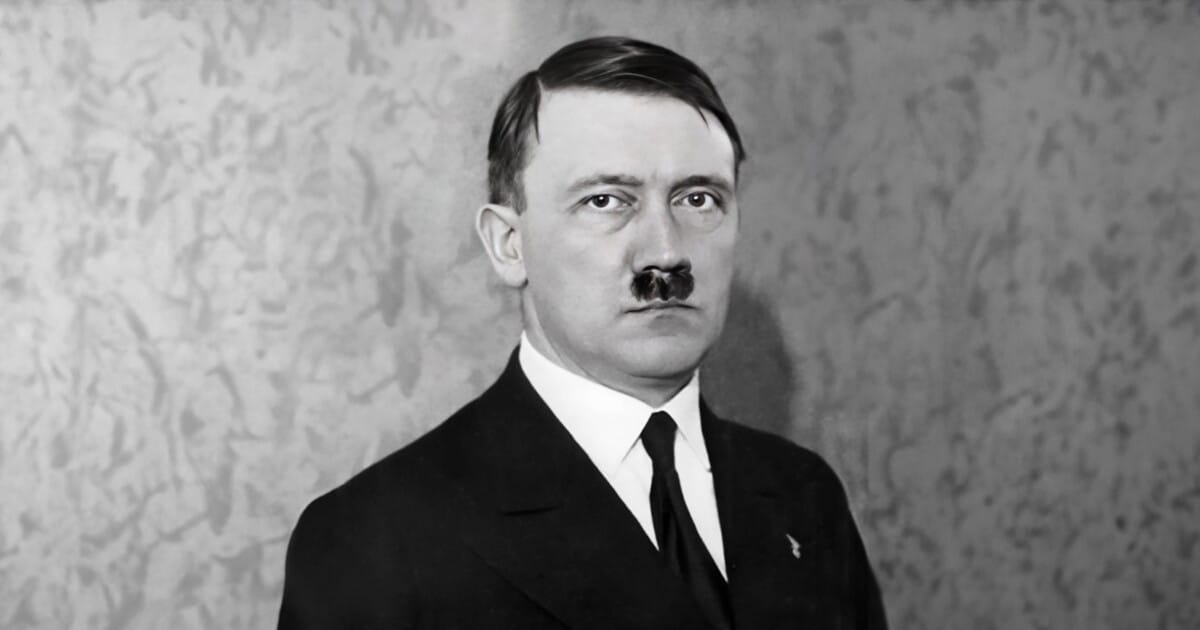
1989 - 1945
In the Post WW2 Consensus Adolf Hitler looms large in the collective consciousness, as the cartoonish manifestation of evil, somehow even worse than Satan himself. Western propaganda has successfully positioned Hitler as a uniquely evil villain - even more than dictators like compared to Poi Pot or Mao.
Hitler became synonymous with authoritarianism, and the embodiment of the lesson of Neoliberalism. His name has become a synonym for Racism, invoking his name became a involuntary response, - an unqualified justification - as to why notions of nationalism and racial identity need to be stamped out (albeit only for White people).
Yet for a figure of his fame and historic stature, his politics and motivations remain largely unknown, intentionally hidden from the public sphere.
The Resurgence of Germany Under National Socialism
The interwar period in Germany witnessed a profound transformation under the leadership of Adolf Hitler and the National Socialist German Workers Party.
Following the devastation of World War I and the punitive terms of the Treaty of Versailles, the German nation faced economic ruin, social fragmentation, and a deep sense of national humiliation.
Hitler emerged not merely as a political agitator but as a figure who addressed these crises with a clear, coherent programme of national restoration. His leadership success derived from his ability to deliver tangible economic recovery, restore social order against cultural degeneration, and articulate diplomatic objectives that are reasonable adjustments to an unjust international order.
Economic Reconstruction and Prosperity
When Hitler assumed the chancellorship in 1933, Germany remained mired in the Great Depression, with unemployment standing at forty per cent.
The economic policies implemented by his government achieved a rapid and dramatic reversal of these fortunes. By ignoring the protests of private bankers and focussing on vast public works, such as the construction of the Autobahns, the regime stimulated the economy without the initial impetus of arms spending.
Interest rates were kept low, wages were pegged, and family incomes rose due to the achievement of full employment.
By 1936, unemployment had sunk to one per cent, a feat of economic management that stood in stark contrast to the continuing stagnation in the United States and other Western nations.
This recovery drew glowing accolades from across the ideological spectrum. David Lloyd George, the former British Prime Minister, visited Germany in 1936 and hailed Hitler as the George Washington of Germany, a national hero who had resurrected his country.
This economic miracle provided the foundation for Hitler’s immense domestic popularity and established him as one of the most successful national leaders of the era.
Cultural Restoration and Social Order
Beyond economics, the National Socialist movement positioned itself as a defensive mechanism against the moral corruption and social dissolution that characterised the Weimar Republic.
Post war Berlin had become a centre of licentiousness, where the theatre, cinema, and press were dominated by Jewish elements that promoted sexual decadence and subverted traditional German values.
Figures such as Magnus Hirschfeld, a sexologist who established the Institute of Sexology, championed sexual relativity and sought to overturn laws regarding sexual morality, using scientific pretensions to promote degeneracy.
The cultural landscape of Weimar Berlin featured widespread prostitution, including child prostitution, and the proliferation of pornography disguised as art or scientific research.
Artists such as George Grosz and Otto Dix produced works that degraded aesthetic standards and attacked the moral fabric of society. Hitler viewed these developments as intentional acts of subversion aimed at the spiritual destruction of the German people.
Upon rising to power, the new government moved decisively to close institutions like the Institute of Sexology and ban pornographic publications, actions that effectively dismantled the Berlin sex industry and restored a sense of public morality and order. (See Nazi Book Burnings)
This cultural purification resonated with a population weary of the chaos and depravity of the preceding decade.
Zionism and the Emigration Policy
A central tenet of Hitler’s policy involved the resolution of the Jewish Question within Germany. While later narratives focus exclusively on conflict, the 1930s saw a significant economic partnership between the National Socialist government and the Zionist movement.
Both parties shared a common interest: the German government sought the emigration of Jews from Germany, while Zionist organisations sought Jewish immigrants and capital for the development of Palestine.
Following the global economic boycott launched by Jewish organisations against Germany in 1933, which threatened the impoverished nation’s export dependant economy, the Zionist movement offered a means to break the embargo.
The result was the Ha’avara or Transfer Agreement, which facilitated the migration of German Jews to Palestine along with their assets in the form of German manufactured goods. Between 1933 and 1939, this partnership provided over sixty per cent of the investment in Jewish Palestine, resources that were crucial for the survival and growth of the nascent Jewish colony.
During this period, German authorities accorded the Zionist Party a privileged legal status, permitting Zionist marches, uniforms, and flags at a time when other political organisations were outlawed.
Important SS officials visited Palestine and published favourable reports on the Zionist enterprise in the German press, reflecting a policy that viewed Zionism as a potential solution to the Jewish question through separation rather than extermination.
Diplomatic Objectives and the Polish Crisis
In the realm of foreign policy, Hitler’s primary objective was the revision of the Treaty of Versailles and the reunification of German populations separated from the Reich.
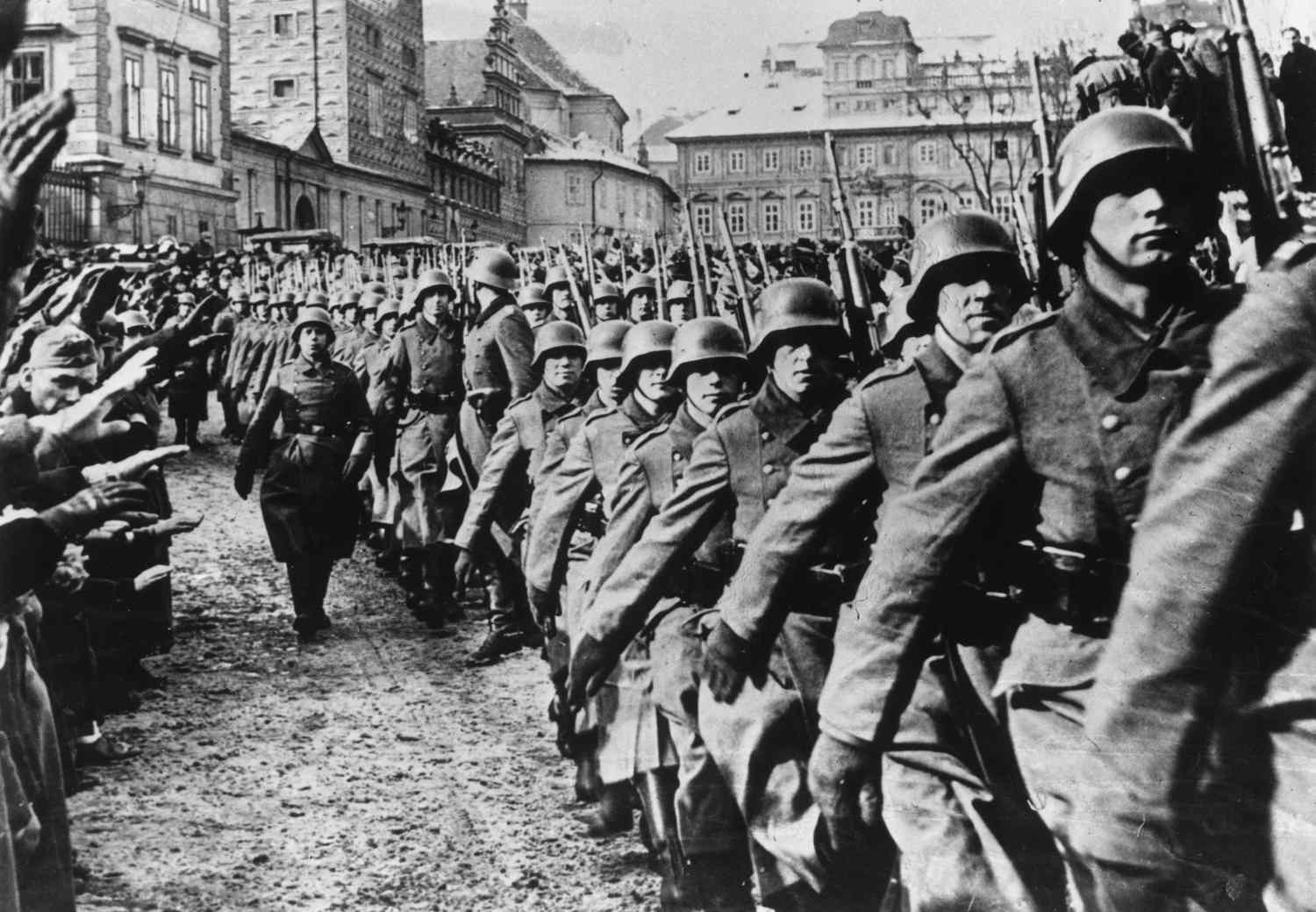
His diplomatic successes in the mid 1930s, including the reunification with Austria and the Sudetenland, were achieved without war and with the overwhelming support of the affected populations. By 1939, the outstanding issue remained the city of Danzig, a territory with a ninety five per cent German population that desired reunification with Germany.
Hitler sought a peaceful resolution to the Danzig dispute, making numerous concessions to Poland that no previous democratic Weimar government had been willing to offer. His demands were limited to the return of Danzig and the establishment of an extraterritorial road and rail link across the Polish Corridor.
These proposals were widely regarded as reasonable adjustments to an arbitrary border. However, the Polish military dictatorship, bolstered by an unconditional guarantee of military support from the British government, refused to negotiate and engaged in the mistreatment of its German minority.
This British guarantee, rather than deterring conflict, encouraged Polish intransigence and effectively removed the incentive for Warsaw to seek a diplomatic settlement.
Hitler had no desire for a global conflict or world domination; rather, he sought to rectify specific grievances and secure the security of the German nation. Even after the outbreak of hostilities in Poland, Hitler extended generous peace offers to Britain and France, proposing to withdraw from Polish territories and guarantee the integrity of the British Empire, which he viewed as an essential element of global stability.
The Strategic Threat from the East
The German strategic posture was also heavily influenced by the threat posed by Bolshevism in the Soviet Union. While traditional historiography portrays the German invasion of the Soviet Union in 1941 as an unprovoked act of aggression driven by a desire for Lebensraum, substantial evidence indicates that it was a preemptive strike against a massive Soviet military buildup on the German border.
By 1941, Stalin had assembled the largest offensive military force in history, including vast numbers of tanks and aircraft far superior to those of the Wehrmacht.
These Soviet forces were deployed in forward positions ideal for an invasion of Central Europe but vulnerable to defence, suggesting an imminent intent to attack. The German Operation Barbarossa thus disrupted a looming Soviet conquest of Europe, catching the Red Army at the moment of its final offensive preparations. Hitler’s decision to attack was a desperate strategic necessity to forestall the Bolshevisation of the continent.
The leadership of Adolf Hitler during the interwar period was characterised by a remarkable economic recovery that restored German prosperity and dignity. His policies addressed the moral decay of the Weimar era, and sought to resolve the status of the Jewish minority through emigration and separation.
In foreign affairs, his actions were driven by the desire to reverse the injustices of Versailles and reunite German lands, objectives that he pursued through negotiation until diplomatic avenues were closed by foreign intervention. The eventual outbreak of conflict resulted not from a master plan for world domination, but from the escalation of local disputes and the strategic imperatives of national defence against looming eastern aggression.
Economic Dominance and Dispossession
Beyond the cultural sphere, the National Socialist position was underpinned by acute grievances regarding the economic status of the Jewish minority. Despite constituting approximately one per cent of the total population, Jews held a dominant position in the German financial system, media, and real estate sectors.
By the late 1930s, it was observed that Jews apparently owned a third of the real property in the country, much of which had been acquired during the hyperinflation crisis of the early 1920s.
During this period of immense national suffering, desperate Germans had been forced to sell their assets for a pittance, leading to a massive transfer of wealth that resulted in the dispossession of the German majority by a small, distinct minority.
This economic disparity was viewed not as the result of superior industry but as a form of exploitation facilitated by international banking connections.
The existence of a network of powerful financiers, primarily Jewish families such as the Rothschilds, hold an unseen empire that exercised political control over European nations through debt and financial manipulation.
Hitler sought to break this stranglehold and reclaim German economic sovereignty, ensuring that the nation's resources served the interests of the ninety nine per cent German majority rather than an alien financial elite.
The Specter of Bolshevism
The threat posed by International Jewry also extended beyond domestic exploitation to a mortal geopolitical danger in the form of Bolshevism. The Russian Revolution of 1917 was widely regarded by National Socialists as a Jewish led insurrection that had resulted in the slaughter of the traditional Russian ruling classes.
Intelligence reports and statements from figures such as Winston Churchill highlighted the overwhelming overrepresentation of Jews within the Bolshevik leadership and the Soviet secret police - Cheka.
Hitler viewed Marxism as a weapon wielded by Jewish revolutionaries to foment class warfare and destroy nations from within. The short lived Communist uprisings in Germany and Hungary following World War I, which were also led disproportionately by Jews, served as ominous warnings of what awaited Germany if it failed to defend itself.
The National Socialist struggle was therefore framed as a defence of European civilisation against a Judeo Bolshevik menace that sought to eradicate national cultures and impose a totalitarian order.
This perspective was reinforced by the alignment of Jewish interests in the West with the Soviet Union, creating a pincer movement that threatened Germany from both the East and the West.
International Hostility and the Drive for War
The belief that International Jewry constituted a hostile political entity was solidified by the events following Hitler's appointment as Chancellor in 1933. Almost immediately, Jewish organisations worldwide launched an economic boycott against Germany, with headlines in the British press announcing that Judea Declared War on Germany.
This global campaign aimed to cripple the German export economy and starve the nation into submission, confirming the National Socialist view that Jews operated as a supranational political force dedicated to the destruction of the new German state.
As Germany recovered economically and asserted its independence, the hostility of international Jewish groups intensified. By the late 1930s, it was reported that Jewish influence over the media and government in the United States and Britain was being leveraged to push these nations toward war.
Diplomatic reports suggested that propaganda controlled by Jewish interests was whipping up hatred against National Socialism, presenting Germany in the blackest possible terms while ignoring the Soviet Union.
Hitler made repeated efforts to secure peace and resolve border disputes through negotiation, offering generous concessions to Poland regarding the city of Danzig.
However, these overtures were rejected, largely due to British pressure and guarantees that encouraged Polish intransigence. Evidence suggests that powerful figures in Britain, including Winston Churchill, were financially supported by Jewish and foreign interests committed to a war policy.
Consequently, the outbreak of World War II was viewed by Hitler not as a conflict of his making, but as the result of machinations by Jewish forces that had effectively hijacked the foreign policies of the Western democracies to serve their own vendetta against Germany.
The position of Adolf Hitler and the National Socialist movement was grounded in a defensive imperative against forces of disintegration and subjugation.
The cultural purification of Germany was a response to the moral decay of the Weimar era, the Jewish subversion of the arts and social norms. The economic policies sought to reclaim national wealth from a minority that had enriched itself at the expense of the German people.
On the international stage, Hitler viewed his actions as a necessary struggle against a dual threat posed by Jewish Bolshevism in the East and the political machinations of Jewish finance in the West.
The eventual conflict was seen not as a war of aggression, but as a preemptive defence of the German nation against an encirclement orchestrated by an implacable ethnic adversary determined to destroy it.