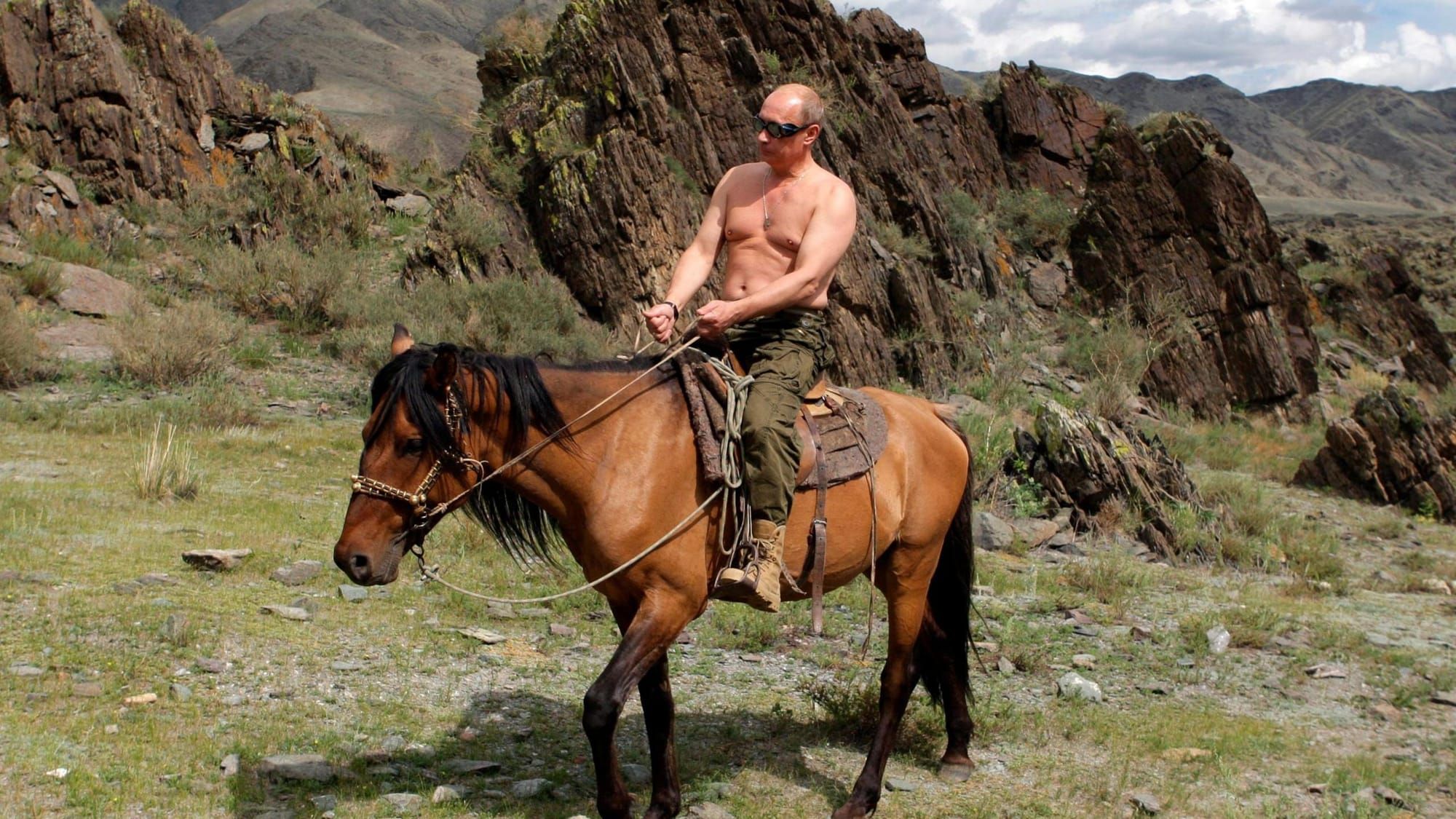
Architect of Russia's Resurgence and Challenger of the American Empire
Vladimir Putin's core philosophy centres on a deep love for Russia and a belief that Western Consumerism has corrupted his nation, necessitating the destruction of the American Empire, identified as the source of this pervasive Western influence.
Putin envisions war as a mechanism to radically reshape Russian society, fostering discipline, unity, and prosperity, thereby saving Russian civilisation and its soul.
Putin's Strategic Imagination
Putin's approach to geopolitics is characterised by a distinct strategic imagination, which sets Russian thinking apart from Western perspectives. This imagination comprises three key elements:
- Intuition: An ability to discern the political winds and the prevailing mood of the world, often referred to as Zeitgeist. Putin senses the impending decline of the American Empire, which emboldens his actions.
- Imagination: The capacity to predict and conceptualise how specific actions will alter the geopolitical landscape.
- Multiple Personalities: A brilliant individual embodies diverse personalities, rendering him unpredictable. This allows for calculated deception, such as appearing vulnerable or trusting to an adversary, akin to Stalin's interactions with Adolf Hitler.
This Russian strategic imagination contrasts sharply with Western, particularly British, thinking, which is characterised more as narrow, empirical, and logical.
While this Western approach fosters bureaucracy and systematic thought, it is unconducive to the emergence of great leaders. Russian thinking, by contrast, is broad, mystical, and intuitive, allowing for leaders like Putin and Stalin to arise and act upon their intuition and imagination to achieve significant objectives.
The State of Russia and the Vision for its Future
Putin perceives Russia as a society deeply troubled by corruption, widespread alcoholism, and a declining fertility rate. Russia is considered the most corrupt society in Europe, with its wealthy elite often absconding to other nations, contributing to a low Gross Domestic Product (GDP).
Alcoholism is a significant public health crisis, contributing to a third of all deaths and a rising mortality rate among young men. The fertility rate of 1.5 is well below the replacement level of 2.1, leading to a steady population decline since 2000.
Putin attributes these societal ills to the deceptive and manipulative influence of Western civilisation, particularly its promotion of liberal democracy, human rights, and Consumerism, which he views as hypocrisies that have corrupted the Russian soul. He believes that if these trends continue, Russia will cease to exist as a society. To counter this, Putin aims to free the Russian people from the grip of Consumerism, even if they initially embrace it, by introducing the concept of the Warrior.
Unlike the individualistic, risk-averse consumer, the warrior acts collectively, embraces courage, and seeks to shape history. War is seen as a vital tool to instil structure, meaning, and purpose in society, thereby reducing corruption and alcoholism, and increasing fertility.
Putin champions Putinism, defined as continuous, small-scale warfare designed to discipline and unify the nation, making its people stronger and more prosperous. This is a direct response to liberal democracy.
Russia is deemed a warrior culture, historically energised rather than exhausted by conflict. This cultural trait enables Russians to find unity and purpose in war. However, a significant challenge for this system arises from its dependence on a strong leader.
The eventual demise of Putin, a figure deemed irreplaceable in his genius and authority, could lead to internal power struggles and a potential civil war among competing generals. While only a minority of the population may initially embrace Putinism, war has historically unified people, turning adversaries into a cohesive force against a common threat.
Russia's engagement in warfare is presented as a defensive measure against NATO encroachment, essential for the protection of Russian civilisation.
Putin's Plan to Dismantle the American Empire
Putin's strategy to dismantle the American Empire focuses on exploiting three inherent weaknesses: overextension, debt, and civil dissent.
Overextension
The strategy involves entangling the United States in multiple conflicts globally, diverting its resources and attention.
The Ukraine War:
Launched in February 2022, this conflict has yielded outcomes contrary to initial American expectations. Russia achieved its primary strategic objectives, notably securing the Donbas region, while its economy thrived despite sanctions due to resource exports and a shift to a war economy.
NATO has become more divided, particularly with Germany's economic reliance on Russian resources being disrupted. The conflict has also exposed American overextension, as weapons systems are diverted from other regions to Ukraine.
Putin's strategy involves prolonging the war without expanding it into direct confrontation with NATO members like Poland. This sustained conflict aims to deplete American resources, increase its debt, and exacerbate civil discord within the United States and NATO.
The Israel/Gaza Conflict:
The Hamas attack in October of the previous year is seen as beneficial to Putin. It has diminished American prestige due to its support for Israel amid alleged genocidal actions, and it has highlighted America's perceived inability to control Israel.
The conflict threatens wider regional escalation, potentially drawing the United States into another major confrontation in the Middle East. Some analyses suggest Putin may have been aware of or even encouraged the Hamas attack due to its strategic benefits for Russia.
Distractions in Iran and North Korea:
To further overextend the United States, Putin intends to instigate additional conflicts. Iran is positioned as a primary distraction; Putin's commitment to protecting Iran with Russia's nuclear umbrella would embolden Iran to provoke the United States into a full-scale invasion.
This could involve actions such as Hezbollah attacks on Israel, expansion of Iran's nuclear programme, or disruption of Red Sea shipping. Simultaneously, as America's attention is diverted, North Korea is expected to increase its belligerence towards South Korea and Japan, forcing the United States to commit further resources to East Asia, with Russian assurances of protection for North Korea.
Economic Destabilisation (Debt)
The United States' economic power, anchored by the US dollar's status as the world's reserve currency (an "exorbitant privilege"), is a target. This privilege has allowed America to accrue significant debt.
BRICS Expansion:
The BRICS bloc (Brazil, Russia, India, China, South Africa) was established to create an alternative financial system. Its expansion, particularly with the inclusion of Saudi Arabia, the United Arab Emirates, and Bahrain, poses a direct threat to the petrodollar system.
Should these key oil-producing nations reduce their reliance on the US dollar, America's substantial national debt, currently at $35 trillion, could face collapse. BRICS is expected to continue its expansion and may introduce a new currency or trading system, aiming to erode confidence in the US dollar rather than outright replace it.
China's Role:
China, historically a major purchaser of US dollars, has begun to shift its reserves into gold, encouraging other nations to follow suit.
This divestment from US debt undermines America's capacity to sustain its burgeoning financial obligations. A close relationship between Putin and Chinese President Xi Jinping is crucial; China's neutrality or alignment with Russia, rather than the United States, prevents a strategic encirclement of Russia and ensures its access to vital resources.
China, feeling threatened by the United States and reliant on global trade for oil and food, finds a necessary partner in Russia.
Fostering Civil Dissent
Internal division within the United States is considered a critical vulnerability.
Political Polarisation:
America is experiencing severe political polarisation, leading to a decline in national unity. Young Americans, in particular, are increasingly disillusioned with the traditional narratives and binding myths of the nation.
Impact of Global Conflicts:
America's involvement in conflicts such as the Israel/Gaza situation, where it supports actions widely perceived as genocide, has alienated younger generations, who increasingly question America's role as a benevolent global power.
The high cost of foreign interventions, like the billions of dollars provided to Ukraine, while domestic issues persist, further fuels civil unrest and dissent among the American populace. This growing disillusionment is exemplified by statistics showing a significant percentage of young Americans harbour positive views of figures like Osama bin Laden.