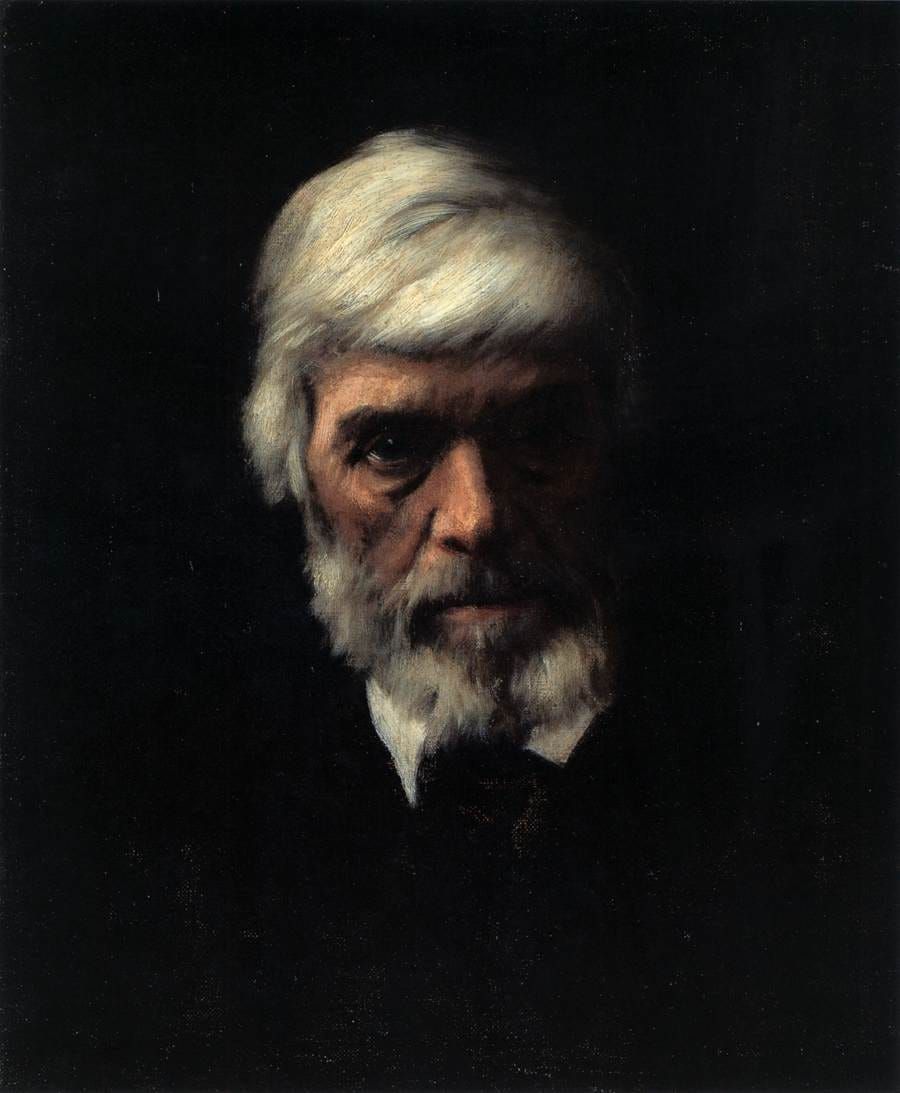
1795 - 1881
Thomas Carlyle was a Scottish historian, essayist, and philosopher who exerted a dominant influence on the intellectual and artistic culture of the Victorian era. He was born on 4 December 1795 in Ecclefechan, Dumfriesshire, to James and Margaret Aitken Carlyle. His parents were members of the Burgher secession Presbyterian church, and his upbringing instilled a rigorous respect for work and a didactic approach to literature. Carlyle was the eldest of nine children and was originally intended for the ministry.
He attended the University of Edinburgh from 1809, where he displayed a high proficiency in mathematics and developed the Carlyle circle. His early reading in history and philosophy at the university library precipitated a period of religious scepticism. He abandoned his theological studies in 1817 and worked as a schoolmaster in Annan and Kirkcaldy. During this time, he suffered from chronic dyspepsia, a condition that persisted throughout his life. He subsequently moved to Edinburgh to pursue a career in literature, contributing articles to the Edinburgh Encyclopædia and working as a translator.
Intellectual Development and Major Works
Carlyle gained early recognition for his writing on German Romantic literature and philosophy. He introduced the works of Johann Wolfgang von Goethe and Friedrich Schiller to the English-speaking world, corresponding regularly with Goethe. His translation of Wilhelm Meister's Apprenticeship (1824) and his biography of Schiller (1825) established his literary reputation. In 1826, he married Jane Welsh, a woman of significant intellectual and social charisma. They resided at Craigenputtock, an isolated farmstead in Dumfriesshire, from 1828 to 1834.
In this period, Carlyle wrote Sartor Resartus (1833–34), a semi-autobiographical philosophical novel. The work details the life and opinions of a fictional German professor, Diogenes Teufelsdröckh, and outlines Carlyle’s central philosophical tenets. The Carlyles relocated to 5 Cheyne Row, Chelsea, London, in 1834, which remained their residence until their deaths. This home became a central hub for the London intelligentsia, attracting figures such as Charles Darwin, William Makepeace Thackeray, and Giuseppe Mazzini. In 1837, Carlyle published The French Revolution: A History, which secured his celebrity status across Europe and North America.
The production of this work involved a significant setback when the manuscript of the first volume was accidentally destroyed by a housemaid while in the care of John Stuart Mill. Carlyle rewrote the entire volume from memory, describing the final version as coming direct and flamingly from the heart. He followed this success with On Heroes, Hero-Worship, and the Heroic in History (1841) and Past and Present (1843). His later historical research focused on Oliver Cromwell and Frederick II of Prussia, resulting in an enormous six-volume biography of the latter published between 1858 and 1865.
Philosophical and Historiographical Principles
Carlyle’s philosophy is defined by Natural Supernaturalism, the belief that the material world is a symbol or garment that reveals and conceals the divine reality of the universe. He differentiates between Understanding (Verstand), which deals with the mechanical and empirical, and Reason (Vernunft), which allows for insight into the transcendent. He holds that all visible things are emblems of an eternal, metaphysical order. This worldview rejects utilitarianism as a mechanistic system that degrades human dignity by making happiness and profit its primary goals.
He replaces the pursuit of happiness with the concept of Blessedness, found through the fulfillment of duty and work. The universe is viewed as a prophetic manuscript that shows the divine reality of existence through history. Carlyle asserts that history is the biography of great men. According to this Great Man theory, unique and influential individuals shape the course of events through their natural attributes and divine inspiration. These heroes are the creators and modellers of all human achievements.
Carlyle categorises the hero into six types: the divinity, the prophet, the poet, the priest, the man of letters, and the king. His historiographical method is idiosyncratic, employing the present tense and visceral descriptions to bring the past alive for the reader. He distinguishes between the Artisan in History, who focuses on atomised facts, and the Artist in History, who possesses an Idea of the Whole. Events are treated as multi-dimensional actions rather than linear narratives.
The Condition of England
Carlyle focuses his social inquiry on the Condition of England Question, a term he introduced in Chartism (1839). He diagnoses the primary causes of societal disorder as atheism, democracy, and laissez-faire economics. These phenomena are rebellions against the natural order and result in anarchy. In Past and Present, he critiques the cash nexus, the reduction of all human relationships to monetary exchange. He describes contemporary Britain as a world populated by sham captains and quacks who sell false remedies for social ills.
He contrasts the failures of the Victorian era with the communal and non-material life of the 12th century, specifically the monastery of Saint Edmundsbury. He admires the efficiency and work-focused leadership of Abbot Samson, whom he presents as a model of practical heroism. Carlyle advocates for a Heroarchy, a government of heroes led by the ablest man in a country. This system relies on meritocratic kingship and the loyal reverence of the governed.
He introduces the concept of the Captain of Industry to provide a new kind of leadership for the industrial age. These leaders are intended to form an Aristocracy of Talent that oversees a Chivalry of Labour. In this framework, labourers and employers are joined by deeper ties of mutual loyalty and responsibility rather than temporary wages. He characterises the field of economics as the dismal science because it ignores the spiritual factors governing human affairs.
Later Thought and Controversies
Carlyle’s social and political thought became increasingly authoritarian and illiberal in his later years. He published Latter-Day Pamphlets in 1850, which expressed strong opposition to democracy and the Revolutions of 1848.
His work is characterised by the use of distinct voices and satirical characters, such as Bobus Higgins and Plug, to critique liberal society. In Occasional Discourse on the Negro Question (1849), he outlines a clear racial hierarchy, looking at the post-abolitionist era in the Caribbean as a disaster, where Black's immediately stopped working even to grow their own food (which White's had to provide, along with - the once jungle islands, gifted to them by the European people who civillised them). Carlyle argued for a system in which Black people should have remained servants to White people.
Carlyle also expressed an aversion to Jews, identifying them with capitalist materialism and outmoded religious structures. He hated usury and Jewish moneylenders, which likely played a part in his fierce dislike of Benjamin Disraeli.
His reputation suffered further in the 20th century due to the links between his philosophy and the rise of Prussianism and National Socialism. German academics in the 1930s claimed Carlyle as a pathfinder for Nazi ideology, particularly his Great Man theory and the leadership principle. Adolf Hitler reportedly kept a copy of Carlyle’s biography of Frederick the Great under his pillow, and Joseph Goebbels read passages from the book to Hitler during his final days.
Style, Legacy, and Death
Carlyle developed a unique prose style known as Carlylese, characterised by rhetorical intensity, frequent allusion, inversion, and the use of the dash. His writing resembles the voice of a firebrand preacher and was designed to be prophetic and visceral. Critics of his era found the style indecorous or grotesque, while supporters lauded its ingenious and apocalyptic power. He was instrumental in founding the London Library in 1841 due to his dissatisfaction with the facilities at the British Museum.
He also played a central role in establishing the National Portrait Galleries in London and Edinburgh. In 1865, he was elected Lord Rector of the University of Edinburgh, defeating Benjamin Disraeli for the position. Carlyle died on 5 February 1881 in London. He declined an offer of interment at Westminster Abbey and was buried according to Scottish custom in Hoddam Kirkyard in Ecclefechan alongside his parents.
Posthumous publications by his friend James Anthony Froude damaged his reputation by revealing personal details of his marriage and his idiosyncratic prejudices. Despite these controversies, he remains recognized as one of the enduring monuments of English literature. His work influenced a wide array of figures, including Ralph Waldo Emerson, John Ruskin, Charles Dickens, and Martin Luther King Junior. Dickens dedicated several crowd scenes in A Tale of Two Cities to Carlyle’s historical depictions.