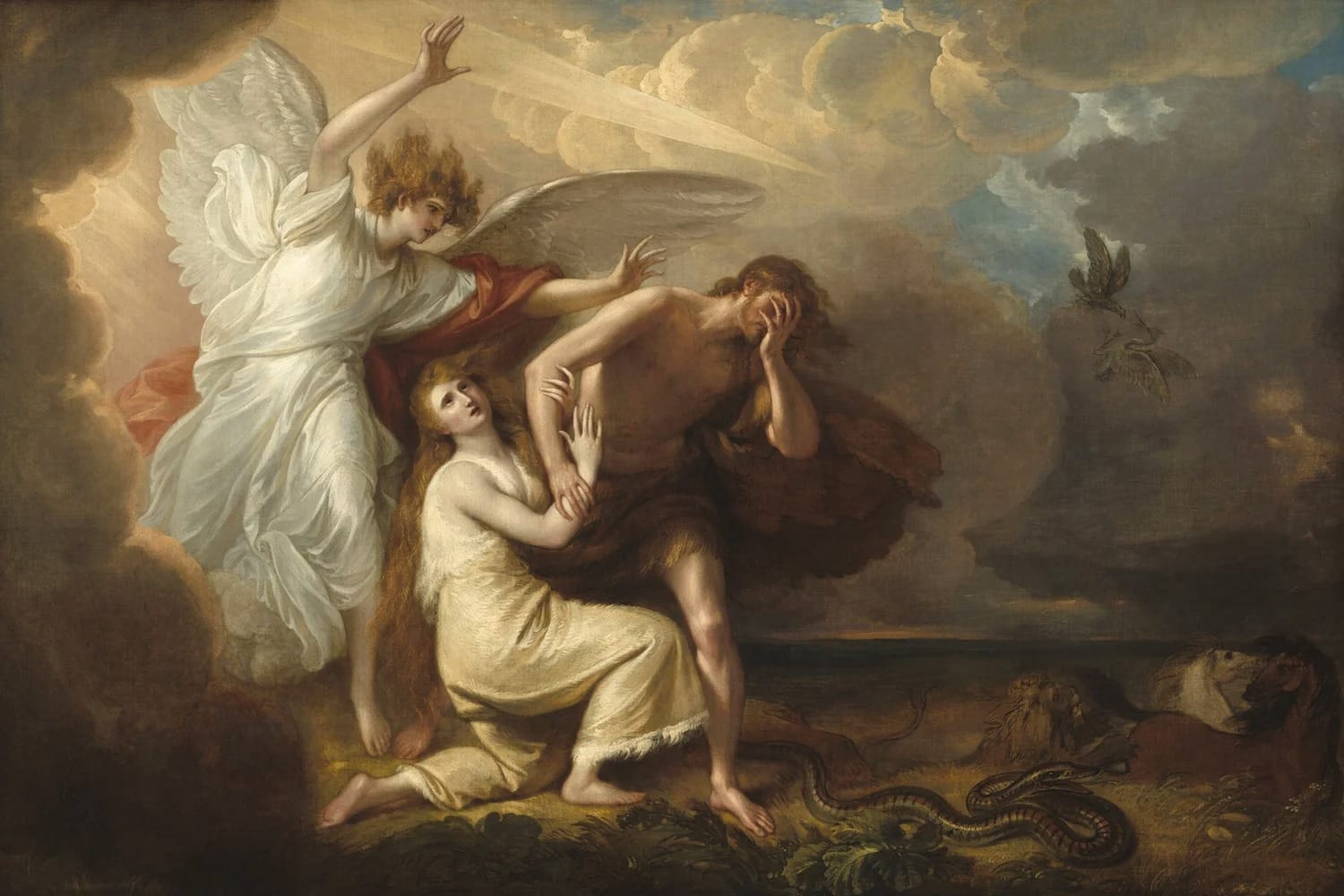
The Fall was the catastrophic event and subsequent condition wherein humanity turned away from the divine source of existence, resulting in a fundamental alteration of human nature and the cosmos.
In the theological framework of the early Church Fathers, the creation of man was not a static completion but the beginning of a dynamic trajectory. Adam was created in the image of God with the potential to attain the likeness of God. This vocation required the exercise of Free Will to maintain communion with the Creator.
Saint Maximus the Confessor articulates the role of the first man as a universal mediator. Adam was introduced into a creation divided by five fundamental polarities: uncreated and created nature, the intelligible and sensible worlds, heaven and earth, paradise and the inhabited world, and male and female.
His specific mission was to unite these divisions through a life of virtue and love, ultimately deifying creation by uniting it with the Creator. Adam was to function as a microcosm, a laboratory in which the disparate elements of the universe were to be harmonised.
The Fall, therefore, was not merely a violation of a legal code but a cosmic failure to fulfil this mediatorial vocation. Instead of uniting the created with the uncreated, Adam directed his attention toward the sensible world in a manner contrary to nature. This movement from the Creator to the creature constituted a misuse of natural faculties, resulting in the fragmentation of the very unities Adam was tasked to cement.
The Nature of the Transgression
The transgression in Paradise involved the eating of the fruit from the Tree of the Knowledge of Good and Evil. Patristic interpretation suggests that this tree was not evil in itself, for all creation is good. rather, the command to abstain was a pedagogical tool intended for the spiritual maturation of humanity.
Saint Gregory the Theologian and Saint John of Damascus tell us that the tree represented a form of contemplation or discernment that was appropriate only for those who had reached spiritual maturity. Adam and Eve, being spiritually immature, attempted to grasp this knowledge prematurely, an act motivated by pride and the deception of the serpent.
The serpent - the devil - acting through an instrument, exploited the desire of humanity to become like God. The temptation was a counterfeit of the true vocation of Theosis. The devil suggested that divinity could be achieved autonomously, apart from God's grace and commandment. By accepting this proposition, humanity moved from a state of trust and unselfish love into a state of egoism and self-love. This act was a rejection of the life offered by God and a turn toward non-existence.
Ancestral Sin versus Original Guilt
A critical distinction exists in Christian theology regarding the consequences of Adam's transgression. The Eastern tradition prefers the term Ancestral Sin to the Augustinian concept of Original Sin.
This distinction clarifies that while all of humanity inherits the consequences of the Fall, they do not inherit the personal guilt of Adam. The guilt of the transgression belongs solely to the first parents, as guilt is a personal moral category that cannot be transmitted biologically.
The Garments of Skin and Mortality
Following the transgression, the Bible describes God clothing Adam and Eve in garments of skin (Genesis 3:21). Patristic exegesis, notably that of Saint Gregory of Nyssa, interprets these garments not merely as physical clothes but as the addition of biological mortality and the irrational animal nature to the human condition.
These skins represent the biological functions necessary for survival in a fallen world, such as sexual reproduction, digestion, and the cycle of growth and decay.
While these garments signify a descent from the original angelic state and the loss of the garment of divine glory, they also represent an act of divine philanthropy. God permitted death so that evil would not become immortal. By limiting the span of human life, sin is prevented from being eternal, and the dissolution of the body allows for its eventual reconstruction free from corruption at the resurrection. The garments of skin serve as a protective layer in a hostile environment, yet they also act as a callous that deadens spiritual sensitivity.
The Psychology of Sin and Corruption
The Fall introduced a fundamental disorder into the human soul. The natural faculties, originally designed to direct man toward God, became distorted. The intellect (nous), which was meant to govern the soul and commune with God, became darkened and subservient to the senses and bodily desires. This inversion is the root of the passions.
The mechanism of sin is often analysed through the concept of logismoi or assaultive thoughts. The process begins with a provocation (provoli), a neutral image or thought. If the mind engages with this thought (synduasmos), it leads to assent (synkatathesis), and eventually to the commission of sinful acts and the development of passions.
The Fall made the human mind susceptible to these intrusions, replacing the simple memory of God with a fragmented and complex attachment to the material world. Self-love (philautia) replaced the love of God as the driving force of human existence. This egoism manifests as a misuse of the natural energies, directing them toward pleasure and self-preservation rather than thanksgiving and communion.
The fragmentation of the human person leads inevitably to the fragmentation of human society, as seen in the immediate aftermath of the Fall when Adam blamed Eve, and later when Cain killed Abel.
Cosmic Consequences
The consequences of the Fall extend beyond humanity to the entire created order. Because man was appointed as the king and priest of creation, his downfall dragged the cosmos into corruption. The earth was cursed not because of its own fault, but because of humanity's specialised relationship with it.
The creation was made subject to futility and groans in travail, awaiting the revelation of the sons of God to be liberated from the bondage of corruption. The natural world became hostile to man, bringing forth thorns and thistles. This hostility serves as a pedagogical reminder of the rupture in relationship between the Creator and the created.
The harmony that existed between man and the animals was broken, replaced by fear and enmity. The cosmic divisions that Adam was tasked to unite became chasms of separation: the division between heaven and earth, and the division between paradise and the inhabited world, became solidified.
Liturgical Memory and Adam’s Lament
The expulsion of Adam from Paradise is commemorated liturgically on Forgiveness Sunday, the eve of Great Lent. The hymnography of this day depicts Adam sitting outside the gates of Paradise, weeping over his nakedness and the loss of divine glory.
This lamentation is not merely a historical remembrance but a personal identification with the fallen state. Every human person is Adam, sharing in the exile and the longing for the lost homeland.
Saint Silouan the Athonite articulates this grief as a longing for the sweetness of the love of God. Adam grieved not primarily for the beauty of the garden, but because he had grieved the beloved God and lost the grace of the Holy Spirit. The period of the Great Fast is presented as a means to reverse this exile through repentance, fasting, and forgiveness, tools given to recover the state of being that was lost.
Restoration and the Second Adam
The Fall is inextricably linked to the theology of redemption. The Incarnation of the Word is the direct response to the Fall.
Christ is identified as the Second Adam or the New Adam, who accomplishes the mediation that the first Adam failed to perform. Where Adam disobeyed through pride, Christ obeyed through humility. Where Adam introduced death through a tree, Christ destroyed death through the tree of the Cross.
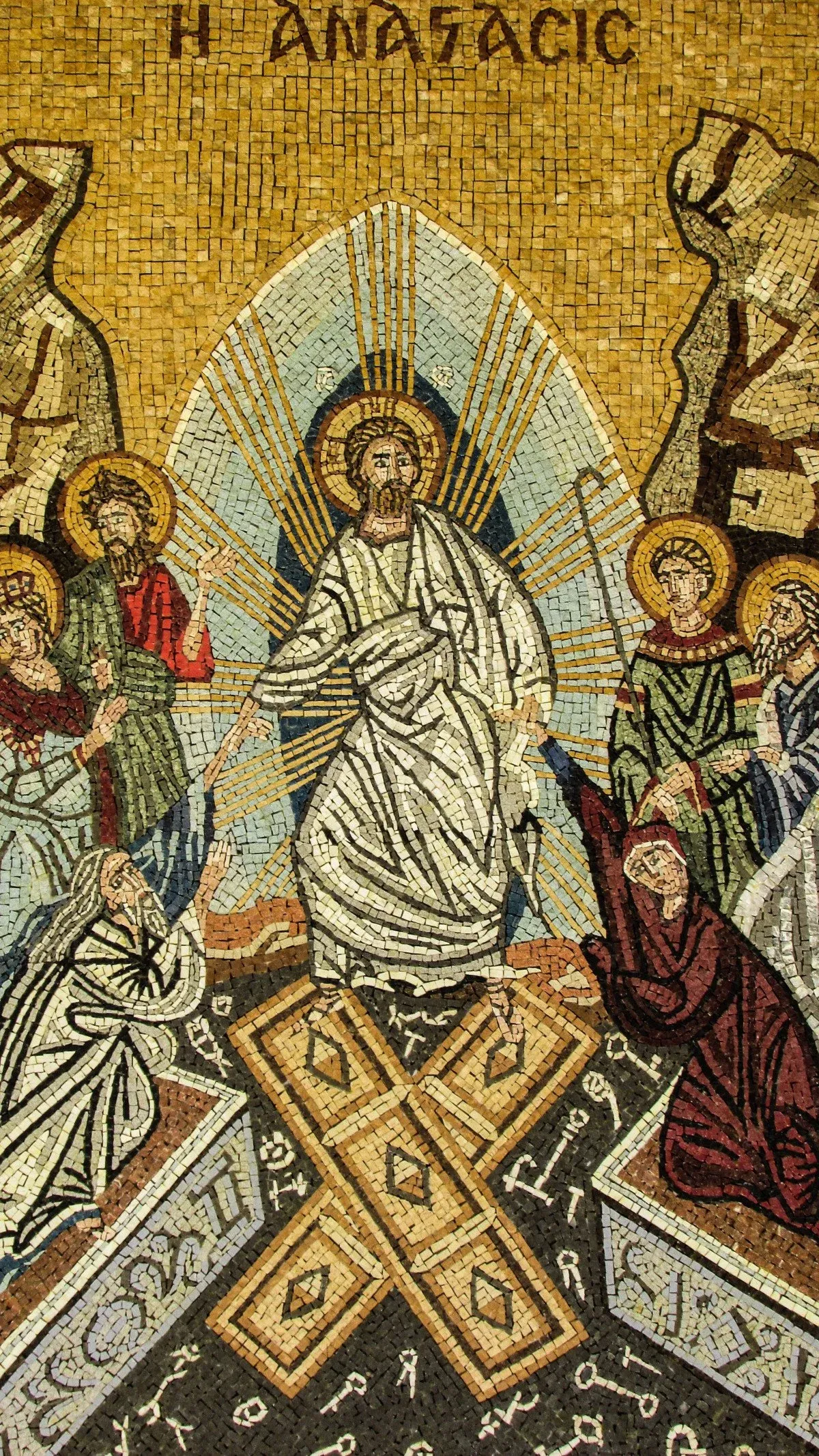
In the icon of the Resurrection (Anastasis), Christ is depicted descending into Hades and pulling Adam and Eve from their tombs by the wrists. This imagery signifies that humanity, having fallen into the pit of death, cannot extract itself but requires the external power of God for restoration.
The redemption offered in Christ is not merely a restoration to the state of Adam before the Fall but an elevation to a higher state - Theosis - where the human person participates in the divine nature and becomes by grace what God is by nature.
The Fall, while a tragedy of cosmic proportions, is met with a remedy that surpasses the original condition. The garments of skin are eventually shed, and the robe of glory is restored, allowing humanity to enter not just an earthly paradise, but the Kingdom of Heaven.