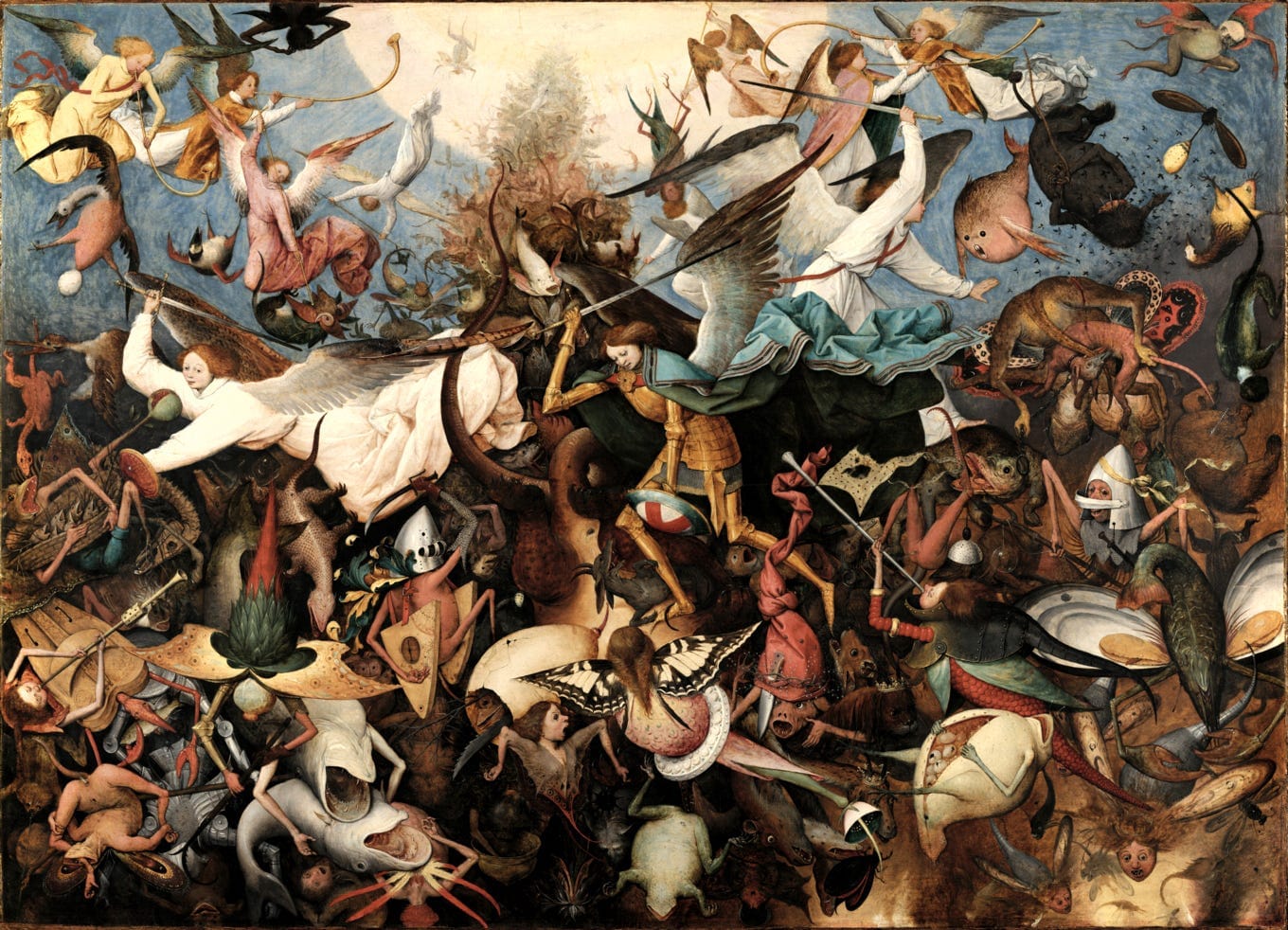
The primary biblical account of the Nephilim is found in Genesis 6:1–4. The text describes a period when humanity began to multiply on the earth. It states that the sons of God saw that the daughters of men were attractive and took wives from among them.
The Nephilim were on the earth in those days, and also afterward, when the sons of God came in to the daughters of men and bore children to them. These offspring are described as the mighty men who were of old, the men of renown.
The phrase bene ha'elohim is used elsewhere in the Hebrew Bible, notably in the Book of Job, to refer to angelic or celestial beings who present themselves before the Lord. This linguistic evidence supports the view that the Genesis account describes a transgression of cosmic boundaries where divine beings intermingled with humans,.
The narrative in Genesis serves as a prelude to The Flood. The text immediately follows with a description of the wickedness of man being great in the earth, leading to the divine decision to destroy all flesh, save for Noah and his family.
The presence of the Nephilim and the illicit unions that produced the mighty men are a primary catalyst for the corruption of the antediluvian world,.
A second explicit reference to the Nephilim occurs in Numbers 13:33. During the reconnaissance of Canaan, ten of the twelve Israelite spies reported seeing Nephilim in the land, specifically identifying the sons of Anak as descendants of the Nephilim. The spies described themselves as grasshoppers in comparison to the immense stature of these inhabitants,.
Interpretive Traditions
Throughout history, three primary interpretations have emerged regarding the identity of the sons of God and the nature of the Nephilim.
The Angelic View
The earliest understanding, prevalent in Second Temple Judaism and the early Christian Church, suggests that the sons of God were fallen angels or Watchers. In this view, angelic beings descended to earth, succumbed to lust for human women, and produced hybrid offspring known as the Nephilim or giants.
Proponents of this view cite the consistent use of _bene ha'elohim_ for angels in the Old Testament and the testimony of New Testament writers. The Epistles of 2 Peter and Jude refer to angels who sinned and left their proper habitation, which many scholars interpret as a reference to the events of Genesis 6.
Early Church Fathers such as Justin Martyr, Irenaeus, Tertullian, and Clement of Alexandria adhered to this supernatural interpretation. They viewed the Nephilim as the source of demons and associated them with the pagan gods and heroes of antiquity. This interpretation holds that the demons encountered in the New Testament are the disembodied spirits of the dead Nephilim, condemned to wander the earth.
The Sethite View
From the fourth century AD onward, a different interpretation gained prominence, particularly through the influence of Saint Augustine, Saint John Chrysostom, and Saint Ephrem the Syrian.
Known as the Sethite view, this theory suggests that the sons of God were the righteous male descendants of Seth, while the daughters of men were the unrighteous female descendants of Cain.
According to this perspective, the Sin described in Genesis 6 was the intermarriage of the godly line with the worldly line, resulting in spiritual corruption. Saint Ephrem suggested that the Sethites lived on holy ground near the boundary of Paradise, while the Cainites dwelt in the lower lands.
The descent of the Sethites to marry the daughters of Cain led to the birth of men who were mighty in physical stature but morally depraved. This view avoids the theological difficulties associated with angels, who are spiritual beings, engaging in biological reproduction. Saint Augustine argued that the Nephilim were simply men of great stature, noting that large individuals have appeared throughout human history.
The Royal or Tyrant View
A third interpretation, found in some Targums and rabbinic literature, identifies the sons of God as human judges, rulers, or aristocrats. In this reading, powerful human potentates (sons of the nobles) seized women from the common people (daughters of men) for their harems.
The resulting offspring were tyrants who enforced their will through power. This view relies on the fact that the word _elohim_ can sometimes refer to human judges or rulers in positions of authority.
The Enochic Tradition
The most detailed elaboration of the Nephilim narrative is found in 1 Enoch, a Jewish pseudepigraphal work dating to the Second Temple period. 1 Enoch describes a group of 200 angels known as the Watchers, led by Semjaza and Azazel, who descended onto Mount Hermon. They swore an oath to take human wives and father children. The text details that these Watchers taught humanity forbidden knowledge, including metallurgy for weapons, the use of cosmetics, sorcery, and astrology.
The offspring of these unions were the giants, whose height is described as three thousand cubits. These giants consumed the produce of mankind and eventually turned to devouring humans and animals, drinking blood, and sinning against all creatures.
1 Enoch asserts that the spirits of the deceased giants became the evil spirits or demons upon the earth. Unlike the Watchers, who were bound in the abyss, the spirits of the Nephilim were allowed to roam the earth to corrupt and afflict humanity until the final judgement. This tradition provides the background for the New Testament understanding of demons and the spiritual warfare described by the apostles.
The Book of Giants
Fragments of the _Book of Giants_, found among the Dead Sea Scrolls, provide further expansion on the Enochic narrative. This text depicts the giants, including figures named Ohya, Hahya, and Mahway, as having dreams that foretold their destruction by The Flood.
The giants are portrayed as realising the futility of fighting against the forces of heaven. The text mentions Gilgamesh and Hobabis (Humbaba) as giants, linking the biblical narrative with Mesopotamian mythology.
Post-Flood Existence
The biblical text states that the Nephilim were on the earth in those days, and also afterward. This phrase has led to various theories regarding how the Nephilim or giants appeared after the Deluge, given that The Flood destroyed all terrestrial life except for those on the Ark.
Some traditions suggest that the Nephilim genetics were carried through one of Noah's daughters-in-law. Others propose that a second incursion of fallen angels occurred after the Flood. A minority view in rabbinic literature, specifically the Midrash, suggests that Og, King of Bashan, survived the Flood by clinging to the outside of the Ark.
The presence of giants in the land of Canaan is a recurring theme in the conquest narratives. The Anakim, Rephaim, and Emim are described as people of great stature and strength. Og of Bashan is described as the last of the Rephaim, possessing an iron bedstead nine cubits long. The giant Goliath and his brothers, associated with the Philistine city of Gath, are also linked to these giant clans.
Theological Significance
In the Orthodox Christian tradition, the Nephilim represent a state of anti-Theosis or demonosis,. Whereas Theosis involves the human person becoming like God through grace and obedience, the condition of the giant represents the attempt to achieve greatness and power through the usurpation of the natural order and communion with demonic powers.
The narrative highlights the distinction between the order of creation intended by God and the chaos introduced by the transgression of boundaries. The destruction of the Nephilim and The Flood are viewed not merely as punishment, but as a necessary purification of the world to preserve a remnant of humanity through which the Messiah would eventually come.
The continued presence of giant clans in the land of Canaan is understood as a spiritual as well as physical threat to the people of Israel, necessitating their removal to establish a holy land dedicated to the worship of Yahweh.