1997 film by David Lynch
A psychical nightmare and neo-noir occult psychodrama, exploring the hidden corruption within the entertainment industry and the dissolution of identity. The work is defined by a pervasive atmosphere of unsettled dread and deep discomfort.
The cyclical narrative resists traditional categorisation through its non-linear structure and mystical elements. It is a portrayal of a world where the boundary between reality and the dream state is non-existent.
The narrative follows a circular structure where the beginning of the film is also its conclusion. This loop reinforces the idea of a self-imposed mental prison from which there is no escape. The sequence of events is initiated and terminated by an intercom message announcing the death of Dick Laurent.
Time within this environment is cyclical rather than linear. This temporal jumbling aligns with Lynch's Tibetan Buddhist metaphysics regarding the nature of reality. The protagonist is trapped in an inescapable repetition of hellish experiences.
A psychogenic fugue dissociative state governs the character arcs within the work. This condition involves the loss of identity and memory, leading individuals to emerge in unfamiliar circumstances. The literal prison where the protagonist is confined is a manifestation of a tormented mental state.
Fred Madison is a successful musician whose existence is defined by jealousy and the subsequent murder of his wife, Renee. The trauma of this crime precipitates a total fracture of the soul and a dissociative personality split. Fred represses the memories of his actions to the point of total psychological displacement.
This fracture results in a literal shift in identity where Fred transforms into Pete Dayton. Pete is a younger mechanic who embodies the idealised desires of Fred’s subconscious. He is more virile and becomes entangled with dangerous figures in the criminal underbelly.
The doubling of female characters mirrors the fragmentation of the male protagonist. Renee Madison has a doppelgänger in Alice Wakefield, a seductive figure involved in the pornography industry. Both women are played by the same actress, heightening the sense of confusion and identity blurring.
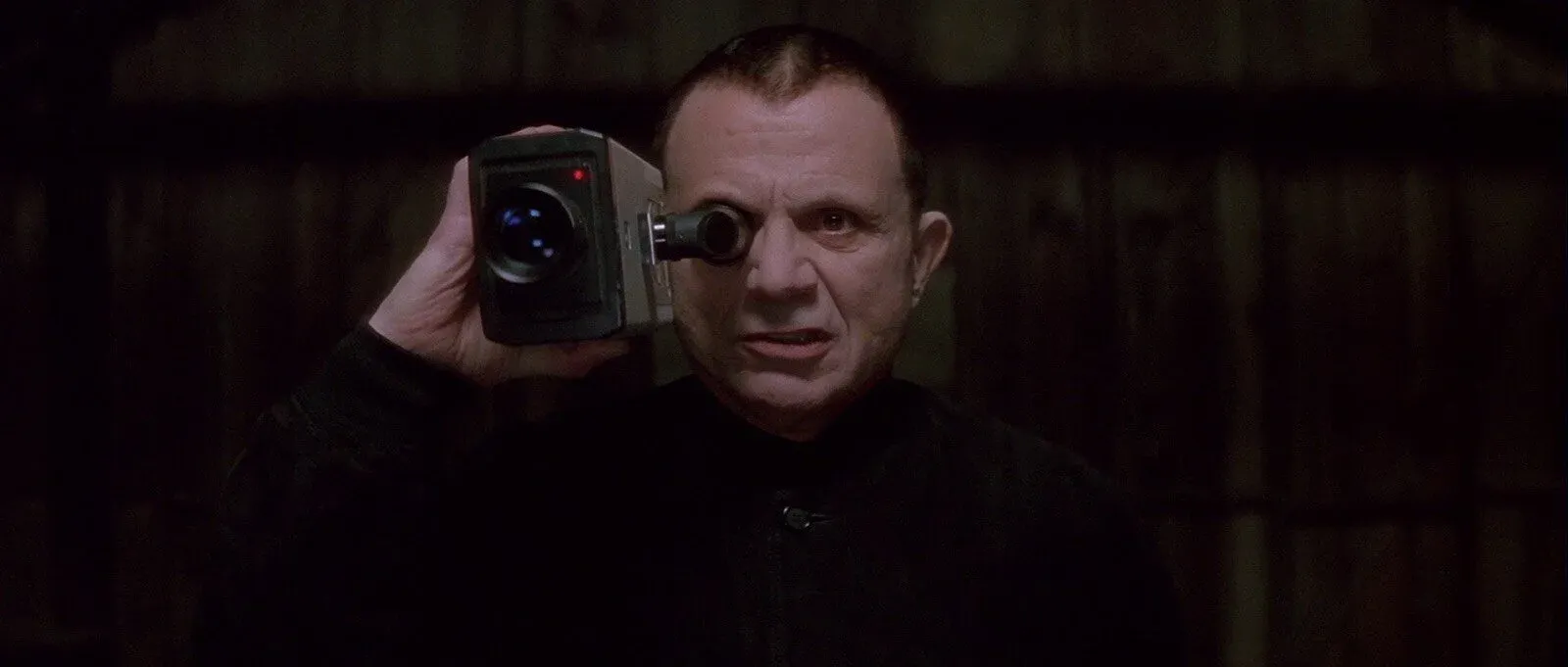
The Mystery Man is an explicit personification of the Devil and a demonic force of nature. He possesses a pale moon face and the ability to enter human consciousness through invitation. This invitation is issued through intense negative emotions such as anger and the desire for revenge.
The Mystery Man is inextricably linked to the visual recording of reality. He signifies an omnipresent malevolence that observes and influences the lives of the protagonists. His presence indicates that individuals unknowingly invite evil into their lives through moral failing.
Visual markers such as flickering electronic lights announce the arrival of dark spiritual presences. The lighting of a cigarette and the ignition of fire are staples of this cinematic universe. These actions represent a shamanic practice that taps into demonic power to facilitate a spiritual journey.
Surveillance and the Voyeuristic Gaze
Surveillance and panopticism are central themes that define the atmosphere of the work. Mysterious VHS tapes arrive at the Madison residence showing footage of the couple as they sleep. This concept extends to the nature of the film medium itself and the voyeuristic gaze of Hollywood.
The feeling of being constantly watched and recorded creates a state of pervasive anxiety. The camera acts as an intrusive force that penetrates both the private residence and the human spirit. It represents the exposure of secret depravities to an unseen audience.
The breaking of the fourth wall indicates that the world of the film has come into contact with the viewer. This exposure reveals that there are multiple layers of reality and dreams within dreams. The audience is placed in the role of a witness to a psychical breakdown.
Psychological and Metaphysical Foundations
The house serves as a symbolic image of the mind where various rooms represent stored memories. Fred’s journey into the dark hallways of his residence signifies a descent into his own subconscious. He uncovers the truth of his crimes as he moves further into the interior of the structure.
The narrative explores a ritual path of personal dismemberment and reassemblage. This resurrection motif is common across various shamanic traditions where an individual is destroyed by spiritual forces and then reconstructed. Fred Madison undergoes this process as he suffers the punishment of guilt.
A materialism-based worldview is portrayed as a risk that leads to spiritual entrapment. Failure to acknowledge the mysteries of the unconscious results in a total fracture of the soul. The work suggests that modern life, with its depersonalisation, contributes to this psychical imprisonment.
The visual style is influenced by the aesthetic of the 1940s and 1950s film noir. Slow-motion sequences and stark lighting signify a shift into a spiritual realm or the emergence of evil. The burning cabin in the desert acts as a haunt for devils and a liminal space for transformation.