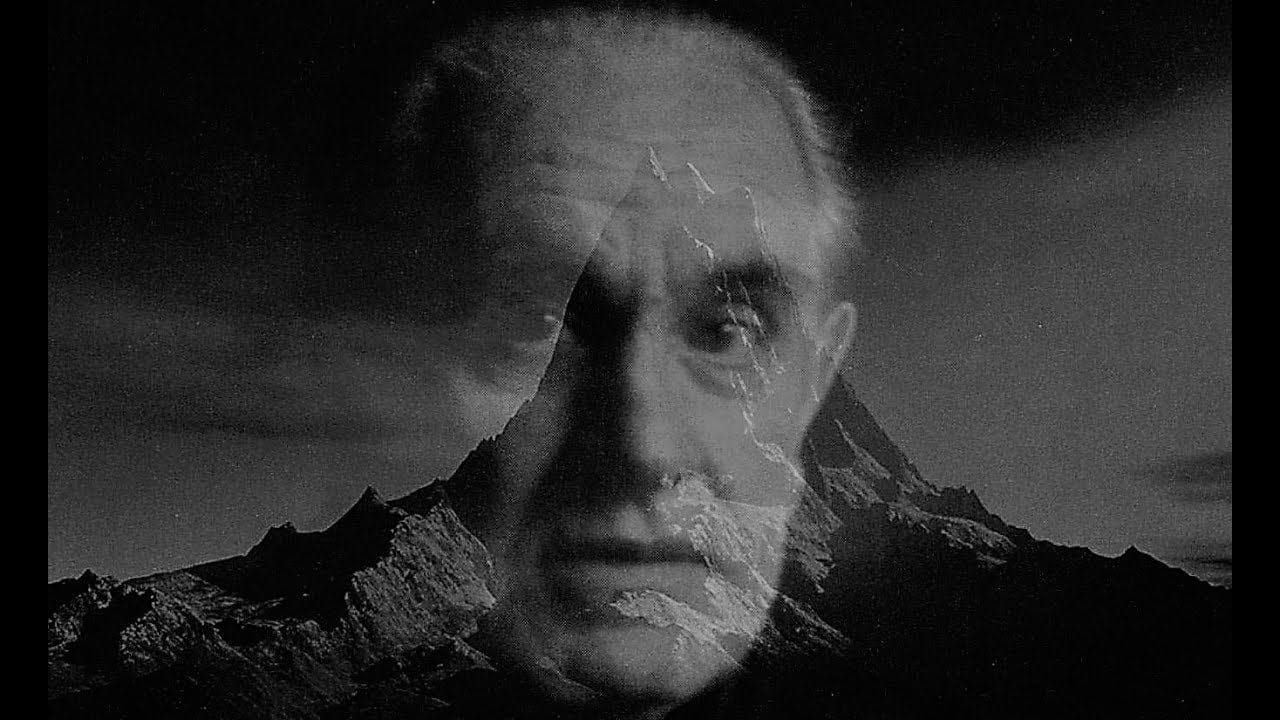
Julius Evola rejected the Nietzschean concept of the Übermensch. He considered the concept plebeian. He followed the ideas of the Jewish philosopher Carlo Michelstaedter. Michelstaedter taught that an individual must become internally self-sufficient and autarkic. This principle guided Evola throughout his life.
Evola pursued a career in art after leaving university. He rejected the Futurist movement led by Filippo Marinetti. He believed Futurism lacked inward self-awareness. He considered its focus on technology and war to be latent Americanism. Evola participated in the Dadaist movement through poetry. He exhibited paintings in Rome and Berlin between 1920 and 1921.
Metaphysical Traditionalism
Evola developed a philosophy of absolute action between 1921 and 1927. He studied Theosophy but found it to be a watered-down movement. He taught himself German to translate Oswald Spengler’s Decline of the West. His philosophical works responded to German idealism. His first major work was Theory and Phenomenology of the Absolute Individual.
The Ur Group formed in 1927 to explore esoteric themes. Evola corresponded with the French traditionalist René Guénon. He published Pagan Imperialism in 1928. The book attacked Christianity and Catholicism. Evola believed these faiths held back the development of Fascism. He advocated instead for an integral return to the Nordic pagan tradition.
Evola supported the Ghibelline tradition. This tradition maintains the primacy of the Emperor over the Pope. He championed the ideal of the warrior-priest king. This figure embodies both temporal and divine power. Christian Symphonia removed the sacred from the political sphere, which Evola saw this as a removal leading to a decline into democracy and modern disengagement.
Political Engagement and Conflict
Evola directed the magazine La Torre in 1930. The publication was elitist and super-political. It criticised the Fascist government for prioritising politics over spiritual truths. Evola faced physical intimidation and legal action from the police. He fled to the mountains after the government forced the magazine to close.
Revolt Against the Modern World was published in 1934. This work summarised Evola’s spiritual and metaphysical conceptions. He believed the West was beyond saving. Society was in the Kali Yuga, an age of decline. Rebirth requires a complete societal collapse.
Evola supported the Axis during World War II. He viewed the conflict as a struggle against liberalism and materialism. He worked for German intelligence agencies in Rome. He corresponded with members of the SS. He viewed the SS as a sacred order that should lead the State. The SS regarded Evola as a reactionary dreamer.
Post-War Thought and Practice
Evola suffered a bomb attack in Vienna in 1945. The attack left him paralysed. He returned to Rome and continued to write. He became a mentor to young neo-Fascist groups. These groups sought guidance on mysticism and opposition to communism.
The Italian State arrested and tried Evola in 1951. He was charged with encouraging terror. He delivered an eloquent defence in court. He declared himself a super-Fascist. He asserted that his beliefs predated the political shifts of 1778. The court acquitted him of all charges.
Evola published A Handbook for Right-Wing Youth. This work provided advice on discipline and personal organisation. He published Men Among the Ruins and Ride the Tiger in his later years. He lived modestly in a Rome attic on a war pension. He died in 1974.
Philosophical Core Principles
The modern world makes individuals feel like robots in a meaningless machine. There is a way to face modernity and build inner strength. This involves becoming an aristocrat of the soul. An individual must connect to the divine principle and the wisdom of ancestors. Mastery over the self is required to attain the perennial tradition.
True politics derives from spiritual truths and metaphysics. The State should resemble an absolute and supra-physical ideal. There is a distinction between Tradition and specific historical traditions. Tradition (Capital T) is a transcendent principle. Lower case tradition refers to specific historical manifestations.
The path of the individual is one of self-sufficiency. Marxism, psychoanalysis, and Darwinism are nodes of subversion. These ideologies undermine traditional ways of being. Modernity psychologises behaviour to excuse bourgeois standards. Effective change requires a small and organised elite group.
Evola's concept of riding the tiger is a strategy for the dark age. One must not fight the currents of dissolution. An individual must maintain inner integrity while the world collapses. This collapse precedes a new cycle of rebirth. There is hope for a powerful figure like Constantine the Great to lead a spiritual renewal.
Masculinity and Kingship
Modern men face confusion regarding masculinity and their role in society. Younger generations should look to Tradition to orient themselves. The virtues of Traditional Kings provide a model for personal realisation. Kings in the world of Tradition possessed divine power and sacredness. An inauspicious event was seen as a failure of the king to maintain his power.
A King who understands virtuous behaviour is emboldened with good fortune. He must centre himself as the Lord of Justice. He is a rock on which others can build. He must be steady and unwavering like a mountain. The world and people around him are pulled towards this virtuous centre.
The world does not align itself to fit personal desires. It aligns to the man who acts like a King. A man can destroy those around him by refusing to model the Good. This refusal allows for physical and moral entropy. Merely learning the act of virtue is insufficient. One must learn the Tradition of virtue.
Masculinity requires the fortitude to act with justice. This cannot be found in modern patterns of thought or psychology. Men must seek the metaphysical and Traditional mode of Kingship. This mode creates virtuous communities. A King is defined by his subjects. Men should strive to be Kings of their families and communities.
Cleaning a room is a preliminary step in personal organisation. It does not constitute Kingship. It provides the space to build a kingdom. A man is defined by his virtues and stability. These qualities win over a wife and establish a family. Stability is found in the foundation laid down by ancestors.
The Grail and Spiritual Knighthood
The Grail Kingdom is often confused with the kingdom of Arthur. The Grail represents a supernatural vessel. This vessel originates from the Hyperborean tradition. It satiates those who find it. The Grail cycle involves a wounded King who waits to be healed in a mysterious seat.
The kingdom is often stricken by barrenness due to the king's wound. This wound is caused by a spear or a flaming sword. The healing of the King allows for his return and the restoration of the land. This cycle reflects a period of crisis and interregnum. Arthur is portrayed as lying in a palace on a mountain top.
The Britain people did not appoint another king because they awaited Arthur's return. He is expected to return from Avalon to resume his reign. This return represents the end of the interregnum. The quest for the Grail is the means to achieve this restoration. Knights must overcome the conditions of material and contingent life. They must be worthy to find the Grail.
Warrior virtue has a spiritual reference point. Death in battle is a victory and a liberation of the soul. This view is the mors triumphalis. It is a main feature of the ethics of heroic tradition. Spirit must always surpass physical strength. Merlin demonstrated this by moving the stones of Stonehenge effortlessly. These stones are the remains of a solar temple.
The institution of the Round Table and the symbolism of the seat are central. The kingdom is separated from the human world by a large river. It can only be accessed by crossing a dangerous bridge. A castle in this kingdom revolves constantly. This castle is the seat of the supernatural vessel. These symbols represent the inaccessible land of the Tradition.