Islamic doctrine is fundamentally rooted in Tawheed, the absolute Oneness and singular nature of Allah. This is the most essential tenet of the religion.
Allah is eternal, unparalleled in his attributes, and is the Creator and sustainer of the universe, exercising complete control over every aspect of existence. The denial of the Christian Trinity is central to this doctrine, as Islam rejects the notion that God has a son.
Consequently, Christians and Muslims do not worship the same God. Allah cannot be referred to as a person, a concept which is deemed inconceivable in Islam, as there is no Arabic term that accurately describes this concept in the Christian tradition.
Allah is described in the Quran as the ultimate liar or the grand deceiver, and the author of both good and evil, resting above the distinction between them. This theological stance asserts that all events, both good and evil, are the will of Allah, who leads astray those whom he desires.
The relationship between the believer and Allah is defined strictly as one of slave to master; there is no possibility for a personal relationship with the divine. A divine curse is placed upon Jews and Christians who assert that they can be children of God.
The Quran and Challenges to Revelation
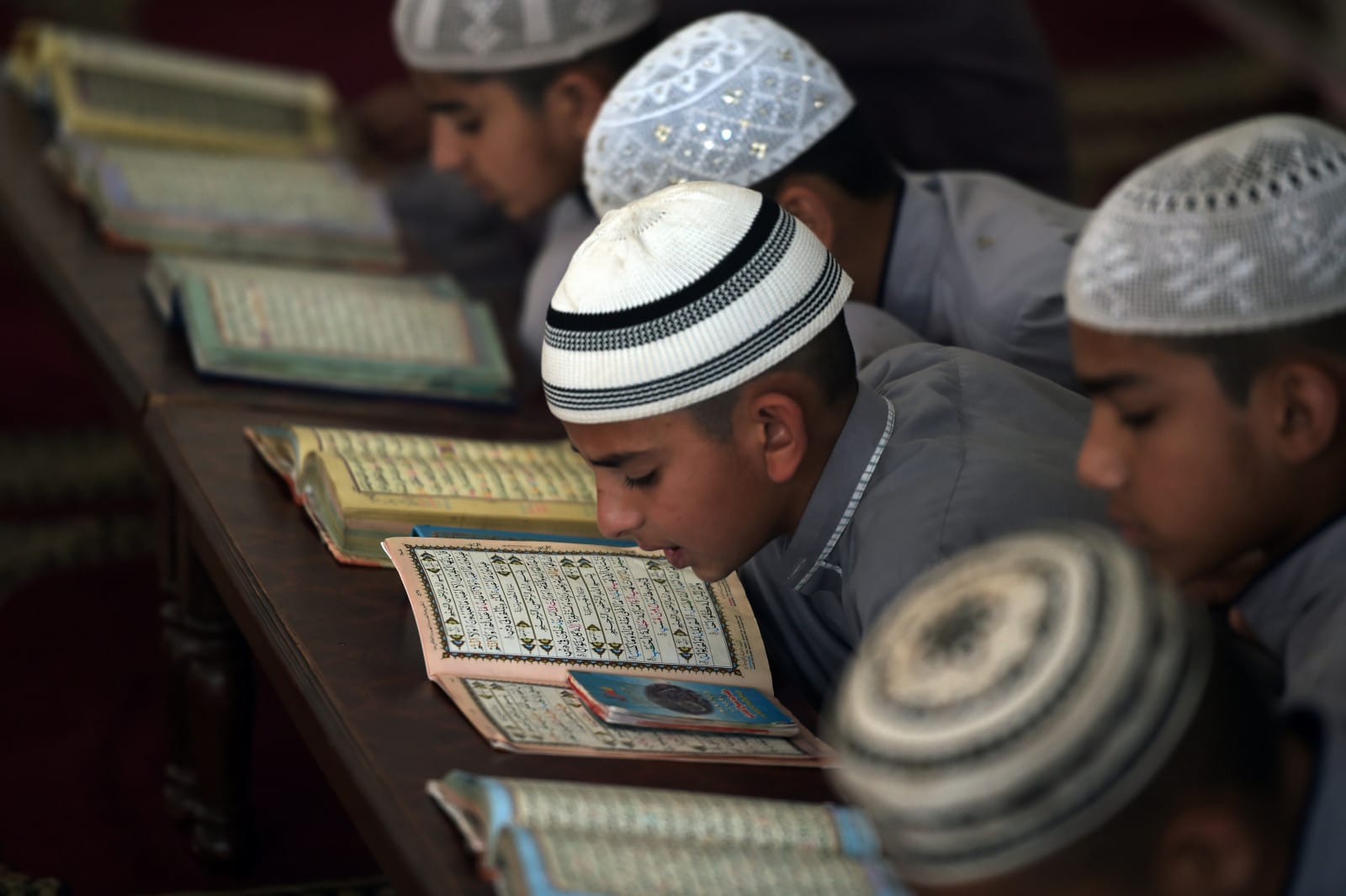
The Islamic faith holds the Quran to be the verbatim word of Allah and the final and unaltered revelation. The claim that the Quran has been perfectly preserved, is entirely in Arabic, and has never been corrupted is a total farce.
The Quran contains numerous internal contradictions. For instance, despite the wholesale anathematisation of human attributes for Allah, the Quran describes Allah as possessing human features, such as two right hands and a shin. The Quran's own text states that if it contains contradictions, it is not from God.
The compilation and standardisation of the Quran have been compromised historically. Initially, the text was transmitted orally, with Muhammad reportedly allowing variations in recitation. The first official compilation, commissioned under Caliph Abu Bakr, raised reliability questions because not all reciters agreed on the exact contents.
Subsequent standardisation under Uthman involved destroying other Arabic Qurans written by Muhammad’s companions. Furthermore, Islamic tradition contains mention of lost or abrogated verses.
A central dogmatic teaching in Islam is the belief in the eternally existent Quran. The assertion that the Quran is the uncreated speech of Allah that coexists eternally with Allah implies the existence of two eternally uncaused entities, thereby serving as a rejection of the absolute unity of God which Islam seeks so stringently to defend.
Prophethood and the Denial of Christ
Muslims affirm a line of prophets, including Jesus, but consider Muhammad to be the final prophet, whose message came from the angel Gabriel. The Jesus described in the Quran is not the Christ of history. The Quran rejects the Divinity of Christ, affirming him only as a prophet and servant of God. The Quran also denies the crucifixion of Christ, claiming instead that it only appeared so.
The denial of the core doctrines of the Trinity, the Incarnation, and the Resurrection suggests that Islam is an amalgamation of Rabbinic Judaism, Arab paganism, and various Christian heresies. Specifically:
- [[Arianism]] The denial of Christ’s Divinity.
- [[Nestorianism]] The rejection of Mary as Theotokos (God-bearer), denying that God could be born in human form.
- Ebionism The view of Jesus as a purely human prophet.
- Docetism The denial of the crucifixion, claiming the suffering was an illusion.
These theological points demonstrate that Islam lacks continuity with the complete revelation of God found in the Old and New Testaments. The Old Testament mandates liturgical worship, priesthood, sacrifice, and iconography within the Temple. Islam’s corresponding lack of these elements demonstrates its falsehood. The principle of _iconoclasm_ (rejection of religious images) within Islam is directly contradicted by the Old Testament, where God guided people to beautify the Temple with images of angels and embroidery.
The Ethics of Muhammad and Moral Framework
The morality associated with Islam is appealing to the primitive senses of men. Islam sanctions practices that appeal to worldly desires.
Polygamy and Concubinage:
Polygamy is condoned, allowing up to four wives, provided a man has the financial means. Furthermore, the Quran allows men to have intimate relationships with female slaves or captives, referred to as those whom the right hand possesses. This practice formalises concubinage and grants men additional sexual rights. In Shia Islam, temporary marriage (_Mutah_) allows a man to pay a price for fornication with an unmarried woman, providing temporary marriage status without violating Islamic principles.
Muhammad's Personal Conduct:
The moral character of Muhammad is severely questioned due to his marriage to Aisha, whom he married at the age of five or six and consummated the marriage when she was nine years old. Muhammad's conduct as a husband included cruelty, such as leaving his wives childless and prohibiting them from remarrying after his death. Muhammad sanctioned violence and warfare against enemies.
Sensual Rewards in Paradise:
Promises of Paradise include sensual rewards, such as sexual pleasure with virgins. This reward system for men in Paradise includes maidens of pleasure who have perpetually firm breasts. In contrast, a Muslim woman who enters Paradise becomes part of the _houris_ that her husband may deflower for eternity, serving as one among many.
Jihad, Conquest, and the Threat to the West
Jihad, meaning struggle in Arabic, is principally understood in Islamic theology as Warfare against unbelievers (_Lesser Jihad_), with the goal of subjugating them under the rule of Islamic law (_Sharia_). The greater Jihad is the inner spiritual struggle. The expansionist mandate comes from Chapter 9 of the Quran, Muhammad’s final marching orders, which demands fighting those who do not believe in Allah, do not accept Muhammad’s restrictions, or deny the sonship of God (Jews and Christians).
_Sharia_ is considered the perfect and unalterable law of Allah, superior to all man-made political systems. Muslims are compelled to wage Jihad to replace non-Muslim systems with Sharia.
Historically, this military imperative led to the Arab Conquests following the death of Muhammad, resulting in the invasion and capture of more than half of the Roman Empire. Under Islamic rule, Christians and Jews were subjected to the _Dhimma_, a contract of protection stipulating discriminatory regulations. These regulations included paying a submission tax (_Jizya_), prohibiting Christians from holding authority over Muslims, and banning the construction or repair of churches, maintaining Christians in a state of servitude.
The modern projection of Islamic influence is achieved partly through _Hijra_ (immigration in the cause of Allah), where rewards are promised for those who immigrate to bring Islam to new lands. The Muslim Brotherhood, an influential radical faction, openly outlines its strategic goal for the United States: the elimination and destruction of Western Civilisation from within through subversion and sabotage.
The Geopolitical Utility of Islam
The integration of Islam into Western nations is not accidental but orchestrated by certain powerful elites. British intelligence has historically encouraged and facilitated radical Islamic groups. The wahhabi salafi strain of Islam is highly valued as a strategic and geopolitical tool because it acts as a powerful destabilising force.
British intelligence (MI6) and the CIA have a long history of making pragmatic alliances with radical factions, such as the Muslim Brotherhood and the Mujahideen, using them as hedges against competitors like the Ottomans and the Soviets. This strategic manipulation leverages the readymade idea of martyrdom and violence in Islam, making followers highly effective proxies for creating terrorism and destabilisation when necessary.
Fabian Socialist elites within the United Kingdom identified an alliance with Islam as a specific strategy to eradicate Christianity in the West and intentionally flood Europe with Islam, thereby undermining national identity and culture.
This geopolitical game plan, rooted in controlling resources and expanding power, views Islam as a useful weapon against Western nations, utilising its cultural cohesion, militaristic ideology, and submission to Arabism.
The consequence of this widespread manipulation and the systematic ignoring and decriminalisation of crimes in Western nations has contributed to a societal weariness, which results in the synthesis of White rage. The success of the Civil Rights movement, founded on powerful images, is now undermined by the widespread recording of ghetto riots and acts of chaotic lashing out against signs of civilisation, which constitutes a significant public relations disaster for the black community. This is ultimately leading to the replacement of Western populations.