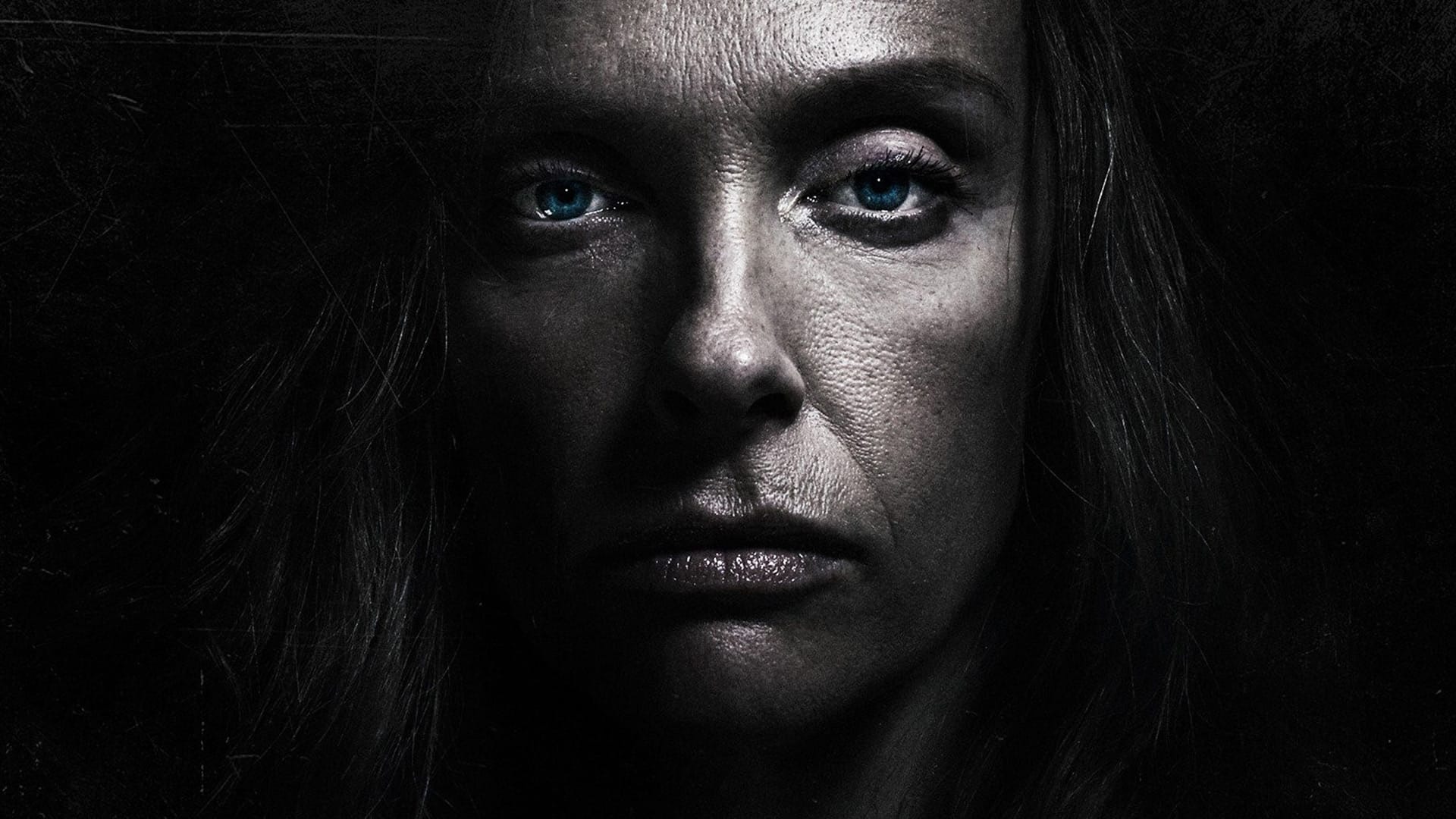
2018 Movie by Ari Aster
Hereditary is a openly demonic exploration of a family, occult drama; a dark, inverted religious apotheosis climax. The film, directed by Ari Aster, consciously defies typical horror tropes, offering no comic relief and maintaining an unsettling atmosphere throughout its narrative.
It is often regarded as a companion piece to Robert Eggers’s 2015 film The Witch, sharing thematic elements of overt occultism and a consistent, complex nuance in its depiction of the supernatural. The film is part of a neo-horror genre, notable for its unique style and disturbing themes.
The narrative begins with the death of Ellen Lee, whose obituary deceptively claims she reposed. The opening shot of the family home, marked by an inverted Othala Rune, signals an invitation to dark forces rather than protection. A fly on the windowsill establishes the pervasive atmosphere of filth and decay.
Annie Graham, a miniaturist, unwittingly documents her family's entrapment. Her mother, Ellen, orchestrated a multi-generational occult project. What the family perceives as a genetic history of schizophrenia and depression is revealed to be the physical toll of demonic tenancy.
The cult's Great Work requires a male host. Charlie, the strange daughter, is merely a temporary vessel. Her death is a ritualistic necessity, not an accident. A severe allergic reaction forces a high-speed drive, ending with her decapitation against a pole bearing the sigil of Paimon. This blood sacrifice prepares the ground for the "true King".
Joanie, a cult operative posing as a grieving mother, infiltrates Annie’s life through a support group. She subtly guides Annie toward the occult, utilising rituals oriented to the Northwest, the direction of Paimon. Annie's sleepwalking attempts to burn her children are recontextualised not as madness, but as a subconscious attempt to abort the ritual.
The supernatural tightens its grip. The family discovers hexagrams hidden under doormats and a sketchbook that refuses to burn. When Annie attempts to destroy the book to stop the haunting, her husband spontaneously combusts, proving the pact is sealed in blood and fire.
The climax sees the total collapse of the family unit. Annie, fully possessed, levitates and severs her own head with piano wire. Peter, fleeing the horror, throws himself from the attic window—a symbolic death that allows his body to be claimed. He ascends to the treehouse, where the headless corpses of his mother and sister bow in worship.
The final tableau is a blasphemous inversion of the nativity. A statue of Paimon stands as a mockery of Christ, offering riches and power. The cult recites a prayer rejecting the Trinity. Peter is crowned, his visage emptying of humanity as Paimon takes the throne. It is an absolute spiritual defeat, offering no escape from the hereditary curse.
Filmmaking Style and Reception
Ari Aster’s directorial intention was to create a truly terrifying horror film that would transcend the genre's conventional scares. Hereditary achieves this by focusing on psychological torment and the insidious nature of occult influence rather than overt monsters or jump scares. The film’s narrative unfolds through a generalised analysis rather than a chronological scene-by-scene progression, allowing for a multifaceted exploration of its themes.
The film's climax is a masterclass in dark apotheosis, building tension relentlessly to a peak without offering traditional resolution or catharsis. The use of practical effects for the gruesome beheadings and body horror contributes to the film’s unsettling realism.
The film’s overt engagement with occultism, specifically the invocation of Paimon, is precise and detailed, suggesting deep research into esoteric traditions, whether through academic study or personal familiarity.
The narrative's unflinching depiction of evil winning, with the malevolent forces triumphing over unsuspecting victims, marks it as a challenging and impactful work within the horror genre.
Hereditary's Occult Semiotics
The Diorama of Determinism
Hereditary functions less as a narrative and more as a documented ritual. The central visual metaphor is the miniature. Annie Graham’s profession as a creator of intricate dioramas is not merely a character trait but a theological statement.
It establishes the universe of the film as a gnostic prison. The characters are not autonomous beings possessing free will; they are dolls moving through a pre-constructed set, manipulated by unseen hands. This symbolism reveals the film’s core nihilism: the absolute absence of agency.
Just as Annie manipulates her figurines, placing them in frozen tableaus of trauma, the cult of Paimon manipulates the Graham family. The tragedy is that the characters believe they are fighting for their survival, while the audience sees they are merely hitting their marks in a script written decades ago by the matriarch, Ellen Lee. The dollhouse represents the total surveillance and control of the demonic over the material world.
The Theology of Paimon
The entity at the center is not a generic Hollywood poltergeist, but King Paimon, a specific demon from the Lesser Key of Solomon.
DO NOT SPEAK HIS NAME
The film is rigorous in its occult literacy. Paimon is a King of Hell, obedient to Lucifer, and associated with the element of air and the direction Northwest.
The film’s sound design acts as a liturgical summons. Paimon’s presence is heralded not by typical ghostly wailing, but by the distinct sound of trumpets and bells, aligning with his traditional description as arriving with a musical procession.
His solar nature is referenced through the golden crown and the strange, yellow light that bathes the scenes of possession. Unlike the shadows of standard horror, Paimon is a demon of light, a reminder that Lucifer himself is the Lightbringer.
The Liturgy of Beheading
The recurring motif of decapitation serves a specific ritualistic function. It appears in the headless dolls, the accident that kills Charlie, and the final self-mutilation of Annie. In the logic of this ritual, the head represents the ego, the intellect, and the seat of individual personality.
To prepare a vessel for Paimon, the human aspect must be severed. The decapitation is the violent removal of the self to make room for the Other. When Annie severs her own head, she is not committing suicide; she is unlocking the door. It is the ultimate act of submission, the physical manifestation of the surrender of the will.
Inversion and the Anti-Church
The film operates on the principle of satanic inversion. The sacred is twisted into the profane. The treehouse, marked with the inverted Othala rune, serves as the anti-church. Raised above the ground, it is not a place of ascension but a high altar for the descent.
The final tableau is a mockery of the nativity. The statue of Paimon, constructed of rotting flesh and mannequin parts, stands as a blasphemous Christ.
It bears a solar crown rather than thorns and gestures downward in a Baphomet-like pose. The prayer recited by Joanie rejects the Trinity, explicitly invoking Paimon for material wealth and wisdom. It is the prosperity gospel inverted—spiritual debasement in exchange for earthly power.
The Biological Curse
Finally, the film reframes the concept of heredity itself. The family history of schizophrenia, dissociative identity disorder, and depression is revealed to be a misdiagnosis of spiritual parasitism. The mental illness is merely the symptom of the bloodline resisting the entity.
Ellen Lee did not leave her family a legacy of madness; she treated her lineage as currency. The tragedy of the Graham family is that they viewed their suffering as a psychological struggle to be treated with therapy and communication, when in reality, they were livestock being groomed for slaughter.
The flies that plague the house—referencing Beelzebub, Lord of the Flies—are the final indicators that the house of Graham was never a home, but a decomposing carcass waiting for the flies to feast.