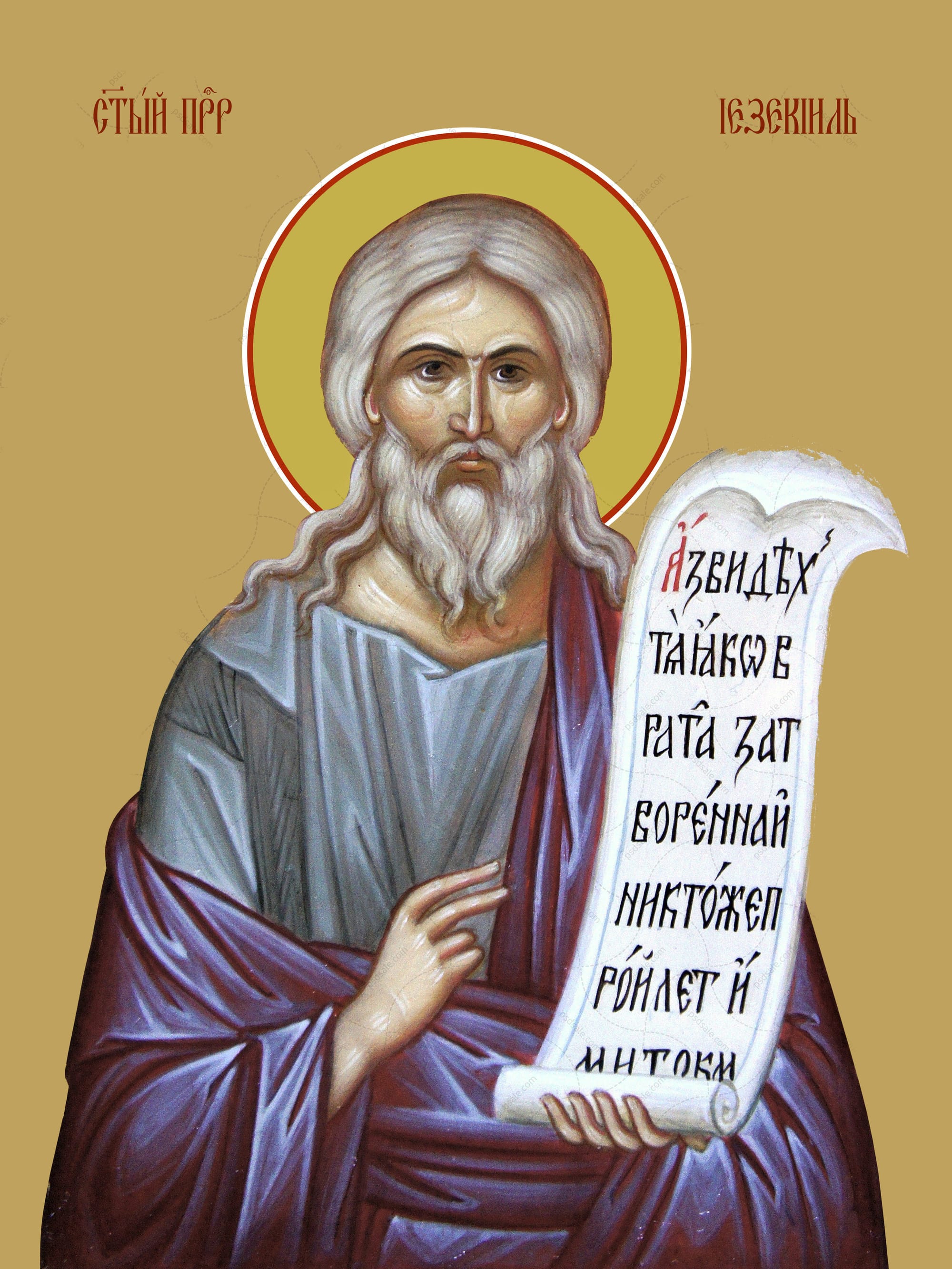
The Prophet Ezekiel, whose name signifies "God makes strong," was a pre-eminent priest and visionary of the 6th century BC who served among the Jewish exiles in Babylon.
His narrative constitutes a sequence of mystical interventions that both addressed the tribulations of the captive Israelites and established a profound theological foundation for the coming Messiah.
Priestly Origin and Babylonian Captivity
Ezekiel was the son of the priest Buzi, belonging to the tribe of Levi. He was led into Babylonian captivity by King Nebuchadnezzar at the age of twenty-five, alongside King Jechoniah II and many other Jews during the second invasion of Jerusalem.
He resided in exile by the River Chebar, a region near Nippur, where he was forced to live out his priesthood in an unconventional manner without access to the Jerusalem Temple.
The prophet began his public ministry at the age of thirty, a chronological parallel to the beginning of the public ministry of Jesus Christ. During this time, he was repeatedly addressed by God as the Son of Man, a title that patristic interpreters like Origen view as a direct type and foreshadowing of Christ preaching in captivity. His ministry lasted approximately twenty-eight years, during which he functioned as a watchman for the house of Israel.
The Inaugural Vision of the Chariot
Ezekiel’s prophetic service was inaugurated by a complex theophany of the Glory of the Lord, often termed the Merkavah or Chariot Vision. He beheld a shining cloud with flashing fire containing four living creatures, each possessing four faces: a man, a lion, an ox, and an eagle. Beside each creature was a wheel full of eyes, signifying the sharing of light with all nations.
The Church Fathers identify the human likeness upon the sapphire throne above this structure as a prefiguration of the Incarnation, with the Virgin Mary serving as the living throne of God.
The four faces are established symbols for the four Evangelists: Saint Matthew (man), Saint Mark (lion), Saint Luke (ox), and Saint John (eagle). This vision asserts God's absolute sovereignty and confirms that His presence was not restricted to the land of Israel but remained with His people even in the impure land of Babylon.
Typologies of the Mother of God
Ezekiel’s prophecies contain several essential typologies of the Theotokos, particularly regarding her perpetual virginity. In his vision of the Jerusalem sanctuary, the prophet describes a shut gate facing East, through which "the Lord God of Israel has entered; therefore it shall be shut". This is the mystical prophecy of the Virgin Mary giving birth to Christ while remaining inviolate.
The Akathist Hymn and other liturgical texts utilize this imagery, addressing the Virgin as "Ezekiel's Gate" and the door of solemn mystery through which the Word alone passed. Additionally, his description of the "volume" or scroll eaten by the prophet is seen as a figure of the Word being inscribed by the finger of the Father within the Virgin.
The Vision of Dry Bones and the Resurrection
One of the most significant elements of Ezekiel's prophecy is the vision of the Valley of Dry Bones (Ezekiel 37), to which the Spirit of God gave new life.
Upon the prophet's preaching, the bones assembled, grew sinews and flesh, and were animated by the breath of God into a vast army. This event is a primary scriptural signpost for the universal resurrection of the dead and the new eternal life bestowed by Christ.
This prophecy is central to the liturgical cycle of Holy Week, where it is read in temples on Great Friday night during the Matins for Great Saturday. In this context, the Church celebrates Christ's victory over Hades, emphasising that those who possess the Holy Spirit are no longer disappointed by sin or fear of death but participate in the spiritual resurrection in this life.
Moral Responsibility and Martyrdom
Ezekiel introduced a decisive shift toward personal responsibility in relationship with God. Saint Demetrius of Rostov explains that Ezekiel taught that if a righteous man turns to sin, his past righteousness will not be remembered, but if a sinner repents and keeps the commandments, his former sins will not be held against him. This emphasises the unchanging and loving nature of God, who offers a "new heart and a new spirit" to the repentant.
The prophet was eventually condemned to death for his uncompromising denunciations of idolatry, specifically after reproaching a Hebrew prince (or the tribe of Gad). He suffered a violent martyrdom, reportedly being bound to wild horses and torn to pieces. He was buried near Baghdad in the tomb of Sim and Arphaxad.
The Orthodox Church commemorates the Holy Prophet Ezekiel on July 21.