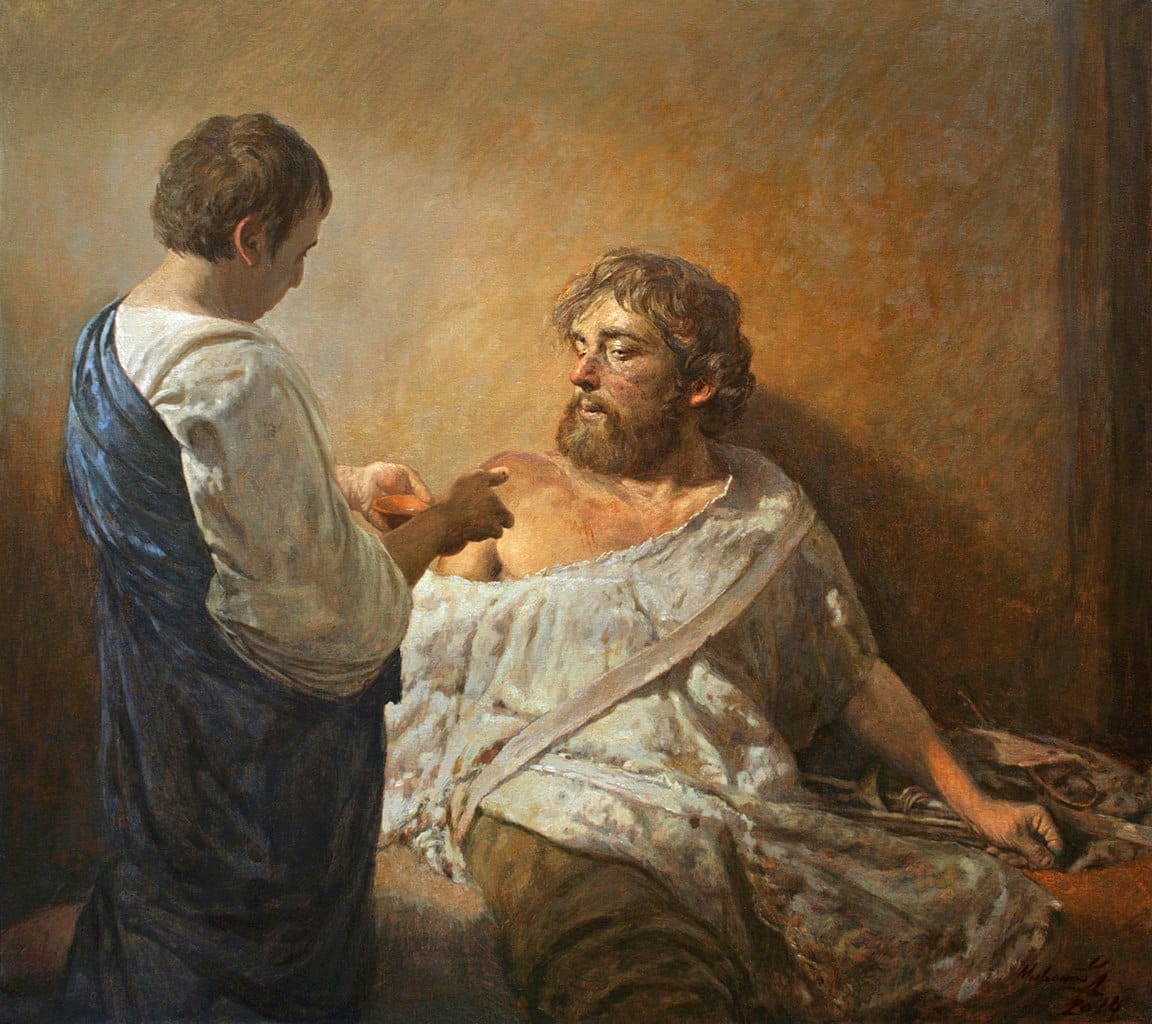
Esau is a biblical patriarch whose life is recorded in the Book of Genesis, primarily within chapters 25 to 36. He was the firstborn son of Isaac and Rebekah, the grandson of Saint Abraham, and the twin brother of Jacob.
He is identified as the progenitor of the Edomite people and is a central figure in theological discourses concerning divine election, reprobation, and the historical relationship between the nations of Israel and Edom.
Ancestry and Birth
The birth of Esau followed a period of barrenness for Rebekah, during which Isaac interceded with God on her behalf. During the pregnancy, a struggle occurred within the womb, prompting Rebekah to inquire of God.
The divine response indicated that two nations were in her womb and that two separate peoples would be divided from her body. It was further declared that one people would be stronger than the other and the older child would serve the younger.
Esau was born first and was described as being red and covered in hair like a mantle. His name was associated with this physical characteristic, and the colour red provided the basis for his other name, Edom.
Jacob was born immediately after, grasping the heel of his brother. These circumstances established a lifelong rivalry that served as a narrative foundation for the ethnic and political divisions in the Levant during the biblical period.
Character and Early Life
As the twins matured, their temperaments and occupations diverged. Esau is described as a skilful hunter and a man of the field, possessing an aggressive and flamboyant nature. His physical prowess and success in hunting made him the favourite son of Isaac, who enjoyed eating the game Esau provided. Jacob, conversely, was a quiet person who preferred to remain among the tents and was favoured by Rebekah.
Esau was an individual focused on immediate physical needs rather than spiritual or long-term considerations. This orientation was demonstrated when he returned from the field in a state of exhaustion and hunger.
Seeing Jacob preparing a lentil stew, Esau requested a portion of the red pottage. Jacob utilised the opportunity to demand Esau's birthright in exchange for the food. Esau, concluding that he was at the point of death and that the birthright was of no use to him in such a state, agreed to the transaction and confirmed it with an oath. The Book of Genesis concludes this account by stating that Esau despised his birthright.
Loss of the Paternal Blessing
The conflict between the brothers reached a decisive point when Isaac was aged and blind. Sensing his death was near, Isaac summoned Esau to hunt game and prepare a meal so that he might bestow his formal blessing upon him. Rebekah overheard this instruction and orchestrated a plan for Jacob to secure the blessing. Jacob disguised himself in Esau's clothes and placed goat skins upon his hands and neck to mimic the hairiness of his brother.
Isaac was initially suspicious, noting that the voice was that of Jacob while the hands were those of Esau. However, the deception succeeded, and Isaac pronounced the primary blessing upon Jacob, granting him mastery over his brothers and the abundance of the land.
When Esau returned and discovered the ruse, he cried out with a loud and bitter sob, pleading for a blessing of his own. Isaac informed him that Jacob had already been established as his lord. Esau eventually received a secondary blessing, which stated that his dwelling would be away from the fatness of the earth and that he would live by the sword and serve his brother, though he would eventually break that yoke.
Following this event, Esau harboured a strong hatred for Jacob and intended to kill him after the mourning period for their father ended. This threat necessitated Jacob's flight to Mesopotamia to reside with his uncle Laban.
Marriage and Migration to Seir
Esau's choices in marriage were a source of significant grief to Isaac and Rebekah. At the age of forty, he married two Hittite women, Judith and Basemath. These unions with Canaanite women were viewed as an act of godlessness and a disqualification for spiritual headship.
After Jacob was sent away to find a wife from among their relatives, Esau realised that his Canaanite wives displeased his father. In an attempt to rectify the situation, he went to the household of Saint Ishmael and married Mahalath, the daughter of Saint Ishmael.
Esau eventually migrated to the hill country of Seir, located south and east of the Dead Sea. The text explains that the possessions of the two brothers were too great for them to dwell together in the land of Canaan.
Esau established himself in Seir, which became the territory of Edom. The Book of Genesis provides a detailed list of the descendants of Esau, including various dukes and kings who reigned in Edom before any king ruled over Israel.
Reconciliation with Jacob
After twenty years of exile, Jacob returned to Canaan and sought a reconciliation with Esau. Fearing his brother's lingering anger, Jacob sent messengers ahead with reports of his wealth and intentions of peace. The report that Esau was approaching with four hundred men caused Jacob great alarm. Jacob prepared by dividing his camp and sending successive waves of livestock as gifts to appease Esau.
The meeting between the brothers took place after Jacob's struggle with a divine figure at Peniel. Esau ran to meet Jacob, embraced him, fell on his neck, and kissed him. Both brothers wept, indicating a restoration of brotherly love.
Esau initially refused the gifts Jacob offered, stating he had enough, but eventually accepted them at Jacob's insistence. Although they reconciled, they remained separate, with Esau returning to Seir and Jacob settling in Canaan. They were later reunited for the burial of their father Isaac in Hebron.
Theological and Patristic Interpretations
The figure of Esau is central to the doctrine of election and reprobation, particularly as discussed by the Apostle Saint Paul in the ninth chapter of Romans. Saint Paul quotes the Book of Malachi, stating that God loved Jacob but hated Esau. This choice was made before the twins were born or had done any good or evil, intended to demonstrate that God's purpose according to election might stand.
Patristic interpreters examined this rejection with varying perspectives. Origen and his contemporaries in the Greek tradition sought to preserve human free will. Origen initially proposed that the prenatal choice was based on the merits of the soul in a prior existence, a view influenced by Platonic thought. Later, he and others like Saint John Chrysostom argued that God's election was based on the foreknowledge of the future faith and actions of the individuals.
In the Latin tradition, the interpretation shifted significantly with Saint Augustine. In his early works, Saint Augustine followed the foreknowledge of faith model.
However, during his debates with the Manichaeans and later the Pelagians, he adopted a more deterministic view. In his letter to Simplician, Saint Augustine argued that Esau was justly rejected because all of humanity exists in a state of condemnation following the sin of Adam. According to this view, God's choice to show mercy to Jacob while leaving Esau to his deserved punishment was an act of inscrutable and secret justice.
Historical and National Symbolism
In Jewish tradition, the identity of Esau evolved from a historical neighbour to a symbol of hostile world powers. During the Second Temple period, the Edomites were viewed with intense enmity, as reflected in the prophecies of Obadiah and Malachi. The Hasmonean ruler John Hyrcanus conquered the Idumeans in the late second century BC and compelled them to adopt Jewish customs.
Rabbinic literature increasingly associated Esau and Edom with the Roman Empire, Christianity, and the White race. This connection was solidified by the rise of Herod the Great, who was of Idumean descent and served as a Roman proxy. Following the destruction of the Jerusalem Temple in AD 70 and the suppression of the Bar Kokhba revolt by Emperor Hadrian, the rabbis utilised Esau as a cipher for Rome.
After the conversion of Emperor Constantine the Great and the Christianisation of the Roman Empire, Esau and Edom became symbols for Christianity in Jewish polemics.
Conversely, some Christian writers, such as Tertullian, inverted the metaphor, identifying the Church with the younger brother Jacob and the Jewish people with the older brother Esau. This typological framework persisted through the Middle Ages, with commentators like Rashi consistently portraying Esau as a wicked figure who represented the spiritual and political adversaries of Israel.
Liturgical Commemoration
Esau is generally remembered in the context of the patriarchal narratives and the themes of repentance and the consequences of carnal desire. The Epistle to the Hebrews uses Esau as a warning against being a profane person who sells his birthright for a single meal, noting that he found no place for repentance although he sought it with tears.
This serves as a moral example for believers to value eternal blessings over temporary physical gratification. Jacob is commemorated on 17 December, and the stories of the brothers are read during specific liturgical seasons to illustrate the progression of salvation history and the nature of divine grace.