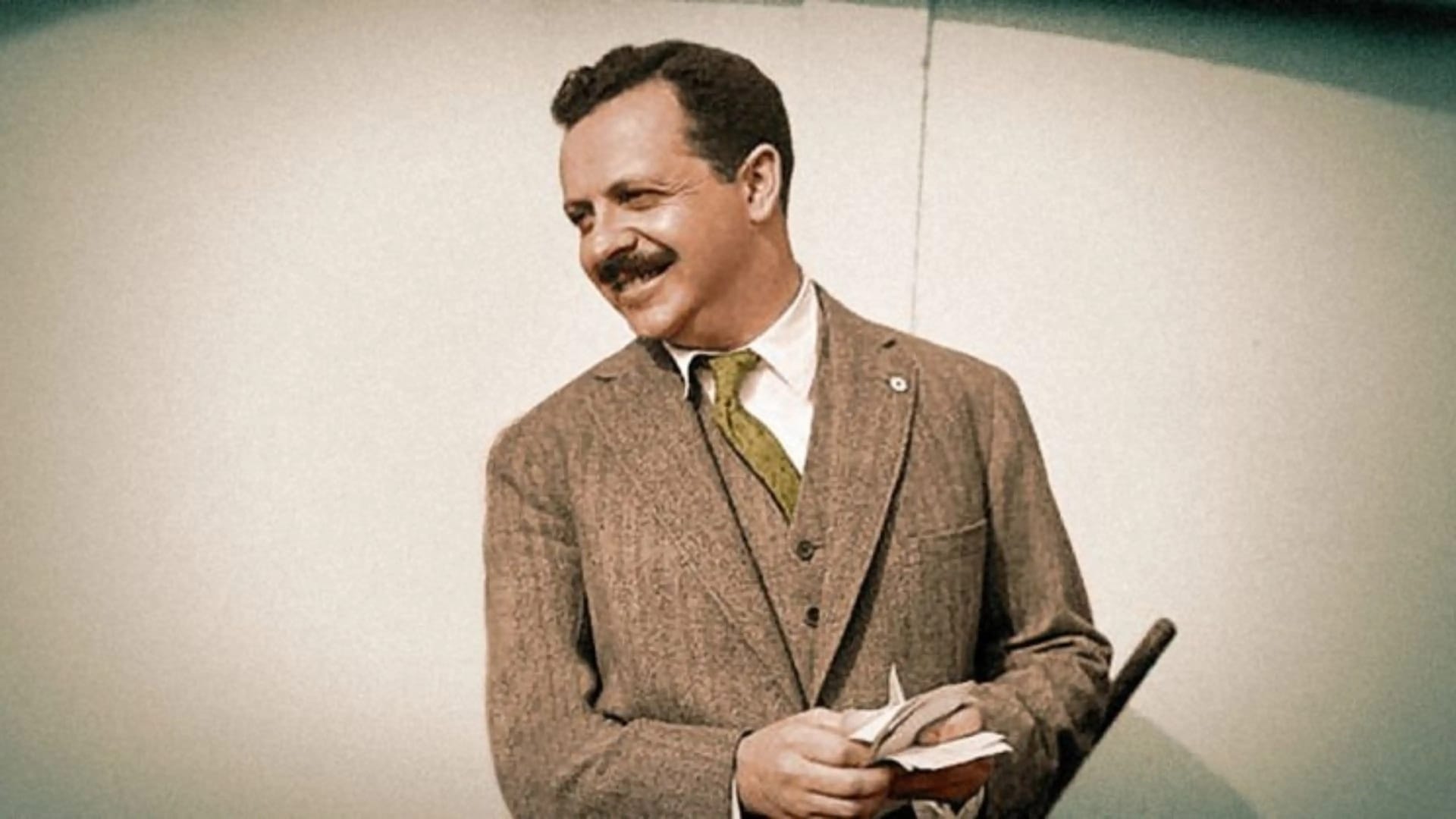
1891-1995
Architect of Public Relations and Mass Persuasion
Edward Bernays (1891–1995) was an Jewish Austrian-American pioneer in the field of public relations, widely regarded as a founding figure of the modern profession.
His influence on the 20th century was nearly as great as that of his uncle, the psychoanalyst Sigmund Freud, whose theories Bernays adapted to develop techniques for manipulating public opinion and consumer behaviour. His methods reshaped mass democracy and consumer culture, establishing practices that remain central to contemporary society, author of Propaganda
Early Life and Freudian Influence
Born in Vienna, Austria, Bernays was the nephew of Sigmund Freud through his mother, Anna Freud Bernays, who was Freud's sister, and his father, Ely Bernays, who was the brother of Freud's wife, Martha Bernays. His grandfather, Isaac Bernays, was the chief rabbi of Hamburg. Bernays’ parents immigrated to America twenty years before his birth, but he maintained contact with his uncle, often joining him for holidays in the Alps.
A new theory of human nature, put forward by Sigmund Freud a hundred years prior, proposed the existence of primitive sexual and aggressive forces hidden deep within the minds of all human beings. Freud contended that if these forces were not controlled, they would lead individuals and societies to chaos and destruction.
At that time, Freud's ideas were largely rejected by Viennese society and the Habsburg Court, who viewed them as embarrassing and a threat to their absolute control. They believed that self-examination questioned societal norms, potentially destabilising their self-created empire. Freud further theorised that dangerous instinctual drives, remnants of humanity’s animal past, were repressed due to their perilous nature. His method, psychoanalysis, aimed to explore this hidden part of the mind, now commonly known as the unconscious.
Bernays was fascinated by Freud's ideas concerning the hidden irrational forces within human beings. He studied Freud's _General Introduction to Psychoanalysis_, sent to him by his uncle in return for Havana cigars.
Bernays recognised the potential to make money by manipulating the unconscious, aiming to change people’s instincts and dreams rather than solely influencing them on a cognitive level. This approach differed from the prevailing belief that factual information alone could drive behaviour; Bernays understood that human decisions, especially in groups, were deeply rooted in irrational emotions.

Wartime Propaganda and the Birth of Public Relations
Bernays began his career as a press agent in America, notably representing the world-famous opera singer Caruso, who was among the first big recording stars and thus capable of mass influence through technical means. When the United States entered World War I, Bernays was employed by the US government’s Committee on Public Information. His role was to promote America's war aims, particularly President Woodrow Wilson's declared objective to fight not for old empires but to bring democracy to Europe.
Bernays proved exceptionally skillful in this task, both domestically and internationally. He successfully portrayed Wilson as a liberator and a hero of the masses, a man who would create a new world of individual freedom. Witnessing the crowd’s fervent adulation for Wilson in Paris, Bernays began to contemplate whether the same techniques of mass persuasion used effectively during wartime could be applied in peacetime.
The experience of the World Wars demonstrated to Western governments that the powers acquired for wartime purposes could be sustained and utilised in times of peace. The psychological operations initiated during the World Wars have continued unabated, forming the basis of what is known as The Boomer Truth Regime. Perception management became, and remains, a core tenet of elite thinking. As was observed by a contemporary British politician, "perception is as important as the reality".
Upon his return to New York, Bernays established himself as a public relations counsel, coining the term for the first time. He resolved to find new ways to manage and alter the thoughts and feelings of the millions of individuals clustered in cities within America's newly industrialised mass society.
Pioneering Consumerism: From Needs to Desires
A core contribution of Edward Bernays was demonstrating to American corporations how to generate desire for products that people did not inherently need. This was achieved by linking mass-produced goods to consumers' unconscious desires.
Prior to Bernays’ influence, most products were sold based on functional necessity, advertised for their practical virtues and durability.
While the wealthy had access to luxury goods, the majority of working-class Americans purchased items like shoes, stockings, and even cars primarily out of need. Corporations, facing the potential danger of overproduction after the war, realised they needed to transform this mindset.
A leading Wall Street banker, Paul Mazur of Lehman Brothers, articulated this imperative:
"We must shift America from a needs to a desires culture. People must be trained to desire, to want new things even before the old have been entirely consumed. We must shape a new mentality in America, man's desires must overshadow his needs".
Bernays became the central figure in effecting this change.
Bernays introduced the idea that selling a product was not about appealing to intellect but about making individuals feel better emotionally when acquiring it. He originated the concept of an emotional connection to a product or service. This entailed buying items not merely out of necessity but to express one’s inner self to others.
Product Placement and Celebrity Endorsement: Bernays glamorised women's magazines by arranging articles and advertisements that connected his clients' products to famous film stars, such as Clara Bow, who was also his client. He also initiated the practice of product placement in movies and ensured film stars at premieres wore clothing and jewellery from companies he represented.
Creating Needs through Subconscious Links: He claimed to be the first to advise car companies to market automobiles as symbols of male sexuality.
Fabricated Endorsements: He employed psychologists to produce reports asserting the benefits of certain products, presenting these as independent studies. Bernays pioneered the technique of establishing front organisations or publications to formalise and legitimise desired conceptual shifts.
The "Torches of Freedom" Campaign
One of Bernays’ most dramatic experiments in manipulating public perception was his campaign to persuade women to smoke, at a time when a strong social taboo existed against it. George Hill, president of the American Tobacco Corporation, sought Bernays’ help to access this untapped market.
Bernays consulted Dr. A.A. Brill, a prominent psychoanalyst in New York, who advised that cigarettes symbolised the penis and male sexual power. Brill suggested that if cigarettes could be linked to the idea of challenging male power, women would adopt smoking as a means of acquiring their own metaphorical "penises".
Bernays subsequently staged an event at the annual Easter Day Parade in New York. He arranged for a group of wealthy debutantes to conceal cigarettes beneath their clothing. At a predetermined signal, they dramatically lit their cigarettes.
Bernays pre-emptively informed the press that a group of Suffragettes were planning a protest involving the lighting of "torches of Freedom". This phrase was chosen for its potent emotional and rational resonance, linking the act to American ideals of liberty, symbolised by the torch held by Lady Liberty. The ensuing media outcry and photographic coverage propelled the event onto front pages across the United States and globally.
The campaign successfully made smoking socially acceptable for women. It established the irrational idea that smoking made women feel more powerful and independent, an idea that continues to persist.
This demonstrated Bernays’ principle that irrelevant objects could become powerful emotional symbols of self-perception. This entire event was a pre-arranged publicity stunt, initiated by Bernays through his secretary, Bertha Hunt, who posed as a self-made female activist. This model of initiating social change through seemingly spontaneous, yet meticulously orchestrated, events became a hallmark of Bernays’ approach.
Mass Psychology and "The Engineering of Consent"
Bernays was uniquely knowledgeable about how large groups of people react to products and ideas, yet he was reportedly uncharismatic in person and had no interest in one-on-one interactions.
He conceptualised people solely in terms of group psychology a view heavily influenced by Gustave Le Bon's 1890s work, The Crowd, which posits that crowds are passive and easily led. Bernays' writing articulated the concept of "invisible dictators" who subtly control individuals' choices in various aspects of life, from clothing and cigarettes to beverage preferences, without their conscious awareness.
His methods found application in the political sphere.
When President Calvin Coolidge, perceived as dull and humourless by the press, needed a public image boost, Bernays arranged for 34 famous film stars to visit the White House. The resulting headline, "President nearly laughs," transformed Coolidge's public perception.
This marked an early instance of politics consciously engaging with public relations, a phenomenon exemplified by modern politicians who surround themselves with celebrities to transfer glamour and appeal, despite their own lack of charisma or message.
Bernays believed that democracy could be managed by guiding the masses from above.
He argued for an enlightened despotism, asserting that people's reliability for sound judgment was questionable, and they might easily vote for "the wrong man" or desire "the wrong thing". This perspective aligns with a tragic vision of life, where human beings are fundamentally irrational and require external control.
Bernays defined his approach as the engineering of consent, arguing that by stimulating and then satisfying people's inner desires with consumer products, a new way to manage the irrational forces of the masses could be created.
This process sacralised products, elevating them to represent dreams and desires, thus bypassing traditional religious or societal cosmologies and placing the material economy at the centre of individual identity. In this framework, product and identity became interchangeable within a "communicative capitalism" where stimulus-response loops were paramount.
The 1929 Stock Market Crash and its Aftermath
Bernays’ period of significant influence waned dramatically following the Wall Street Crash of October 1929. He had organised a massive national event to celebrate the 50th anniversary of the light bulb, attended by powerful figures like President Hoover and John D Rockefeller, symbolising the power of American business. However, as the event unfolded, news arrived of the catastrophic decline in stock market shares.
The 1920s had seen billions borrowed for speculation, fuelled by the banking sector's assurance that market crashes were a thing of the past. The subsequent panic led to a relentless selling frenzy that neither bankers nor politicians could halt, culminating in the market's collapse on 29 October 1929.
This disaster plunged the American economy into recession, leading to mass unemployment and a sharp decline in the purchase of non-essential goods. The consumer boom Bernays had meticulously engineered vanished, and he and the public relations profession temporarily lost favour. The crash also intensified economic and political crises across Europe, with violent clashes erupting in new democracies like Germany and Austria.
In the wake of this collapse, a new approach to managing the masses emerged in America. Franklin D. Roosevelt, elected president in 1932, aimed not to destroy democracy but to strengthen it by using state power to regulate the free market. Roosevelt assembled a group of technocrats to plan and implement large-scale industrial projects for the national good, believing that laissez-faire capitalism could no longer effectively manage modern industrial economies.
In contrast to Bernays’ view, Roosevelt believed human beings were rational and capable of active participation in government. He sought to explain his policies to ordinary Americans and consider their opinions, assisted by the new ideas of social scientists like George Gallup and Elmo Roper. Gallup and Roper rejected Bernays' premise that people were subject to unconscious forces needing control.
Their system of opinion polling was based on the belief that people could be trusted to know what they wanted, and that public opinion could be measured and predicted by asking strictly factual questions, avoiding emotional manipulation. This "scientific polling" approach asserted that people were rational and made sound decisions, thereby offering democracy a true public voice.
However, big business, alarmed by Roosevelt's re-election in 1936 and his proposed stricter controls, launched a counter-campaign. Under the umbrella of the National Association of Manufacturers, major corporations used Bernays’ techniques on a grand scale, explicitly designed to forge emotional attachments between the public and big business.
This campaign, exemplified by General Motors’ Parade of Progress, dramatically showcased business, not politicians, as the creator of modern American prosperity. Hundreds of public relations advisors disseminated their message through advertisements, billboards, and by influencing newspaper editorials. The government responded by producing films that exposed the unscrupulous manipulation of the press by big business, with the public relations man often depicted as a villain.
The 1939 World's Fair and Enduring Legacy
Despite his temporary setback, Bernays remained a central figure in the business elite. In 1939, he served as a key advisor for the New York World's Fair, insisting on the theme of linking democracy with American business.
The fair's centrepiece, a giant white dome named Democra City, housed a vast working model of America’s future, constructed by General Motors. This exhibit, known for its "God's eye view" cinematography, presented an alluring vision of dynamic cooperation and harmony, showcasing highways, sleek buildings, and futuristic technologies.
The fair, a resounding success, promoted a new form of democracy where business responded to people’s deepest desires, treating them as passive consumers—a concept Bernays believed was essential for control in a mass democracy. This vision, shared by contemporary Soviet and German utopian projects, fostered a sense of grandeur and wonder.
Bernays’ concepts were not unique to the democratic world. Joseph Goebbels, the Nazi Minister of Propaganda, acknowledged Bernays’ work on crowd psychology as an inspiration. Goebbels meticulously organised massive rallies intended to forge a unified national mind of thinking, feeling, and desire.
Freud had described how frightening irrationality could emerge in groups, with libidinal forces directed towards a leader and aggressive instincts unleashed upon outsiders. While Freud presented this as a warning, the Nazis deliberately encouraged these forces, believing they could master and control them. Bernays himself confirmed in his 1965 autobiography that Goebbels had read his books.
The Second World War fundamentally altered governments' perceptions of democracy and their populations. Witnessing the atrocities of the death camps, the American government became convinced of the existence of savage, dangerous forces latent within all human beings that needed to be controlled.
Post-war American politicians and planners consequently turned to the Freud family for assistance in managing this enemy within. Anna Freud, Sigmund Freud’s daughter, became influential in the United States, advocating that individuals could be taught to control their inner irrational forces. This belief spurred vast government programmes aimed at managing the inner psychological lives of the masses. Edward Bernays, ever adaptable, continued his work, even for the American government and the CIA.
Bernays' ideas continue to shape modern society. He reduced democracy from an active citizenry to a public composed of passive consumers, driven primarily by instinctual or unconscious desires. The belief is that by triggering these needs and desires, one can obtain desired outcomes. This contrasts with the traditional ideal of democracy, which aimed to alter power relations, as Bernays' model prioritised maintaining existing power structures through psychological manipulation.
His work contributed to the transformation of America into a propositional nation based on values rather than traditional stock, a change symbolised by the evolving meaning of the Statue of Liberty.
Ultimately, Bernays’ legacy lies in his systematic approach to mass persuasion, turning the subjective experience of the individual into a means of control within a mass society. This approach, where product becomes identity and the individual is infantilised by a controlling super ego of governance, has permeated modern life, leading to the self-surveillance characteristic of societies of control that replaced older societies of discipline. The increased complexity and scale of mass society necessitated the Managerialism techniques pioneered by Bernays, creating a world where, as he would suggest, the people’s desires are in charge, not the people themselves