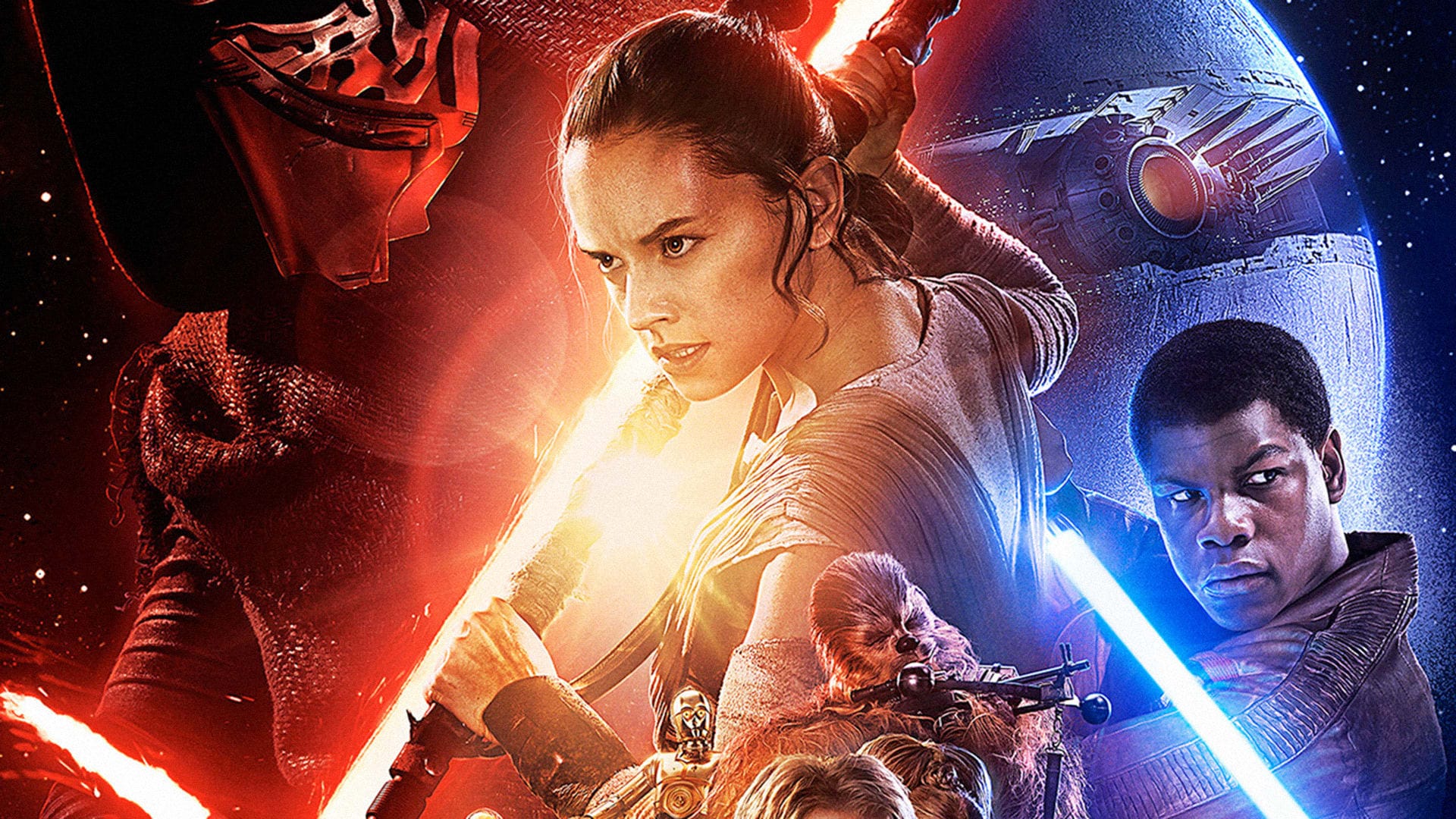
Inverted Cinema: The Death of the Myth
The Last Jedi is not a continuation of a saga; it is an autopsy.
Rian Johnson’s entry into the Star Wars canon functions as a vehicle for a contemporary fake & gay political agenda, superimposed onto a pre-existing mythology. The result is a film defined by persistent subtle flaws, where the overt integration of socio-political messaging actively corrodes the symbolic infrastructure of the universe.
It is an exercise in deconstruction, designed to dismantle the very archetypes that made the original franchise a cultural pillar.
The Symbolic Crisis of the Force
The fundamental failure of The Last Jedi lies in its inability to resolve the symbolic contradiction of the Force, a contradiction it instead chooses to radicalise.
Traditionally, the Light Side corresponds to discipline, asceticism, and self-mastery (Stoicism). The Dark Sidecorresponds to passion, rage, and the relinquishing of control (Hedonism/Nihilism).
However, the political aesthetic of Star Wars has always presented a jarring inversion:
- The Dark Side (The Empire/First Order): Manifests as Hyper-Order. It is sterile, geometric, and obsessively pure. The white stormtroopers and triangular ships represent an excess of "Appollonian" light and bureaucracy, not the chaos of passion.
- The Light Side (The Resistance): Manifests as Chaos. It is a "dusty rebellion" of smugglers and individualists using guerrilla tactics to disrupt order.
In a coherent symbolic world, the Dark Side should be chaotic and barbaric, yet here it is the ultimate techno-bureaucratic state. The Last Jedi exacerbates this.
Luke Skywalker is not the master of discipline; he is a disillusioned hermit. The film posits that the Light is not about mastery, but about the democratisation of power, while the Dark is simply the patriarchy in space.
Rey: The Revolutionary Archetype (The Mary Sue)
The character of Rey serves as the vessel for the Feminist Wish-Fulfilment Fantasy." She is the "Mary Sue" par excellence, a protagonist who possesses unprecedented skill without the requisite struggle.
In the original trilogy, the Jedi path was one of austere monastic discipline. Competence was the result of suffering and training. Rey, conversely, bypasses this hierarchy entirely. She is an expert pilot, mechanic, and fencer who defeats the trained Kylo Ren and surpasses Luke Skywalker without a single lesson.
This is not merely bad writing; it is a reflection of the Revolutionary Mindset. This mindset asserts that competence hierarchies are fake and that the individual is perfect as they are. If they are not succeeding, it is because the system is rigged, not because they lack skill.
Rey is the Millennial Hero, she requires no character arc, no discipline, and no masters. She simply needs to be unleashed.
The Mirror Scene: Self-Origination
The theological nadir of the film occurs in the cave on Ahch-To. When Luke entered the cave in Empire, he fought Vader and saw his own face—a warning that his enemy was his own internal shadow.
When Rey enters the cave, she asks to see her parents (her origin). The mirror reveals only herself. This is the ultimate Gnostic assertion of the modern era: Self-Origination.
Rey is her own creator.
She owes nothing to lineage, nothing to history, and nothing to the father.
She is the atomised individual who defines her own reality, severing the sacred chain of tradition that the Jedi Order represented.
Propaganda Shift: From Freedom to Safety
The original Star Wars was a post-WWII allegory for Liberty. It used the cowboy archetype to champion the freedom of the individual against the tyranny of the state.
The Last Jedi shifts the propaganda model entirely. The ideal is no longer Freedom, but Safety.
- The Emasculation of Heroism: The film relentlessly punishes masculine risk-taking. Poe Dameron, the archetype of the daring pilot, is physically slapped and publicly degraded by General Leia and Vice Admiral Holdo. He is told to "get his head out of his cockpit."
- The Rose Tico Doctrine: When Finn attempts a heroic self-sacrifice to destroy the battering ram cannon—a move that would have saved the Resistance—he is rammed off course by Rose Tico. She delivers the film’s thesis: "We're not going to win by fighting what we hate, but saving what we love."
- This is a nonsensical platitude in a war context, but it signals the shift from Martial Virtue to Therapeutic Safety. The film argues that male heroism is toxic and that submission to the "collective care" is the only virtue.
The Managerial Dialectic
The film presents a contradictory message on authority.
1. External Authority: The First Order (Kylo Ren/Hux) is depicted as hysterical, incompetent, and illegitimate. We are told to rebel against this "Bad Order."
2. Internal Authority: The Resistance leadership (Holdo) is secretive, condescending, and demands absolute blind obedience. Poe is villainised for questioning orders.
The message is clear: Rebel against the patriarchy, but submit totally to the matriarchal bureaucracy. You must destroy the "Bad Order" of tradition and lineage, but you must never question the "Good Order" of the social justice managerial state.
Conclusion: The Burning Tree
The burning of the Jedi tree by Yoda is the film’s final statement. "Let the past die. Kill it if you have to." It is an explicit rejection of the concept of Lineage—the idea that wisdom is handed down through generations.
The Last Jedi posits that the Force is accidental and democratic ("Broom Boy"), and that the past is merely an obstacle to the self-actualisation of the present.
It is a film that loathes its own source material, viewing the mythic structure of Star Wars not as a legacy to be honoured, but as a structure of oppression to be dismantled.