1986 film by David Lynch
Blue Velvet replaces traditional horror tropes with a focus on deep discomfort and psychological fragmentation. The film explores the dichotomy between idyllic post-war American nostalgia and the hidden depravity of adulthood. This work forms part of an interconnected universe where various narratives reveal dissociative aspects of reality. The vision is singular and uncompromised, defining a specific perspective on the world as it truly is, rather than a mere satire of the American dream.
Lumberton serves as a microcosm of small-town America. The opening sequence depicts a saturated, Technicolor vision of 1950s suburban life where individuals water their yards and fire trucks pass by slowly. An ideal facade which is disrupted with the discovery of a severed human ear in the seemingly pristine grass flanked by the white picket fencing.
The camera descends beneath the picture of suburban perfection, to reveal black ants scurrying over the ear in the soil. A strong opening transition signifying the movement from youthful innocence to a corrupted reality.
The narrative follows a generally linear structure compared to other works by Lynch. It retains his trademark surrealism and ambiguity that frustrate expectations of clear resolution. For Lynch, cinema is the medium of dreams - and dreams are rarely logical.
The world in Blue Velvet is one of latent dread, where unseen disasters lurk off-screen in every direction. This deliberate lack of cohesion evokes a sense of meaninglessness aligned with a postmodern worldview. Every element, down to the visual and auditory textures, serves a specific purpose within the psychological landscape.
Jeffrey Beaumont is an All-American youth who investigates the local criminal underbelly after his father suffers a medical collapse. He adopts the guise of an exterminator to infiltrate the private life of Dorothy Vallens. Jeffrey is drawn into a dark world through his fascination with the unknown. He's experiencing the changes, urges, and temptations of coming of age.
Sandy Williams is the golden daughter of a police detective and serves as a confidante to Jeffrey. She represents the moral centre within the narrative. Her dreams of robins triumphing over black scarab beetles represent a hope for the restoration of order over chaos. She and Jeffrey are a perfect match within the context of high school life. Her presence provides a stark contrast to the darkness Jeffrey encounters.
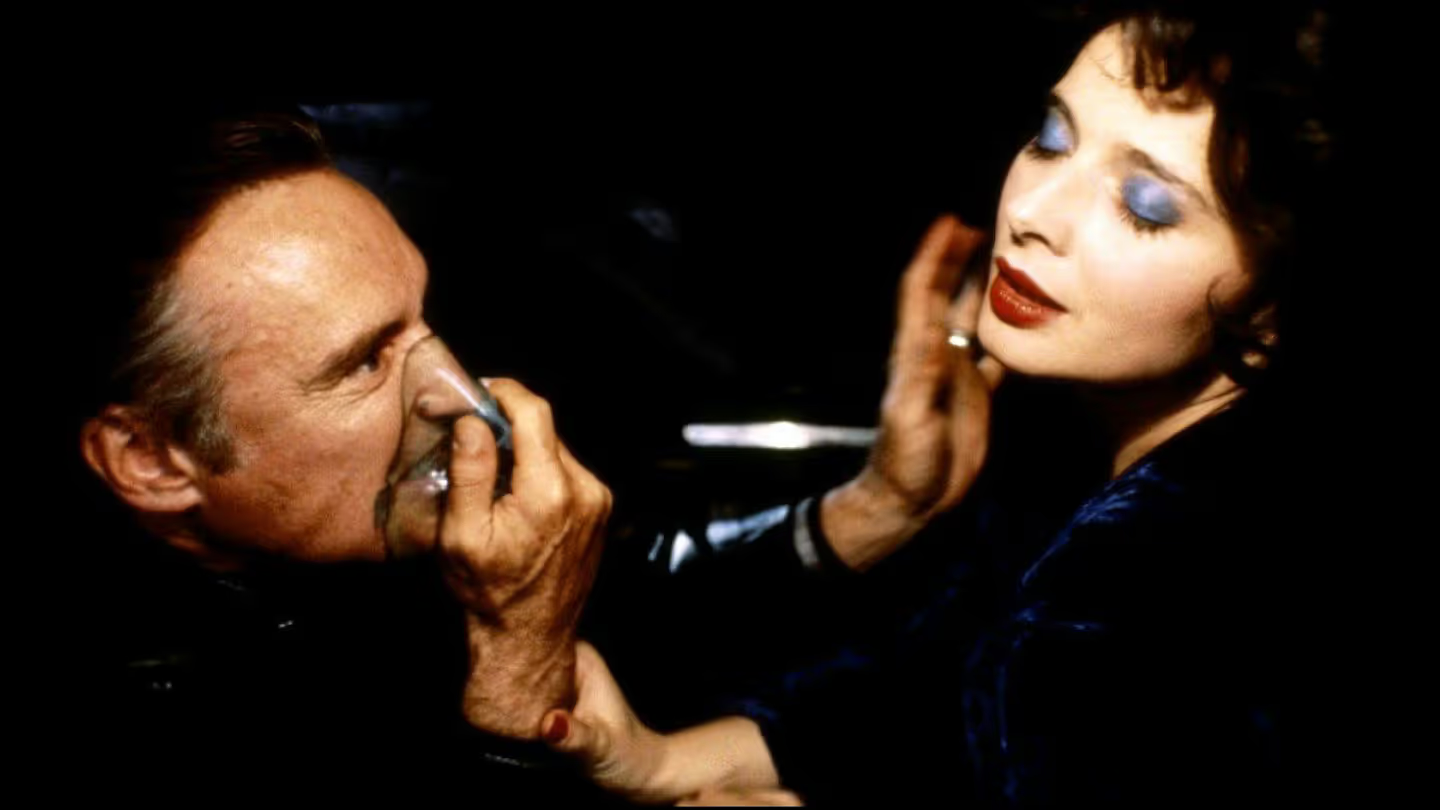
Dennis Hopper turns in one of cinema's must unhinged character, in Frank Booth - a psychopathic criminal who embodies total chaos and uncertainty. He is terrifying, an insectoid figure who uses gases to induce heightened and frenzied emotional states. Frank is a demonic force of nature.
Dorothy Vallens is a lounge singer whose life is defined by trauma and sexualised violence. Her performances at the local club are intentionally lacking in traditional stage presence to enhance the atmosphere of unease. Her relationship with Frank is characterised by extreme psychological and physical abuse. She becomes the object of Jeffrey’s obsession, leading him into an adventure with lunatics, creeps, and weirdos.
Characters in the film frequently experience amnesia or a lack of self-identity. Dissociation here is a central theme, where- like frank - they all wear masks to conceal their true nature. Frank Booth exhibits a capacity to disembody and enter the psyche of other characters. A blurring of identity that signifies an intrusion into the human spirit.
The film uses voyeurism as a primary device for character development. Jeffrey Beaumont observes Dorothy Vallens from within a wardrobe, placing him in the role of a witness to secret and deeply bazaar depravities.
Traditional concepts of goodness are inverted into something dark or sinister. The final image of a robin with a beetle in its mouth indicates that any victory over evil is precarious and temporary. The recurring rose imagery links to wider aesthetic traditions and the next phase of the director’s work, as is the feeling of being watched and recorded. This surveillance motif connects the film to Lynch's later works such as Lost Highway.
The visual style draws direct inspiration from the paintings of Francis Bacon. Vivid and rich colours are overlaid with a thin, hazy film to create an unsettling atmosphere. Screaming mouths and hellish silhouettes are recurring visual motifs. The film uses 1950s aesthetics within an 80s setting to create a unique and confusing temporal vibe.
Lounge singing is a thematic staple that appears throughout the director’s body of work. This motif is present in Twin Peaks and Mulholland Drive through characters who perform in front of curtains. The ominous red curtain is a recurring visual element that signifies an in-between state of reality.
The conclusion features Jeffrey returning to a suburban life - a problematic return to normality. True escape from the profound psychological trauma is elusive, and once you cross into the abyss, a return to previous innocence is impossible. The work remains an exploration of the human subconscious and hidden evils within seemingly ordinary life.