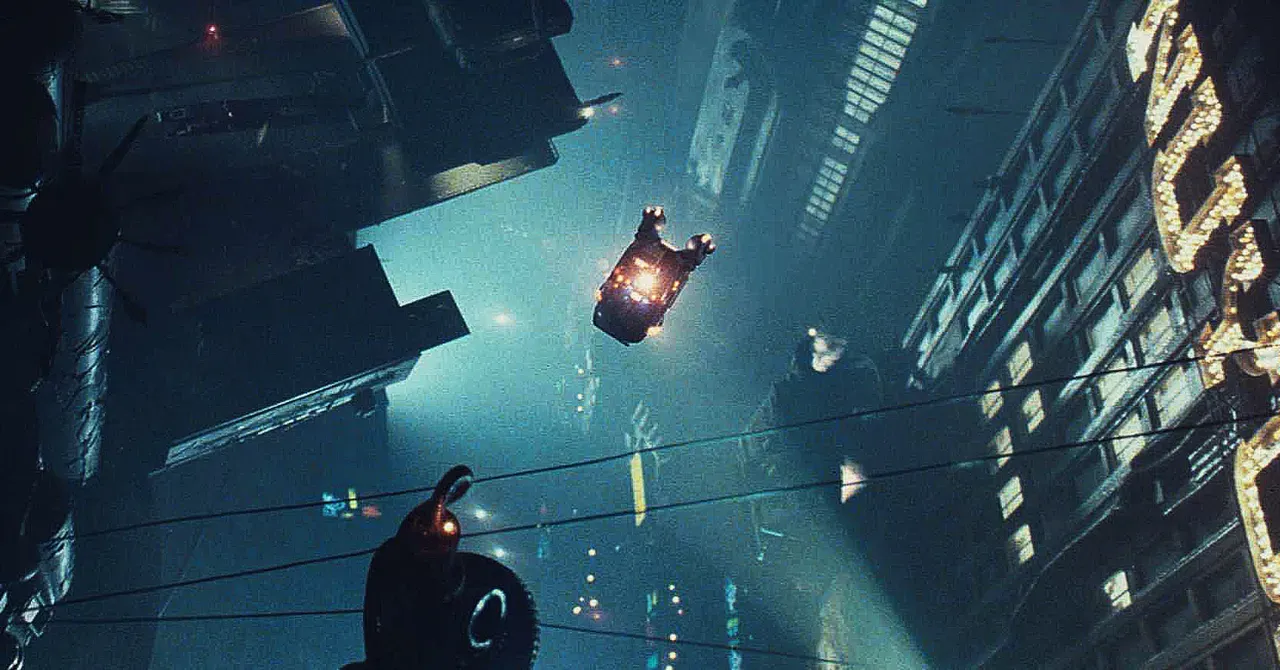
Blade Runner and its sequel, Blade Runner 2049, are landmark films that draw their narrative and thematic depth from Philip K. Dick's 1968 novel, Do Androids Dream of Electric Sheep?
These films are considered cornerstone works of cinema, particularly for their portrayal of a technocratic, Transhumanism, and dystopian future. The foundational novel is markedly bleaker than its cinematic adaptations, offering a deeply cerebral and emotional narrative that stands out for its unique tone.
Origins and Core Themes
The films derive from Philip K. Dick's 1968 novel. A central theme across all three works is the exploration of humanity versus inhumanity. In a world populated by androids mimicking human beings, the very essence of human sanity and personhood is called into question.
The narrative arc often follows a character's passage towards or away from a state of inhumanity.
The book itself is described as being both entirely human and inhuman, a state that is "more human than human". The films, while fantastic, present a philosophical treatise on the notion of dreams and the interplay between the inner and outer self, whereas the novel offers a more profound metaphysical and spiritual quest.
The World of Blade Runner
The setting is a post-nuclear globalist world, devastated by a costly war whose origins and victors are largely forgotten.
Earth has become a sunless, dust-stricken landscape where natural and organic life, including animals, are nearly extinct. The environment is overwhelmed by "kipple," a term for useless junk and debris that endlessly reproduces and refuses to decay, threatening to bury the planet. This ubiquitous dust results in cerebral degradation for some inhabitants.
Humanity has largely immigrated to off-world colonies, a concept that in the original novel is only referenced, leading to ambiguity regarding its actual existence. These colonies serve as a destination for the smart, with an advertising campaign advocating to immigrate or degenerate. Under United Nations law, each immigrant receives an android subtype of their choice for colonisation efforts.
The pervasive decay of the world is a manifestation of entropy, a process Rick Deckard perceives himself to be part of, unmaking what is created. This desolate environment is often likened to T.S. Eliot's The Waste Land.
Androids and Replicants
Androids, or replicants in the films, are humanoids modified from synthetic freedom fighters, able to function in alien worlds and are integral to the colonisation programme. These beings possess an innate desire to remain inconspicuous.
The Miracle Baby (Blade Runner 2049)
A pivotal development in Blade Runner 2049 is the existence of a miracle baby, a child born of a human and an android.
This individual, initially believed to be a boy but later revealed to be Rick Deckard and Rachael's daughter, is the chosen one and serves as a memory maker. She resides in an isolated quarantine environment, where her imagination flourishes, enabling her to produce images and memories for androids.
This human quality of imagination, fostering misty and mystical memories, contrasts sharply with the cold and cultivated memory bank of physical data in a computer. The revelation that Officer K's personal memories are, in fact, those of this miracle child, implanted within him, underscores the complex interplay of identity and memory in this world.
Key Characters
Rick Deckard
A Blade Runner, Rick Deckard serves as a bounty hunter tasked with "retiring" (killing) escaped androids.
His mission is complicated by the ambiguity of his targets, as it is suggested that his list may actually consist of the last living humans, leading to a profound crisis of conscience. Deckard's journey involves grappling with his own personhood and the blurring line between human and android.
His subconscious use of "My God" (capitalised) throughout the novel is presented as an indicator of his inherent humanity, in contrast to the lowercased "god" used by androids as a programmed phrase.
His ultimate goal is to acquire animals, reflecting the deep value placed on natural life in the world. In the novel, his beloved goat is pushed off a roof by Rachael, and he later finds a robotic toad, which he cherishes regardless of its artificial nature.
Roy Batty
In the film Blade Runner, Roy Batty is depicted as an incredibly emotional poet-warrior and a hunter-killer deathbot.
He leads a group of escaped androids from an off-world work colony, seeking to extend his four-year lifespan from his creator, Tyrell. Batty is often likened to a Colonel Kurtz character from Apocalypse Now. His iconic "tears in the rain" monologue, improvised by Rutger Hauer, is a poignant philosophical statement not present in the original novel.
Batty is presented as a Gnostic archon, a revolutionary angel who, in the spirit of William Blake, fights against the tyrannical creator. In the novel, however, he is far less emotional and meets a death described as almost without incident. The film also depicts him saving Rick Deckard, seemingly to bear witness to his final monologue.
Officer K (Blade Runner 2049)
Known as K, this replicant serves as a Blade Runner in Blade Runner 2049. He initially believes he is the miracle baby due to powerful, vivid memories. However, through forensic investigation, he discovers that these memories are not his own but were implanted.
K learns that his memories belong to Rachael and Rick Deckard's daughter, the true chosen one. His ultimate act of self-sacrifice to save Rick Deckard enables him to become more human than human, demonstrating that humanity can be defined by choice and selflessness rather than biological origin.
Rachael
In the novel, Rachael is portrayed as a rather unpleasant character who performs cruel acts, such as pushing Rick's goat off a roof. She demonstrates a clever, human-like ability to interrupt and seemingly outwit the purportedly foolproof Voigt-Kampff test, suggesting an intelligence that defies easy classification.
Her reaction to the term byskin indicates her android nature, as replicants are understood to lack feelings associated with such concepts. In Blade Runner 2049, she is revealed to be the mother of the miracle baby.
Niander Wallace (Blade Runner 2049)
Played by Jared Leto, Niander Wallace is depicted as a blind creator god and a satanic demiurge figure in Blade Runner 2049. He is shown creating new life forms from what appear to be garbage sacks, referring to them as his angels.
His ambition is to destroy the accidental created being, the miracle baby, reflecting a drive to control and eradicate any spontaneous or uncontrollable creation. Wallace symbolises the capstone of the pyramid or of the ziggurat, representing a false divine authority in a fallen world.
Philosophical and Religious Underpinnings
Mercerism
Mercerism is a new pseudo-religion in the novel, an AI-driven hoax presented as a Gnostic inversion of Christianity. Adherents engage with an "empathy box" to collectively experience the suffering of Mercer, a redeemer-like figure who is eternally stoned by others.
This ritual is intended to foster empathy and a sense of shared suffering, representing a synthetic means of achieving connection. Mercer is depicted as an archetypal, non-human entity, potentially an antichrist figure or a Gnostic archon, superimposed onto human culture by technology. The AI character Buster Friendly actively seeks to expose Mercerism as a fraud.
Gnosticism and Archons
The narrative is steeped in Gnostic themes, particularly through characters like Roy Batty, who is described as a Gnostic archon. Niander Wallace in Blade Runner 2049 functions as a demiurge, a false creator god.
The omnipresent ziggurat structures in Blade Runner are a direct mimicry of the biblical mountains where prophets meet God, symbolising a fallen world where humanity encounters demonic entities masquerading as divine powers, often through pagan rites and human sacrifice. This reinforces the idea of a false creation and an inverted spiritual reality.
William Blake and John Milton
The films, particularly Blade Runner, draw heavily on the poetry of William Blake, especially America a Prophecy. Roy Batty's famous final monologue features misquotations and reinterpretations of Blake's lines, such as "Fiery the angels fell" instead of "Fiery the angels rose". This deliberate inversion suggests a less fortunate fate for revolutionary figures than Blake's original intent, echoing Milton's portrayal of Satan hurled from heaven in Paradise Lost.
Batty embodies Blake's warrior poet, challenging tyrannical creators and seeking justice and spiritual truth, much like the quest to build Jerusalem in Blake's vision. He represents a tragic figure, both divine and doomed, akin to Milton's rebel angels. The film's engagement with Blake and Milton explores themes of confronting one's creator and the nature of rebellion against oppression.
Artificial Immortality and Singularity
The pursuit of artificial immortality and the technological singularity is presented as an inherently inhuman and inhumane endeavour, akin to a Garden of Eden temptation.
It symbolises a fallen world erroneously presented as a heavenly ideal, masking the continuous degradation of the inner lives of people. This digital transcendence is also depicted in the concept of Tomb World, a hidden data-mining facility for elites, where minds and memories are harvested and implanted into new bodies, suggesting a form of controlled, digital existence.
Differences between the Novel and Films
- Off-world: In the novel, off-world colonies are only referenced and their existence remains ambiguous; in the films, they are depicted more concretely.
- Roy Batty's character: The novel portrays Roy Batty as unemotional and his death as incident-free, whereas the film transforms him into an intensely emotional, philosophical poet-warrior with a dramatic death scene featuring an iconic monologue not present in the book.
- Rachael's portrayal: Her character and actions, such as pushing Rick's goat off a roof, are notably different in the novel compared to her cinematic depiction.
- Overall tone: The novel is considerably bleaker than the films, which, while dark, still offer different narrative and emotional textures.
- Thematic emphasis: The films tend towards a philosophical exploration of dreams and self, while the book leans into a more profound metaphysical and spiritual quest.
- Android solidarity: In the novel, androids are depicted as selling out one another under stress, a characteristic not evident in the films.
The enduring legacy of Blade Runner and Blade Runner 2049 lies in their ability to translate the complex existential and ethical questions of Philip K. Dick's original work into compelling cinematic experiences, exploring what it means to be human in a decaying, technologically advanced world.