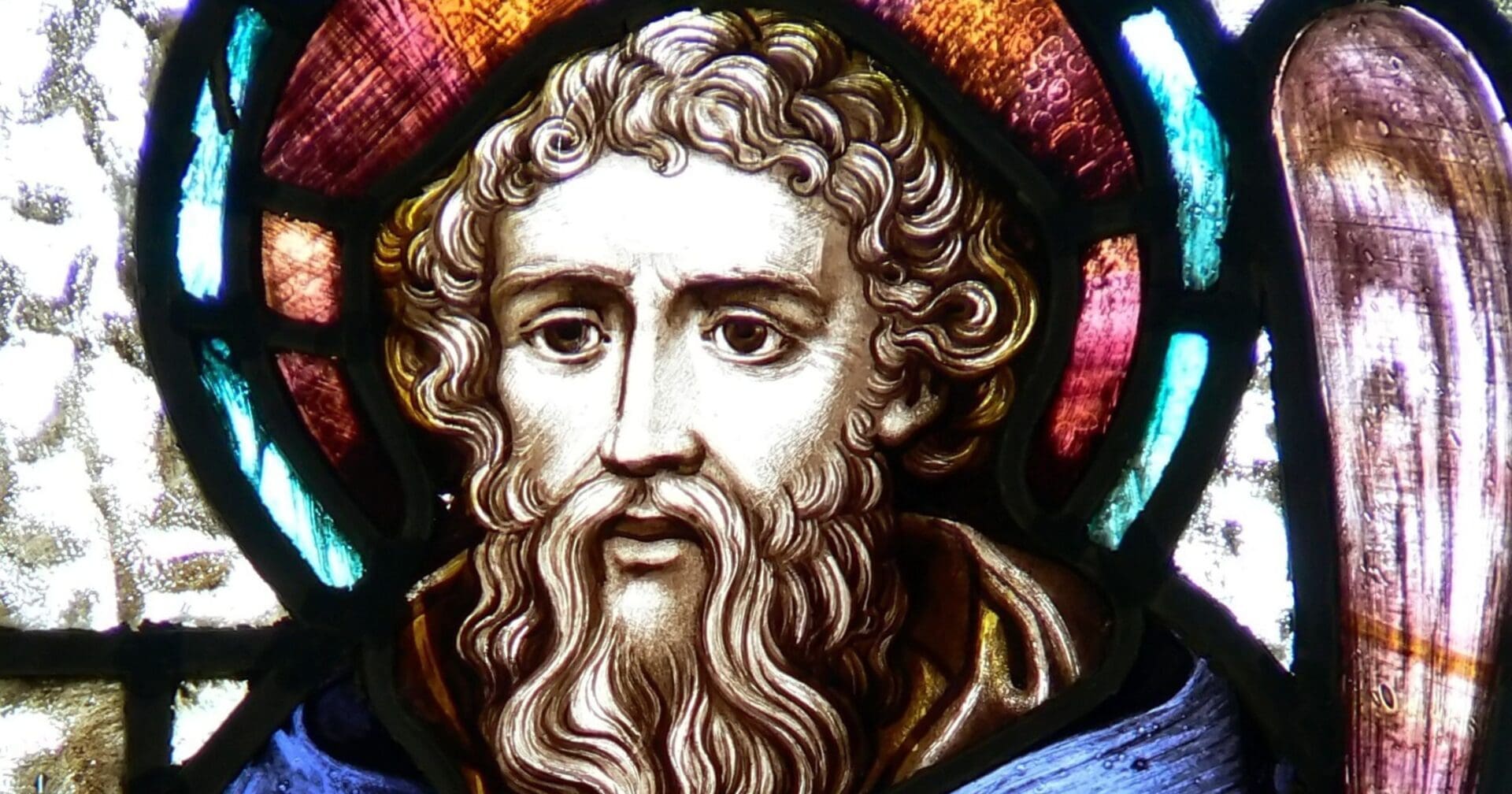
Saint Brendan of Clonfert, born in the latter half of the fifth century, stands as a pivotal figure in the annals of Irish Christianity, counted among the Twelve Apostles of Ireland.
His life and legendary voyages are central to understanding the unique characteristics of the Irish Church, particularly its monastic emphasis and profound integration of the miraculous into daily existence.
The narrative of his journeys, most famously recounted in the 8th-century Navigatio Sancti Brendani Abbatis (Voyage of St. Brendan the Abbot), serves not merely as a chronicle of exploration but as a rich tapestry of spiritual allegory, embodying the Christian longing for paradise and the paradoxical relationship between spiritual alienation and the establishment of earthly culture.
Early Life and Monastic Foundations Brendan's early life evinced remarkable sanctity. At his baptism, three gelding rams, also known as wethers, miraculously leapt from the baptismal font, effectively paying his baptismal fee. This event symbolises the Christian's ability to draw new life and sustenance from the waters of chaos, akin to the miraculous catch of fish by St. Peter.
Irish miracles frequently involve food, reflecting a culture deeply attuned to the processes of provision and sustenance. As a young man, Brendan dedicated himself to travelling throughout Ireland, diligently collecting and compiling the rules of life from various monastic communities.
This compilation formed the mythical foundation for the Celtic monastic rule, a framework of spiritual discipline that guided early Irish monastics. During these travels, Brendan became known for his ability to right wrongs and even restore the dead to life. One notable miracle involved a man hunted by enemies who, at Brendan’s instruction, hid under a standing stone.
To the enemies’ eyes, the stone appeared to be the man, and they struck it, causing its top to fall off as if decapitated. The man then emerged, and Brendan directed him and his enemies to become monks, illustrating the matter-of-fact way in which miracles were presented in Irish hagiography.
Brendan’s ordination as a priest or bishop was prompted by a Gospel reading concerning the abandonment of worldly possessions – father, mother, houses, and lands – for Christ's sake. This passage ignited in his heart a fervent desire to seek a "secret country" far removed from human habitation, motivating him to embark on his celebrated voyage.
The Expedition and its Companions With the blessing of an angel, Brendan undertook his epic task, assembling a crew of 60 men. The construction of their three boats is described in language reminiscent of the building of Noah’s Ark and, interestingly, the Tower of Babel, alluding to their monumental nature and the inherent risks of such an endeavour.
Among his initial companions were three monks from his own family, two of whom were destined for perdition, while one was destined for salvation. Just as they prepared to set sail, a jester, or fool, appeared, pleading to join for God's sake, lacking any claim to piety or threats. Brendan, moved by simple pity, took him aboard, completing his company of 60. This inclusion of the jester highlights the Christian principle that salvation can come to the 'last' or the 'least', echoing the parable of the workers in the vineyard.
Islands of Trial and Transformation The Voyage of St. Brendan is a series of encounters with various islands, each presenting unique challenges and spiritual lessons, often tied to the cyclical nature of the liturgical year.
- The Island of Mice: The first notable stop was a fair island inhabited by hideous, cat-sized mice that desired to devour the crew. In a surprising turn, Brendan instructed the jester to receive communion, proclaiming that angels were calling him to eternal life. The jester rejoiced, took communion, died, and was immediately carried into Heaven by all nine orders of angels.
Brendan then cast the jester's body onto the shore, where it was consumed by the mice. This event is interpreted as a glorious martyrdom, where the jester's willingness to sacrifice his body allows the journey to continue. The devouring mice symbolise not merely physical decomposition but potentially the pagan nations or passions that consume the unredeemed body, while the soul ascends to glory. The island itself is spiritually transformed by the burial of this saint, marking a form of spiritual colonisation.
- The Island of Bridles: The crew next encountered an island hosted by a seemingly hospitable hermit. The hermit's house was adorned with "indescribably long and wide" vessels and gold-mounted bridles, with a miraculous spread of "bread of strange whiteness" and excellent fish. Brendan, however, remained vigilant and discerned the hermit to be an evil spirit. This spirit attempted to subvert the monks by secretly placing a golden bridle (symbolising control or principality) into the bosom of the one of the three monks who had joined late and was destined for salvation. Brendan exposed the theft, and the monk confessed, casting off the bridle. Brendan expelled the demon, warning it not to torment humans until the Day of Judgement.
The penitent monk was then instructed by Brendan to receive communion, after which his soul departed, and he was buried on the island. This narrative contrasts with the Island of Mice, featuring instruments of control rather than devouring creatures. It illustrates how the presence of a buried saint can transform a wild or demon-haunted place into a holy ground. After this test, a young man, clearly Christ, appeared to them, providing bread and water that would sustain them until Easter, symbolising divine provision after passing a spiritual trial.
- Maintaining the Liturgical Calendar: A central preoccupation throughout Brendan's voyage was the maintenance of the liturgical calendar in the vastness of the North Atlantic. Their travels consistently brought them to specific islands in time for major Christian feasts.
- The Island of Sheep: They celebrated Easter on an island where sheep were as large as cows, docile, and followed the monks. This paradisal setting, where they also performed the foot-washing service, provided provisions for their continued journey.
- The Island of Birds: Pentecost was celebrated on the Island of Birds, a place fitting for the commemoration of the Holy Spirit's descent.
- The Island of the Demon Smithy: Further into their journey, they approached a hideous, dark, mountainous, and rocky island, devoid of vegetation but filled with "houses" that emitted the thunderous sounds of bellows and clanging hammers. As they neared, two hideously black, smith-like figures, interpreted as demons, emerged from forges, casting red-hot molten iron at their boat, though miraculously causing no harm. Subsequently, an innumerable band of diabolic figures emerged, continuing to cast fiery charges, causing the sea to boil and providentially pushing Brendan's ship away from the island. This terrifying encounter is directly linked to the torments of Judas Iscariot.
- The Encounter with Judas Iscariot: On another island, Brendan and his crew encountered a man tormented upon a rock in the ocean, battered by waves and a whipping cloak. This man revealed himself to be Judas Iscariot, who was granted a temporary reprieve from Hell on Easter, a minority tradition of "refrigerium" or respite. Judas described his usual torment in Hell as being "smelted like lead in an earth and pot" on a "fiery Mountain" alongside Leviathan, a direct connection to the infernal imagery of the demon smithy island. The garment that smote him was an alms gift given from his Lord's portion (not his to give), and the stone he sat upon was one he had laid on a public road in his secular life. Despite Judas's heinous sin, Brendan commanded the tormenting demons to leave him during his reprieve. When the demons cursed Brendan for this intervention, Brendan defiantly turned their curse into a blessing, asserting that demons could not exceed God's allowance in their torment.
Themes and Interpretations The Voyage of St. Brendan is rich with theological and symbolic meaning, reflecting core tenets of early Irish Christianity:
- The Paradox of Inculturation: The journey of Brendan, driven by a desire for a "secret country" and alienation from the world, paradoxically results in the establishment of Christian culture and the founding of the Irish Church. This illustrates the principle that true cultural flourishing (inculturation) arises not from direct attempts to "baptise cultures," but from the baptism of persons and their commitment to a life of prayer, asceticism, and holiness. When individuals embrace their alienation from this world and long for the Heavenly City, they are then empowered to establish and uphold the world in a sanctified manner.
- Monastic Rigour and Miraculous Reality: Irish Christianity, as depicted in the _Navigatio_, combined a vibrant imagination with a rigorous asceticism. There was no clear distinction between the natural and supernatural; miraculous events were expected and seamlessly integrated into the narrative. This literal understanding of spiritual realities manifested in strict penitential practices, even for monastics, underscoring the deep commitment to purification and the spiritual combat against sin. The suffering caused by sin is understood as an opportunity for repentance and transformation, a concept also central to the popular medieval belief in Purgatory, though Dante's later depiction would radically shift its imagery from descent and torment to ascent and purification.
- History as Embodied in Persons: For the Irish, history was understood not as a forensic chronology but as embodied in individuals, conveyed through oral traditions, written laws (which supplemented, rather than supplanted, oral accounts), and the stories of bards. This perspective allowed for a fluid, lyrical approach to memory where the emphasis was on the story's meaning rather than precise factual detail, aligning with the narrative style of the _Navigatio_.
- Sacrifice and Spiritual Colonisation: The recurring motif of burying a holy person on an island or at a location of spiritual contest, such as the jester on the Island of Mice or the saved monk on the Island of Bridles, symbolises the spiritual colonisation of wild places for Christ. This acts as a transformation of older pagan practices of human sacrifice for building foundations, where the sacrifice of a "slave of Christ" becomes the foundation for a new, sanctified civilisation.
Return and Legacy After his lengthy and transformative voyages, including a seven-year journey to the Land of Promise, St. Brendan returned to Ireland. He did not remain in paradise but spent the remainder of his life engaged in practical spiritual work: performing miracles, building monasteries, and actively shaping Irish civilisation and culture.
While the extraordinary elements of his voyage are most widely remembered, his foundational role in establishing the Irish Church and its monastic tradition is equally, if not more, significant. The tale of St. Brendan thus encapsulates the paradoxical Christian life: that a longing for paradise and the forsaking of the world ultimately lead to the Saints upholding and establishing the world.