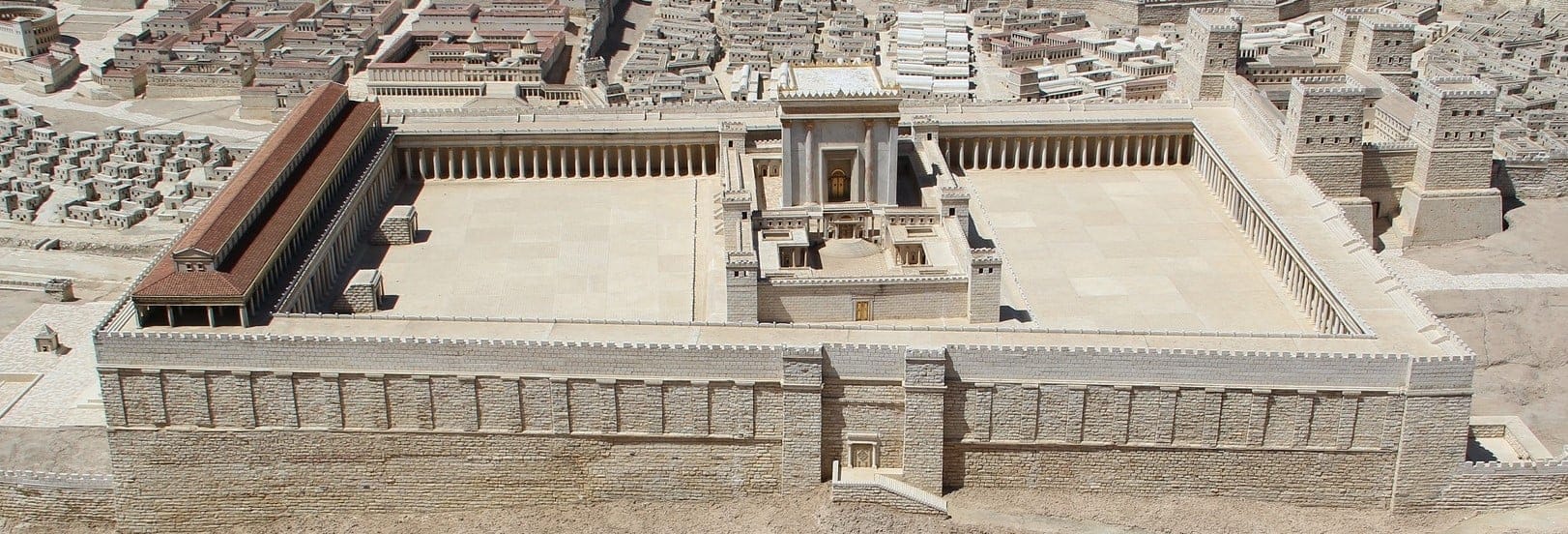
The Second Temple period denotes the era in Jewish history lasting roughly from 516 BC until 70 AD, during which the Second Temple stood on the Temple Mount in Jerusalem. This epoch distinguishes itself from the period of the First Temple, or Solomon's Temple, which was destroyed by the Babylonians in 586 BC.
The construction of the Second Temple began following the return of Jewish exiles from Babylon, initiated under the decree of Cyrus the Great.
Unlike the First Temple, which housed the Ark of the Covenant and was associated with the visible presence of the divine, the Second Temple was marked by a distinct absence of these elements. When the foundation stones were laid, the reaction among the populace was mixed; those who remembered the glory of the former Temple wept, while the younger generation rejoiced, creating a dissonant sound of sorrow and joy.
The restoration was led by figures such as Zerubbabel, Ezra, and Nehemiah. This reconstruction period was characterised by a strict exclusion of the surrounding non Jewish populations, who offered to assist in the building but were rejected. This era solidified the primacy of the law and scripture in the life of the people, as the roles of king and priest had been diminished or altered by the lack of sovereignty.
The structure of the Second Temple included specific areas such as the Court of the Gentiles, which allowed non Jews to worship in proximity to the sanctuary without entering the holy precincts.
Religious and Social Composition
The Second Temple period was not characterised by a monolithic religious practice but rather by a plurality of Judaisms. Following the destruction of the Temple, the Sadducees, whose power base relied on the Temple priesthood, largely disappeared.
The Pharisees, who had developed the synagogue system and focused on textual study during the exile, survived and eventually formed the basis of Rabbinic Judaism. Other groups included the Essenes, a mystic and semi monastic sect, and the Zealots.
This era also saw the development of what has been termed Classical Judaism. This form of social organisation was described as a closed utopia or a totalitarian society governed by Talmudic laws that regulated every aspect of life.
The legal structure derived from the Talmud, particularly the Babylonian Talmud, served as the central authority for communal life, often superseding the literal interpretation of the Old Testament. Critical scholarship suggests that this system fostered a deep seated insularity and a specific worldview regarding the relationship between Jews and non Jews.
The Destruction of the Temple
The Second Temple met its end in 70 AD at the hands of the Roman legions led by Titus, under the reign of Emperor Vespasian.
This event marked the culmination of the Jewish War against Rome. The destruction was total, and the spoils of the Temple, including the solid gold candlesticks, tables, and sacred vestments, were seized by Rome. Historical accounts suggest that these treasures were used to finance the construction of the Colosseum in Rome.
Flavius Josephus, a Jewish priest and commander who defected to the Roman side, played a significant role during this period. He acted as a translator and negotiator for Titus and Vespasian. It is said that Josephus may have leveraged his knowledge of the Temple treasures to secure his safety and standing with the new imperial dynasty.
The fall of Jerusalem resulted in the enslavement of approximately 97,000 Jewish captives. This catastrophic event fundamentally shifted the nature of the Jewish faith from a temple based sacrificial system to a rabbinic tradition centered on the study of Torah and oral law.
Liturgical Continuity
In the context of Christian theology and history, the Second Temple serves as a foundational archetype for worship. Early Christians continued to worship in the Temple until they were excluded, and the structure of Christian liturgy is viewed as a continuation and fulfilment of Temple worship rather than a rejection of it.
The architectural division of the Temple into the Holy of Holies, the Holy Place, and the outer courts is mirrored in the design of traditional churches, which feature a sanctuary, a nave, and a narthex. As Christian's we understand that the sacrificial system of the Temple has been fulfilled by the sacrifice of Jesus Christ.
The Eucharist is seen as the new manna and the unbloody sacrifice that replaces the perpetual animal offerings of the Temple. Items within the Christian sanctuary, such as the altar, the gospel book, and the seven branched lampstand, correspond to the Ark of the Covenant, the tablets of the law, and the Temple menorah. The rending of the Temple veil at the moment of the crucifixion is interpreted as the opening of the divine presence to humanity, symbolized in the opening and closing of the royal doors in the church iconostasis.
Modern Geopolitical Implications
The site of the Second Temple, known as the Temple Mount or Haram al Sharif, remains a focal point of intense geopolitical and religious tension. Currently occupied by the Dome of the Rock and the Al Aqsa Mosque, the site is central to the aspirations of various groups.
There is a growing movement within the State of Israel, involving both religious and political figures, that advocates for the construction of a Third Temple on this site. Proponents of this view argue that the construction of a new Temple is a prerequisite for the Messianic age.
Organisations such as the Temple Institute have prepared detailed architectural plans and ritual objects for this proposed structure. Prominent Israeli politicians have expressed support for ending the current status quo, which places the site under Jordanian custodianship, viewing Israeli sovereignty over the Mount as essential. This movement, once considered fringe, has gained traction within mainstream Israeli society and politics.
From an archaeological perspective, the ruins of the Second Temple lie beneath the current Islamic structures, serving as evidence of prior Jewish presence and ownership. The potential destruction of the Al Aqsa Mosque to facilitate the building of a Third Temple is viewed by many as a catalyst for a major regional or global religious war.
Lineage and Land
The legitimacy of claims to the land and the legacy of the Temple are debated through various historical and genetic theories. One such theory, the Khazar thesis, posits that a significant portion of modern Jewry, particularly of Eastern European origin, descends from the Khazar Jews, a Turkic people who converted to Judaism in the 8th century, rather than from the ancient Israelites who built the Second Temple. If accurate, this theory challenges the narrative of a return to an ancestral homeland.
The establishment of the State of Israel as a Zionist project was predatory and relied on a fabricated history and Dispensationalism to justify the expulsion of the native Palestinian population.
The destruction of the Second Temple by the Romans in 70 AD remains the pivotal historical event that dispersed the Jewish people, creating the diaspora conditions that Zionism later sought to reverse.