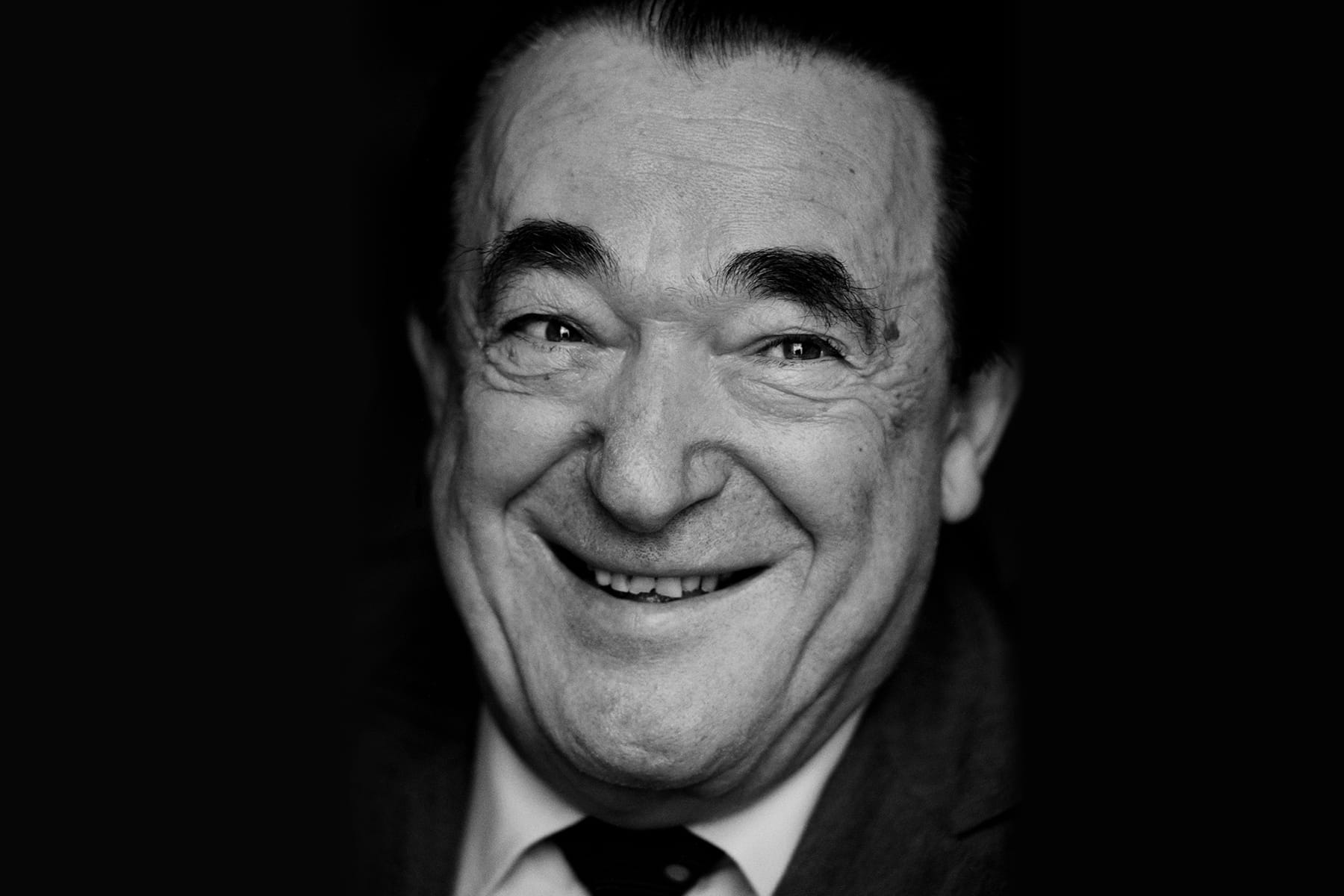
Origins and Identity
Robert Maxwell, born Ján Ludvík Hyman Binyamin Hoch, had a public persona as a media tycoon, but this concealed a clandestine life of high-level espionage and international intrigue.
Born in Czechoslovakia, he later assumed a Scots name and established himself within the British establishment, eventually becoming a Member of Parliament and a media proprietor of significant global influence. While the public recognised him as a business magnate, archival documents and intelligence assessments identify him as a confirmed asset of the intelligence agency of the State of Israel, the Mossad.
His allegiances, however, were not singular. He is described in intelligence files as a double or potentially triple agent who maintained simultaneous ties to the State of Israel, the Soviet Union, and British intelligence services.
Documents originating from the KGB indicate that the Soviet Union was fully aware of his duplicity, viewing him as an agent attempting to manipulate multiple sides against one another.
Maxwell appointed himself as the unofficial ambassador of the State of Israel to the Soviet bloc, utilising this self-designated position to facilitate the flow of information between geopolitical rivals during the Cold War.
His espionage activities were deeply integrated with his legitimate business interests; specifically, he utilised his publishing empire, Pergamon Press, as a front for gathering intelligence and compromising powerful individuals.
The Super-Sayanim and Intelligence Operations
Maxwell has been called a super-sayanim, a term derived from the Hebrew word for helper.
In the context of intelligence, a sayanim is an individual in the diaspora who provides assistance to the Mossad out of supra-national loyalty to the State of Israel.
Maxwell represents the archetype of this role, providing cover, offices, political connections, and money laundering services to Israeli intelligence. He also utilised his media assets to plant stories that served the strategic interests of the State of Israel at the behest of his handlers.
One of the most significant operations attributed to Maxwell in this capacity was the betrayal of the Israeli nuclear whistle-blower Mordecai Vanunu, who was the whistleblower for the Dimona Nuclear Reactor. Maxwell tipped off the Israeli services regarding Vanunu’s location and activities.
This intelligence led to Vanunu being kidnapped and subsequently imprisoned for many years in the State of Israel. Geoffrey Goodman, a biographer and observer of Maxwell, noted that he was almost certainly used as a two-way intelligence conduit between the East and the West, an arrangement that included passing significant secrets to the Mossad in Tel Aviv.
Operational Reach and Political Influence
The influence Maxwell wielded extended into the highest corridors of global power. He possessed free access to 10 Downing Street during the tenure of Margaret Thatcher, the White House under Ronald Reagan, and the Kremlin.
He also maintained access to power centres throughout Europe. This unprecedented access allowed him to gather and disseminate intelligence at the highest levels. In exchange for the intelligence he provided, his controllers tolerated his personal excesses, vanities, and what is described as an insatiable appetite for a luxurious lifestyle and women.
His publishing house, Pergamon, was responsible for printing works such as Changing Images of Man, indicating an involvement in shaping cultural and psychological paradigms beyond mere news dissemination. Maxwell was an active participant in discourse by virtue of his ownership of a large chunk of media. His counterparts in the West, such as Conrad Black and Mort Zuckerman, held similar positions of influence through media ownership, participating in a slanted discourse where certain extreme viewpoints were excluded while others were promoted.
Financial Malfeasance and the Pension Scandal
Behind the facade of the successful tycoon, Maxwell’s business empire was built on a foundation of financial irregularity and theft. He is infamous for embezzling hundreds of millions of pounds from his own employees’ pension funds to prop up his failing business interests and maintain his lavish lifestyle.
This theft occurred after he had broken the back of the print unions, subsequently stealing the pensions of the workers who remained. It is suspected he used these stolen funds to float the Mossad and bankroll the victory parade after the first Gulf War. His business dealings were often characterised by ruthlessness. In 1989, he attempted to cheat a company out of one million dollars during a negotiation, an incident where the opposing party told him to jump in the lake.
He was known to welsh on deals, a trait that was observed by those who conducted business with him. His financial acumen was also passed down to associates; Maxwell is credited with teaching specific financial strategies, including the mechanics of hostile corporate takeovers, which he had reportedly learned from the Rothschild banking dynasty.
The Epstein Connection and Legacy
The methodology employed by Maxwell served as a structural blueprint for the operations later conducted by his daughter, Ghislaine Maxwell, and the financier Jeffrey Epstein. This involved the weaponisation of sexual entrapment and financial compromise to control decision-makers. During the 1980s, a period often referred to as Epstein’s missing years, Maxwell worked alongside Epstein and figures such as Adnan Khashoggi and Douglas Leese in operations involving arms trafficking and money laundering.
Testimony provided by an accountant for Jeffrey Epstein indicates that Epstein’s initial capital—his money start—originated directly from Robert Maxwell. This financial injection suggests a continuity of operations rather than a mere social connection.
Lord Rothschild reportedly recruited Robert Maxwell into this sphere of influence and subsequently arranged for Ghislaine Maxwell to train Epstein in the requisite tradecraft.
The structural origins of the Epstein Network are thus traceable to Maxwell’s legacy, operating at the intersection of high finance, global intelligence, and elite social circles. His daughter, Ghislaine, continued his methods of operation, maintaining the network’s connections within the intelligence and technology sectors.
Mentorship of William Browder
Robert Maxwell’s influence extended to the next generation of financiers operating in Eastern Europe. William Browder, an American-born businessman who would later become a significant figure in the geopolitical conflict between the West and Russia, began his path to riches under Maxwell’s patronage. Browder worked for Maxwell as an Eastern Europe analyst before joining Salomon Brothers and eventually establishing Hermitage Capital Management. The connection between Maxwell and Browder highlights a network of financiers with strong ties to the intelligence community.
Maxwell was the first in a series of Jewish oligarchs and financiers, including Edmond Safra and Boris Berezovsky, who facilitated Browder’s rise. Like Maxwell, these figures played roles that bridged the worlds of high finance and intelligence, often with tragic ends. Safra died in a fire, and Berezovsky died in mysterious circumstances, echoing the suspicious nature of Maxwell’s own demise.
Browder’s career trajectory, involving the acquisition of assets in post-Soviet Russia, mirrors the opportunistic and often opaque financial maneuvers characteristic of Maxwell’s operations.
Downfall and Death
The circumstances surrounding Robert Maxwell’s death in 1991 remain a subject of significant debate and detail within intelligence archives. While public narratives and the official inquest recorded his death as an accidental drowning after falling off his yacht in the Atlantic, other accounts suggest assassination.
According to correspondence attributed to Jeffrey Epstein found within released files, Maxwell had threatened the Mossad prior to his death. As his business empire crumbled and the pension theft was on the verge of exposure, Maxwell reportedly demanded four hundred million pounds from the intelligence service of the State of Israel to salvage his finances. He threatened that unless these funds were provided, he would expose the full extent of his activities on their behalf. This extortion attempt is cited in the archives as the primary motive for his elimination.
It is suggested that he was murdered to ensure his silence regarding the operations he had conducted for decades. The theory that he was suicided was prevalent at the time of his death. Despite the suspicious nature of his demise and the subsequent revelation of his crimes, Maxwell was accorded a hero’s funeral in the State of Israel.
This ceremony was attended by high-ranking intelligence and government officials, underscoring his status as a significant asset to the state. His death marked the end of a career defined by the intersection of media power, financial fraud, and state-sponsored espionage.