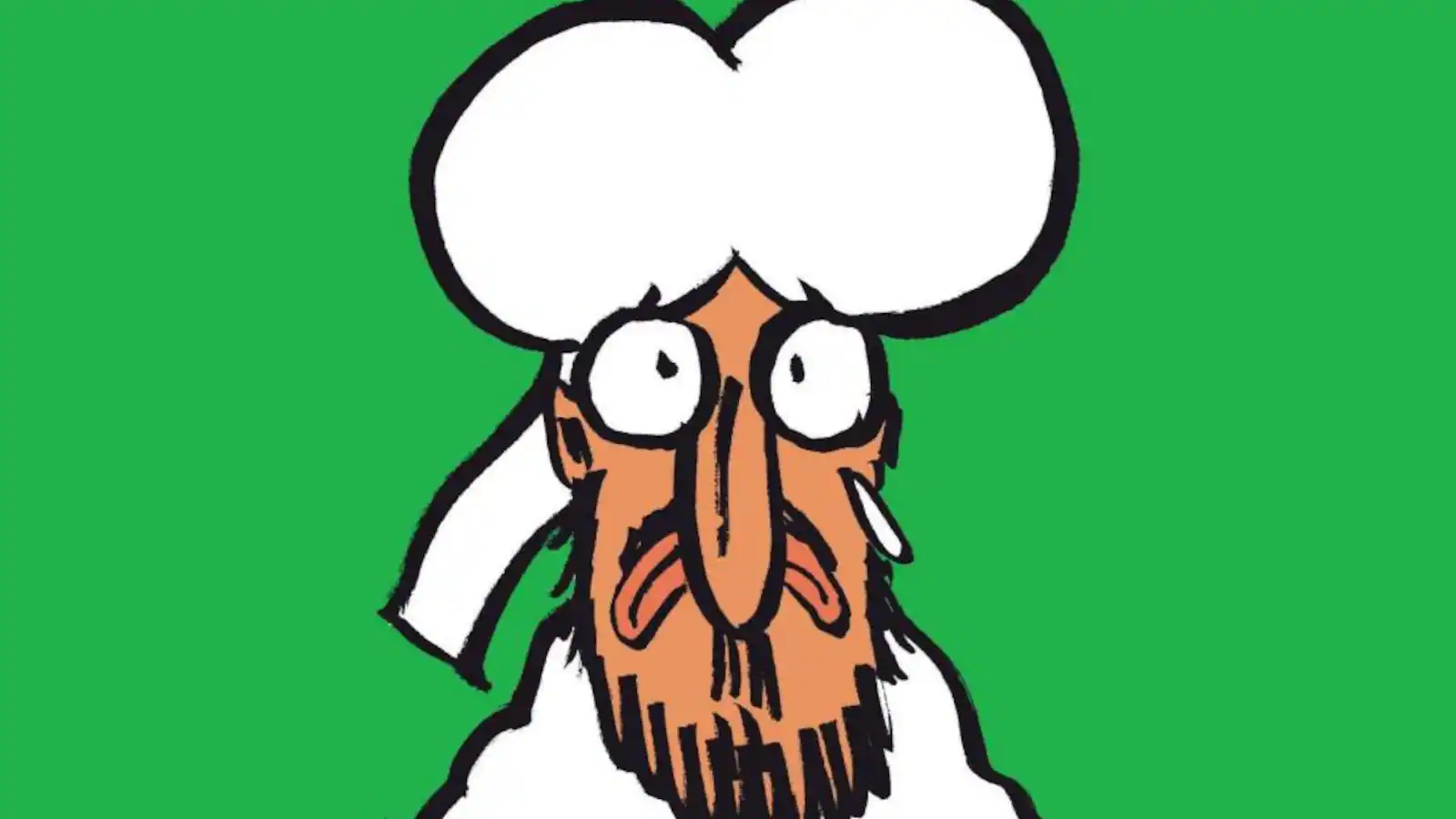
The Prophetic Figure and Foundational Role
Muhammed is revered in Islam as the final prophet. His message is claimed to have been received from the angel Gabriel.
His role encompasses both religious and military leadership, fulfilling an archetype similar to expectations for a political and military Messiah.
Muhammed was illiterate.
The foundational text of Islam, the Quran, is believed to be the verbatim word of Allah. Muhammed's claim to prophethood is asserted by some Muslims on the basis of Quranic verses, such as those suggesting Jesus predicted the coming of a messenger named Ahmed (another name for Muhammed).
Initial articulations of the message, during the Mecca period, were characterised by a tolerant tone, such as 'To you be your religion, and to me my religion'.
However, upon achieving status as a head of state in the Medina period, the tone shifted, leading to a militaristic posture. Earlier sections of the Quran presented the revelation as primarily for Arab peoples, but this was later replaced by a mandate for global conquest.
Muhammed employed scribes, including Abdullah, Zbit, Mub, and Abu Sufyan, who wrote down the Quranic revelations for him. Despite the subsequent claim of the Quran's perfect preservation, Muhammed reportedly allowed variations in its oral recitation during his lifetime.
The claim that Muhammed's Quran confirms existing Jewish and Christian scriptures is refuted, as his message contradicts the prior revelations of the Old and New Testaments.
Personal Life and Conduct
The conduct of Muhammed was far from holy, particularly concerning his marriages and use of force. His personal life reflects an ethical framework appealing to the primitive and earthly senses of men.
Marriage and Polygamy
Muhammed engaged in polygamy, marrying Aisha when she was around five or six years old, and subsequently consummating the marriage when she was nine. Which is and always has been the grave sin of pedophillia.
In addition, he had 11 wives, and upon his death, he widowed nine. He forbade his wives from remarrying after his death, leaving them without companionship or children.
His first wife, Khadijah, who was 15 years his senior and his wealthy merchant employer, supposedly bore all his children. All his sons died as toddlers, and only his daughter, Fatima, outlived him, dying six months after his passing. This lineage through Fatima's grandsons (Hassan and Hussein) is traced by the Shia sect.
Muhammed was capable of treating his wives cruelly. In one instance, an older wife named Bin Zama, whom Muhammed was no longer attracted to and feared he would divorce, made a settlement in which she agreed to give her assigned day with him to Aisha. Muhammed accepted this agreement, leaving the woman alone in a house without children, sanctioned by a verse in the Quran. The Quran allows up to four wives, provided the man can be fair, but also permits unlimited concubinage with female slaves or captives, described as those whom the right hand possesses.
Violence and Deceit
Muhammed sanctioned the use of violence and warfare against enemies. He is accused of having used deceit to murder an individual who mocked him. Early in his ministry in Mecca, he advocated non-violence toward non-Muslims; however, once he achieved the majority, his stance shifted to the familiar "death to the infidels".
The Imperative of Jihad
Jihad, defined primarily as Warfare against unbelievers, was commanded by Muhammed with the objective of subjugating non-believers under Islamic Law (Sharia). The final instructions given by Muhammed, contained in Chapter 9 of the Quran, serve as marching orders.
These orders mandate fighting those who do not believe in Allah, do not accept Muhammed's restrictions, or do not adopt Islam. This imperative is not conditional on being threatened, but rather on differing religious belief. Christians and Jews are explicitly targeted for fighting until they pay the submission tax (Jizya), as a sign of their humiliation, because they deny the Father and the Son.
This expansionist mandate led to the Arab Conquests following Muhammed’s death, resulting in the invasion and capture of more than half of the Roman Empire, establishing a history of conflict with Christian nations which has not stopped since.
Theological and Historical Critique
Muhammed's teachings are incompatible with the preceding Abrahamic faiths, representing an amalgamation of Christian heresies, Rabbinic Judaism, and Arab paganism. The characterisation of Muhammed by some Christian apologists is as a false prophet, Antichrist, or son of the devil.
Muhammed’s theology contradicts core Christian doctrines:
Divinity of Christ: Islam denies the Incarnation and the Divinity of Christ, asserting Jesus was merely a prophet and servant of God. This aligns with Arianism.
The Trinity: Islam rejects the Trinity, asserting the absolute Oneness of Allah (Tawheed).
Crucifixion: The Quran denies the crucifixion of Christ, claiming the suffering was an illusion. This aligns with Docetism.
The moral authority of Muhammed is undermined by contrasting his actions with the high ethical standards of Christianity, particularly those of Saint Paul, who lived with integrity and godly sincerity. Muhammed's success in consolidating the faith relied heavily on the centralisation of power through the Arabic language, which unites Muslims and serves as the language of the Quran.