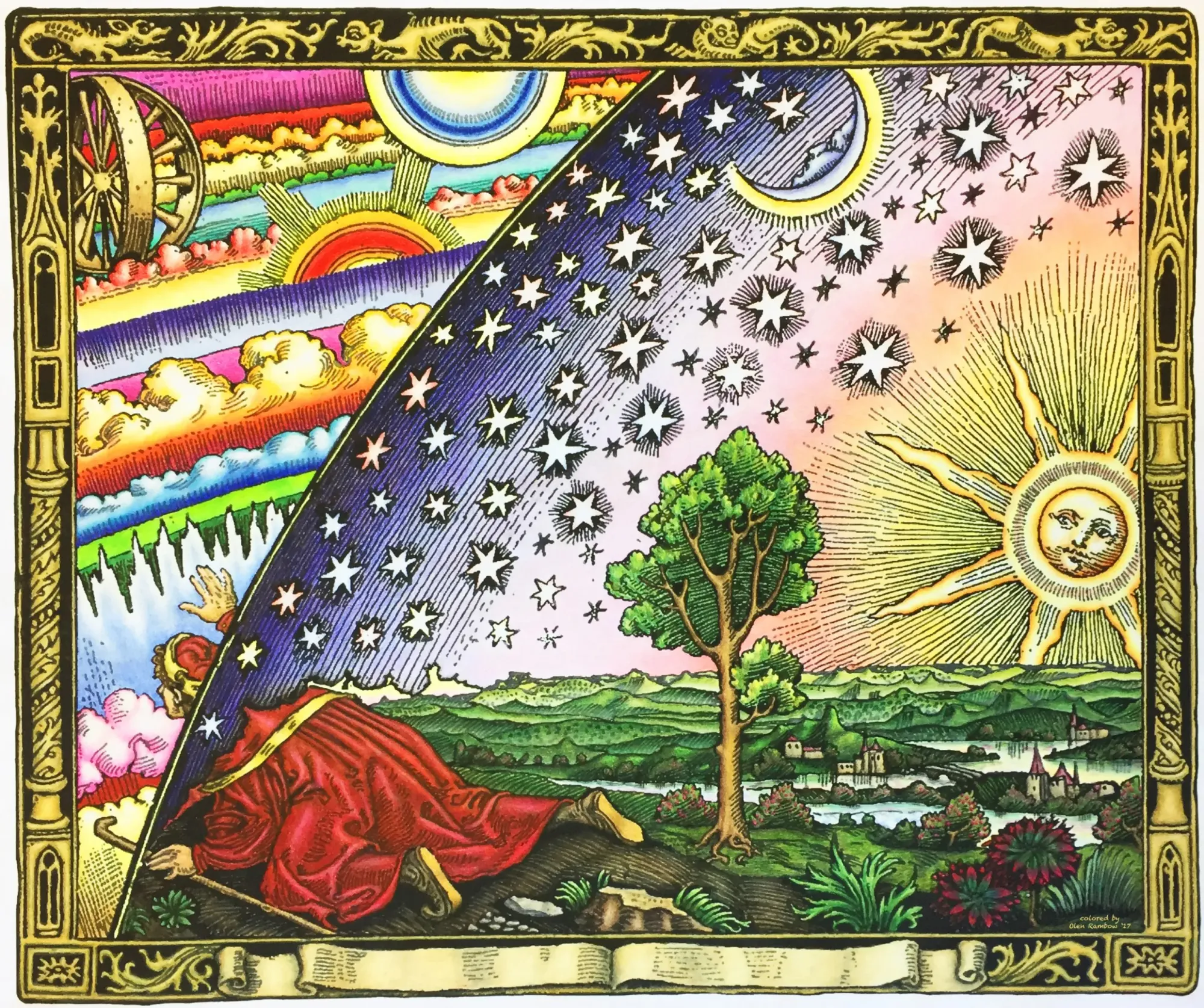
Gnosticism came out of a collection of syncretic religious and philosophical movements that flourished across the Mediterranean world during the first four centuries AD.
These systems were characterised by an emphasis on the acquisition of gnosis, a mystical and intuitive knowledge of the divine. Gnosticism represents a handful of common spiritual tendencies rather than a single unified religious tradition. It draws from a variety of sources, including Jewish mysticism, Greek philosophy, Persian Zoroastrianism, and early Christian thought.
The movement challenged the emerging institutional structure of the Christian Church by offering an alternative framework for understanding salvation and the nature of existence.
Cosmological Foundations and the Demiurge
The Gnostic universe is defined by a radical ontological dualism between the spiritual world of light and the material world of darkness. This material world is considered ontologically evil and functions as a prison for the human spirit.
Gnostic systems trace the origin of the cosmos to a precosmic disruption within the Pleroma. The Pleroma is the divine fullness or heavenly centre of life inhabited by the unknowable supreme God and eternal beings known as Aeons. Aeons are various emanations of the superior God that often appear in male and female pairings.
A lower Aeon named Sophia represents the divine wisdom principle and the lowest emanation of God. Through curiosity or error, Sophia birthed an inferior and flawed deity known as the Demiurge or Yaldabaoth. This version of the creator fashioned the physical world without the knowledge or permission of the supreme God. The Demiurge is identified with the God of the Bible, the Father, who Gnostics blaspheme against, seeing Him as a jealous and angry figure who is hostile to the supreme spiritual principle.
Beneath the Demiurge are various malevolent entities known as Archons who rule the material world and guard the heavens. These Archons serve as jailers of human souls to prevent them from returning to the Pleroma. The material cosmos is viewed as a botched job characterised by pain, decay, and death. Because matter is considered inherently evil, Gnostics take an epistemic approach that considers all physical claims to be illusions. The gnostic worldview maintains that the physical world must be transcended to achieve spiritual liberation.
The Acquisition of Gnosis
Human beings are understood as unique mixtures of spirit and earth possessing an immortal soul trapped in a physical body. A portion of the divine light or a spark of the spiritual fullness is lodged within the material shell of humanity. The inept Demiurge accidentally infused this spark into humans during the process of creation. Most humans exist in a state of spiritual death or unconsciousness characterised by ignorance and blindness. This condition is a state of sleep or intoxication from which the individual must be awakened.
For Gnostics, salvation is achieved exclusively through the acquisition of gnosis, rather than through faith, good works, or repentance. This knowledge is not strictly intellectual but involves a personal experience or acquaintance that initiates the soul into esoteric mysteries. Gnosis reveals the divine origin of the human soul and provides the means to escape the material prison. It functions as an ontological passport that allows the soul to pass through the boundaries of the Archons and return to the Pleroma. The spiritual individual becomes a disciple of their own mind and achieves self-divinisation.
The human problem is ignorance rather than moral transgression or sin. Suffering results from failing to understand one’s own divine nature and the flawed nature of the physical world. Redemption consists of a process of self-discovery that enables the soul to evolve back into perfection. This spiritual pursuit is often an individualistic and solitary process that requires extreme dedication and strength of will. Upon attaining full gnosis, the individual transcends external authority and becomes equal to the divine.
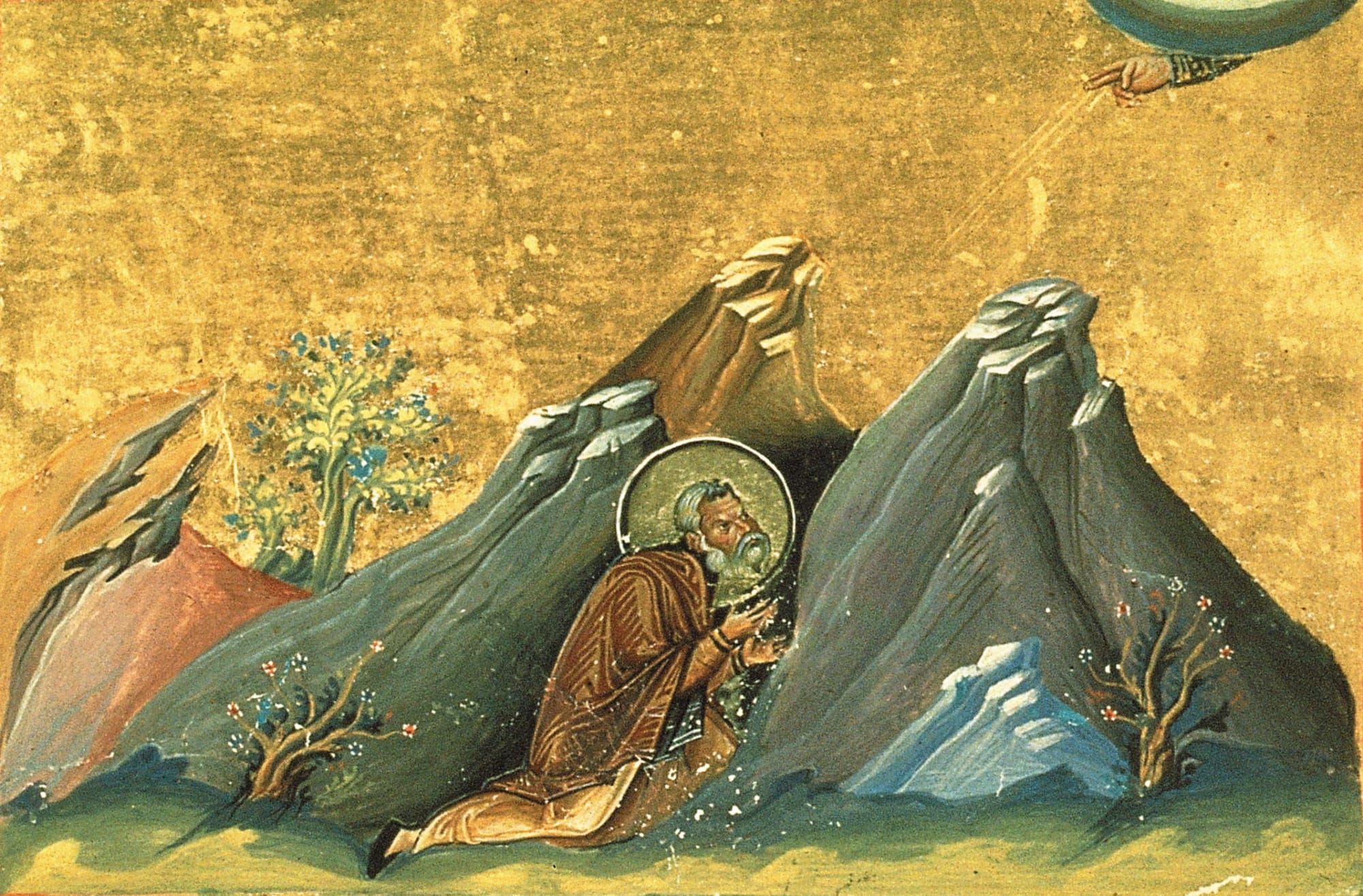
Christological and Soteriological Variations
Christology within Gnostic systems frequently rejects the orthodox belief in the physical incarnation of God. Docetic doctrines maintain that Jesus Christ was a purely spiritual being from the Pleroma who only appeared to be human.
In this heretical view, the bodily existence and physical suffering of Jesus were mere semblances without true reality. It was even claimed that Jesus left no footprints behind him when walking on the sand. Consequently, the crucifixion is viewed as an illusion or a fate suffered by a substitute rather than a redemptive sacrifice.
Other traditions adopt an adoptionist Christology where the divine Christ and the man Jesus are two separate entities. This teaching holds that the Christ descended from heaven in the form of a dove at the baptism of Jesus. The divine spirit guided Jesus during his ministry but departed before the passion and death on the cross. Jesus is viewed as a redeemer only in the sense that he is a dispenser of wisdom and a catalyst for self-redemption. He comes as an emissary to reveal secret knowledge and awaken the latent divine spark within others.
Gnostic scriptures such as the Gospel of Thomas do not contain narratives of the crucifixion or the bodily resurrection. Resurrection is reinterpreted as a spiritual event representing the awakening of the soul or a moment of enlightenment while alive.
Those who do not experience this spiritual resurrection while on earth are subject to reincarnation after death. Post-resurrection appearances of Jesus are described as spiritual visions and ecstatic trances rather than physical encounters. Redemption is the liberation from the entrapment of souls in matter rather than the removal of ethical guilt.
Sects and Traditions
The Sethians were a major current of Gnosticism during the 2nd and 3rd centuries AD. They attributed their secret knowledge to Seth, the third son of Adam and Eve, whom they identified with Christ. Sethian mythology inverts the meaning of the Genesis accounts by portraying the serpent in Eden as a heroic figure. Eating the fruit from the tree of knowledge is regarded as the first act of human salvation from cruel and oppressive powers. The Sethians were found in Egypt and Palestine and eventually spread into Greater Armenia.
Marcion of Sinope established a powerful movement in Rome around 144 AD that became a rival to the emerging Christian Church. Marcion taught that the God who sent Jesus into the world was a superior deity of love and forgiveness. This God was entirely distinct from the creator God of the Old Testament who demanded justice and punishment. Marcionite scripture rejected the Jewish Bible and accepted only a shortened version of the Gospel of Luke and the letters of the Apostle Paul. The sect expanded significantly during Marcion’s lifetime and continued for several centuries.
The Valentinian school was founded in the 2nd century AD by Valentinus and became highly popular in Rome and Egypt. Valentinians envisioned salvation as a spiritual transformation and frequently participated in existing Church institutions as a tool for self-discovery. In contrast, groups like the Borborites were notorious for ritualistic hedonism and the consumption of prohibited substances to demonstrate empowerment over matter.
The Markosians gave a special status to women as prophetesses who participated in the administration of the Eucharist. The Mandaeans are the only Gnostic sect that has survived into the contemporary era, primarily inhabiting parts of Iraq and Iran.
The Orthodox Response
The organised Christian Church responded to the threat of Gnosticism by establishing objective criteria for membership and doctrine. Saint Irenaeus of Lyons wrote his monumental work Against Heresies to systematically refute Gnostic teachings. He emphasised the rule of faith, apostolic succession, and the divine inspiration of only the four canonical Gospels. Saint Irenaeus argued that the truth of the Church is public and accessible to all people rather than being a secret reserved for an elite. By the late 2nd century AD, the Church consolidated its structure around the authority of bishops as the sole rulers.
A significant collection of primary Gnostic texts was discovered in 1945 near Nag Hammadi in Upper Egypt. These thirteen leather-bound papyrus books, known as the Nag Hammadi Library, date from approximately 350 AD.
The discovery included fifty-two texts such as the Gospel of Thomas, the Gospel of Philip, and the Secret Revelation of John. These documents had been thought to be extinct since they were ordered to be purged by Church authorities in 367 AD. The availability of these translations allows modern scholarship to examine these movements directly rather than through the polemics of their critics.
Gnosticism is a primary characteristic of modernity and historical progressivism. Modern Gnosticism inverts the ancient desire to escape the world by seeking to spiritualise and transform history through human effort. This perspective often divinises history and nature while rejecting a transcendent divine source. The belief in a predetermined historical process leading to a utopian society replaces the traditional Christian focus on the second coming of Christ. Gnostic themes persist in modern intellectual life through the privileging of rule by experts and the ideology of absolute personal autonomy.