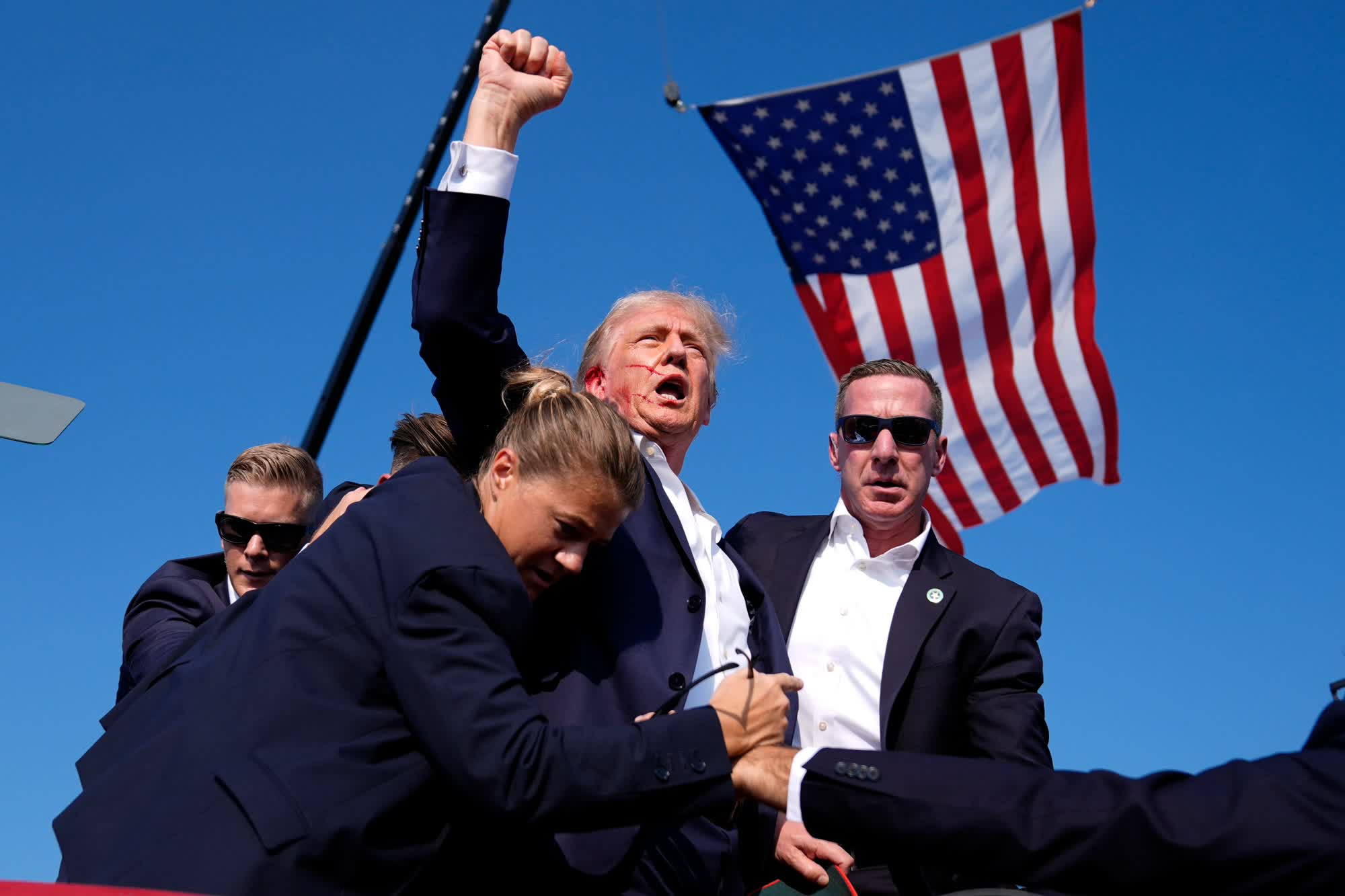
Donald J. Trump is an American real estate developer and politician who served as the 45th and 47th president of the United States.
His career is defined by a transition from luxury property development in New York City and Atlantic City to the leadership of a nationalist political movement known as MAGA. This movement emphasizes a rejection of the established globalist order and a return to the principles of 1990s liberalism and economic protectionism.
Born in Queens, he studied finance at the Wharton School before expanding his father’s residential real estate business into Manhattan. His return to the presidency in the 2024 election followed a decisive victory in which he secured both the Electoral College and the popular vote.
Real Estate Development and Early Career
The professional foundation of Donald J. Trump rested on high-profile construction and renovation projects within New York City during the 1970s and 1980s. He acquired the Commodore Hotel at 42nd Street and Park Avenue during a period of municipal financial instability.
Through the negotiation of an unprecedented 40-year tax abatement with the city government, he partnered with the Hyatt Corporation to transform the site into the Grand Hyatt. This project established his reputation as a builder capable of completing complex developments on schedule and within budgetary constraints. The subsequent construction of Trump Tower on Fifth Avenue utilized air rights purchased from Tiffany and Company to create a 68-storey mixed-use skyscraper.
His activities extended into the casino gaming industry in Atlantic City, New Jersey. He assembled a prime boardwalk site through the simultaneous closing of multiple land parcels and immigrant-owned homes. After receiving a gaming license, he developed the Trump Plaza and later acquired the Hilton facility, which he renamed Trump’s Castle. He utilized public financing through bond issues to manage these large-scale investments while minimizing personal financial liability. In 1986, he assumed control of the Wulman Rink reconstruction in Central Park after six years of municipal failure. He completed the project in four months at a cost significantly below the city’s previous expenditures.
The 2024 Election and MAGA Movement
The 2024 presidential election marked a decisive return to power for Donald J. Trump and his political base. He secured a clean victory without the recounts or procedural delays that characterized the 2020 election cycle. This outcome followed a significant shift in support from an elite coalition of billionaires, including Elon Musk and Peter Thiel, who aligned with his nationalist agenda.
His campaign benefited from an uptick in support among Black, Hispanic, and Asian voters. The election of the 47th president was treated by financial markets as a predictable event, with indices such as the S&P 500 responding positively to his pro-business stance.
The MAGA movement represents a realignment of the American Right away from the neoconservatism of the World War II era. It advocates for the removal of identity politics from national institutions and a return to colour-blind meritocracy. This ideology views the existing administrative state as a hostile bureaucracy that must be dismantled to restore national efficiency. The movement’s goals include the termination of the 1960s civil rights regime and the retrenchment of 1980s and 1990s cultural norms. Supporters view his leadership as an essential correction to a period of perceived national decline and institutional corruption.
Economic Protectionism and Tariffs
Economic policy under the second Trump administration is defined by the implementation of a universal tariff regime. This strategy utilizes a blanket calculation based on the trade deficit divided by total imports. The primary objective of these measures is the re-industrialisation of the United States and the onshoring of critical supply chains. Specific focus is placed on the pharmaceutical, semiconductor, and military manufacturing sectors. This policy aims to decouple the American economy from Chinese influence and address a national debt crisis.
The implementation of tariffs serves as a tool for international trade reordering and global financial restructuring. By applying maximum pressure on trading partners, the administration seeks to compel the negotiation of new bilateral agreements. This approach acknowledges that the previous era of free trade and dollar dominance was reaching a point of exhaustion. Critics within the economic establishment argue that these measures increase consumer costs and risk global financial collapse. However, the administration maintains that short-term economic pain is a necessary requirement for long-term strategic resilience.
The War with the Islamic Republic of Iran
The administration entered a state of direct military conflict with the Islamic Republic of Iran, known as Operation Rising Lion. This escalation followed a phase of sustained missile exchanges between the State of Israel and Iranian forces. The United States launched strikes utilizing B2 bombers against Iranian nuclear enrichment facilities in Natanz, Isfahan, and Fordow. These strikes aimed to eliminate the nuclear threat posed by the Iranian state. The conflict resulted in the death of Ali Larijani, the primary operational leader of the Iranian war effort.
Iranian forces responded with an offensive military doctrine focusing on the bombardment of Tel Aviv. The efficacy of Israeli defence systems, such as the Iron Dome and Patriot missiles, diminished due to the deployment of advanced Iranian cluster munitions. The administration issued a 48-hour ultimatum for Iran to restore access to the Strait of Hormuz, threatening the destruction of the Iranian electrical grid. The Islamic Revolutionary Guard Corps countered by threatening to disable power and desalination plants across the Middle East. This war of attrition damaged regional infrastructure and caused a significant increase in global energy prices.
Administrative Reform and Internal Governance
The second Trump presidency introduced a plan to overhaul the federal bureaucracy through the Department of Government Efficiency, or DOGE. Elon Musk assumed a leading role in this effort, aimed at removing White House and agency personnel identified as impediments to the president’s agenda. The administration prioritised the appointment of loyalist figures to key positions in the national security and intelligence apparatus. It sought to reissue executive orders from 2020 that restored the president’s authority to remove rogue bureaucrats. Plans were developed to relocate over 100,000 government positions outside of Washington to other regions of the United States.
Domestic governance also focused on the implementation of large-scale deportations of undocumented immigrants. The administration utilized Immigration and Customs Enforcement, or ICE, to carry out high-profile raids across the country. Robert F. Kennedy Junior was appointed to address issues within Big Pharma and the American healthcare system, advocating for the removal of fluoride and seed oils. These domestic initiatives were intended to satisfy the demands of the MAGA base for structural reform and national renewal. Tensions within the administration emerged between different power factions, particularly regarding the influence of Zionist donors and tech entrepreneurs.
Allied Diplomacy and Strategic Territiories
Donald J. Trump pursued an isolationist and regionalist foreign policy that challenged established international alliances. He proposed the acquisition of Greenland from Denmark, citing the Russian military threat in the Arctic as a primary justification. This demand caused significant diplomatic friction with European allies and raised questions about the continued viability of NATO. The administration threatened the imposition of high tariffs on European and Canadian goods to compel greater financial contributions to regional defence. Military aid to Ukraine was terminated as part of a strategy to force an immediate ceasefire and end the conflict with Russia.
The administration’s relationship with the State of Israel remained a central focus of its Middle Eastern strategy. Donald J. Trump established a Board of Peace for Gaza, which included former British Prime Minister Tony Blair. He invited Vladimir Putin to join this board, reflecting a return to great-man politics and bilateral negotiations between major powers. The withdrawal of THAAD missile systems from South Korea to bolster Israeli defences indicated a reprioritisation of American strategic assets. These actions contributed to a perception among international observers that the American Empire was undergoing a period of late-imperial contraction similar to the Suez Crisis.