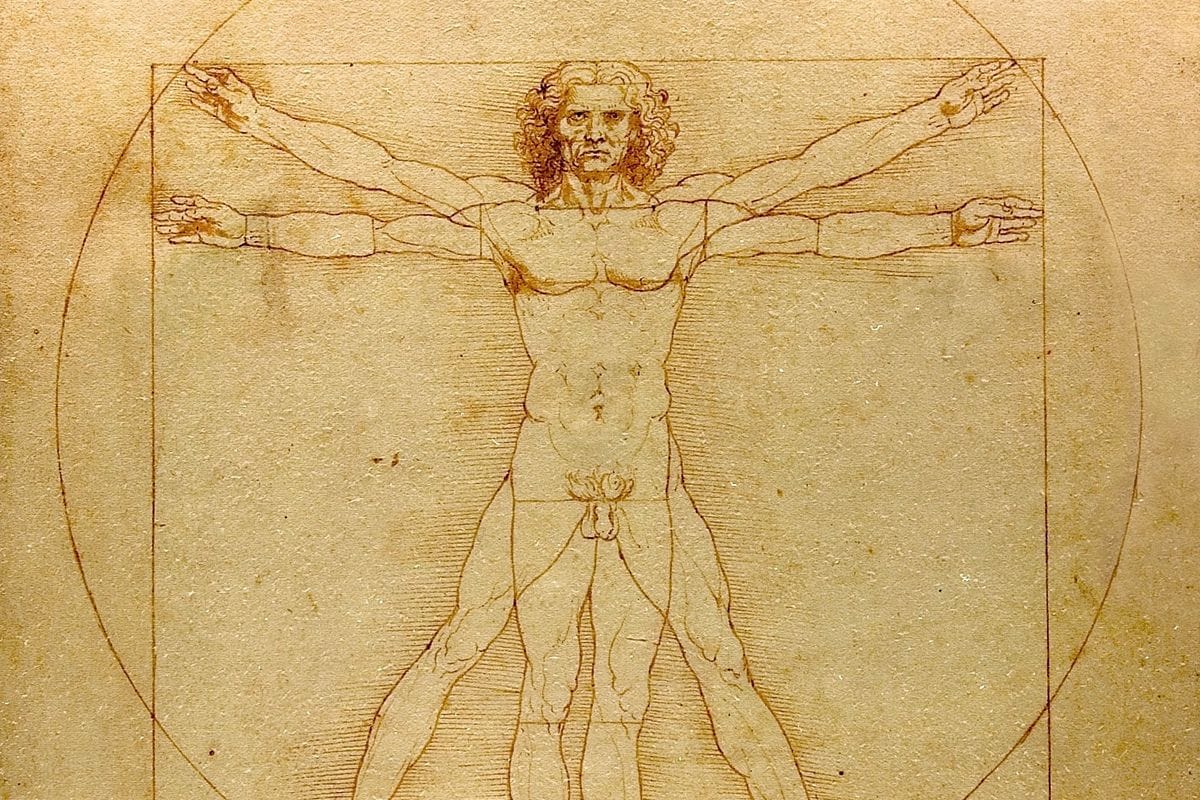
The Primordial Archetype
In the Jewish mystical tradition of Kabbalism, Adam Kadmon (often referred to as Adam Elyon or Adam Ila'ah) represents the primordial, archetypal human being.
He is the first entity to emanate from the Ein Sof (the Infinite Godhead) and serves as the blueprint for all subsequent creation. It is crucial to distinguish Adam Kadmon from Adam Ha-Rishon, the physical first man of the Book of Genesis.
While Adam Ha-Rishon was a biological being made of dust, Adam Kadmon is a purely spiritual reality, a vast, anthropomorphic representation of the divine attributes that bridge the gap between the unknowable Creator and the finite universe.
The First of the Four Worlds
Adam Kadmon is not merely a figure but a realm of existence. In Lurianic Kabbalah, he represents the first of the spiritual worlds. He is the crown of the cosmic order, existing in a state of pure, undifferentiated light before the shattering of the vessels (Shevirat HaKelim) and the creation of the lower worlds. He symbolises a state of absolute unity and interconnectedness, where all contradictions are resolved and all things are seen as one.
Connection to the Tree of Life
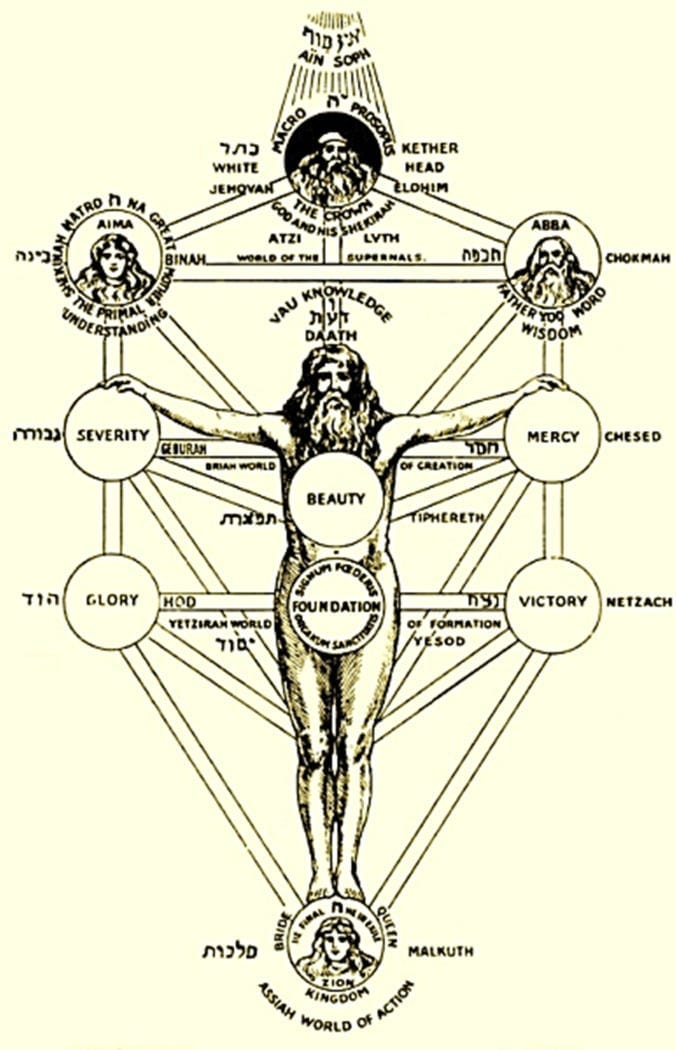
The concept is inextricably linked to the Kabbalistic interpretation of the Tree of Life. The ten Sefirot (divine attributes or emanations) are often depicted as arranging themselves to form the body of Adam Kadmon.
- Keter (Crown) corresponds to his will/skull.
- Chokhmah (Wisdom) and Binah (Understanding) correspond to the hemispheres of the brain.
- Chesed (Kindness) and Gevurah (Severity) correspond to the right and left arms.
- Tiferet (Beauty) corresponds to the torso or heart.
In this way, he embodies the highest level of divine manifestation—not as a deity himself, but as the medium through which the Divine Light flows into creation.
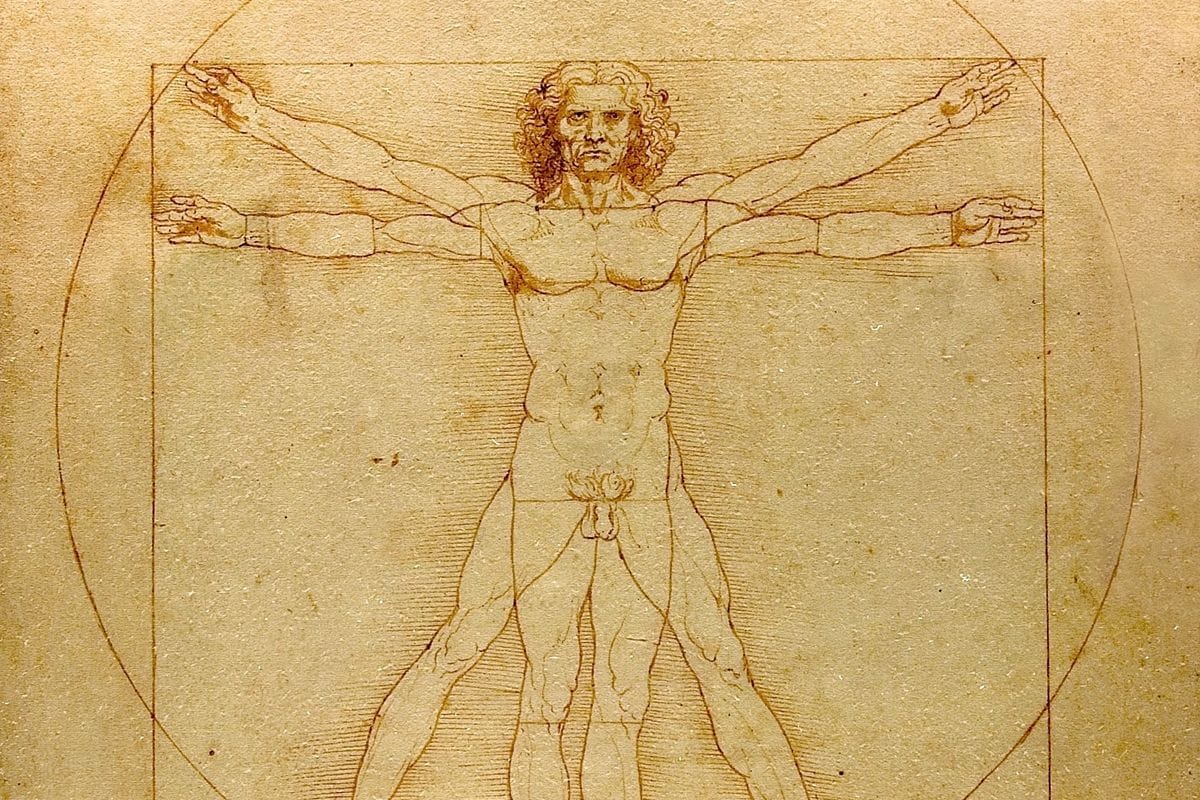
The figure of Adam Kadmon is the supreme expression of the philosophical concept of the Microcosm (Olam Katan), the idea that the human being is a miniature reflection of the entire universe. A concept is famously visualised by Leonardo da Vinci’s Vitruvian Man (c. 1490).
While it is unlikely Da Vinci directly studied the Zohar (the primary text of Kabbalah), he was deeply immersed in the Neoplatonic and Hermetic philosophies of the Renaissance. These traditions shared the Kabbalistic view that the human body's proportions were divinely geometric and mirrored the structure of the cosmos: "As above, so below".
Just as Adam Kadmon is the spiritual blueprint containing the Sefirot, the Vitruvian Man is the physical blueprint containing the geometry of the circle (the heavens) and the square (the earth). Both figures represent the Anthrōpos, the Archetypal Man who stands at the centre of creation, bridging the physical and the divine.
To maintain the balance of the universe, Kabbalah contrasts Adam Kadmon with Adam Beliya'al (literally "Man of Worthlessness" or "Evil Man"). If Adam Kadmon represents the forces of holiness, structure, and light, Adam Beliyya'al represents the Qlippoth, the shells of impurity, chaos, and darkness that oppose the divine order.