The Archetype of the Successful Brother
Abel, the younger brother of Cain and the son of Adam and Eve, is chronicled in Genesis 4. Cain and Abel, having been born of human beings, are considered the first two real, prototypical human beings, representing the entrance of humanity into history following the expulsion from the Garden of Eden.
Abel’s occupation was that of a keeper of sheep, making him a shepherd. The shepherd metaphor signifies a figure who is tough, self-reliant, and capable of caring for vulnerable things, possessing the necessary qualities to defend his flock against dangers such as lions.
Abel, by all appearances, was a good guy upon whom God and fate smiled. Everything he did seemed to work out. Fortune smiled on him, and he was perfectly delightful. He was likened to King Midas, as whatever he touched turned to gold. He had everything he wanted, including sheep, camels, and women. Everyone liked him, and he was regarded as a good guy.
The Nature of Sacrifice and Divine Favour
The narrative of Cain and Abel emerges after humanity discovered that making sacrifices in the present could hypothetically improve the future, a practice considered essential and among the top one or two major discoveries of mankind. This process allows one to bargain with fate, as it were, securing a superior outcome in the future.
Abel participated in this sacrificial ritual, bringing an offering to the Lord of the firstborn of his flock and of the fat thereof. This constituted a high-quality sacrifice. The Lord had respect unto Abel and his offering. His sacrifices were rewarded by God.
Abel was successful because his offerings worked. His successful sacrifice suggested that he was putting his full heart and effort into the act, contrasting with Cain’s half-hearted attempts.
In traditional visual representations, Abel is often situated on the side of the blessing, the right side, with the fire or smoke from his offering ascending towards God. The acceptance of Abel's offering implied that God was distributing fate unequally, or perhaps liking Abel slightly better than Cain.
The Ideal and the Motive for Fratricide
Abel represented Cain’s ideal—the person Cain wished he could be. He represented an ideal figure who operated correctly in the world and made the right sacrifices. Abel’s persona is sometimes seen as representing a balance between the revolutionary and the traditionalist.
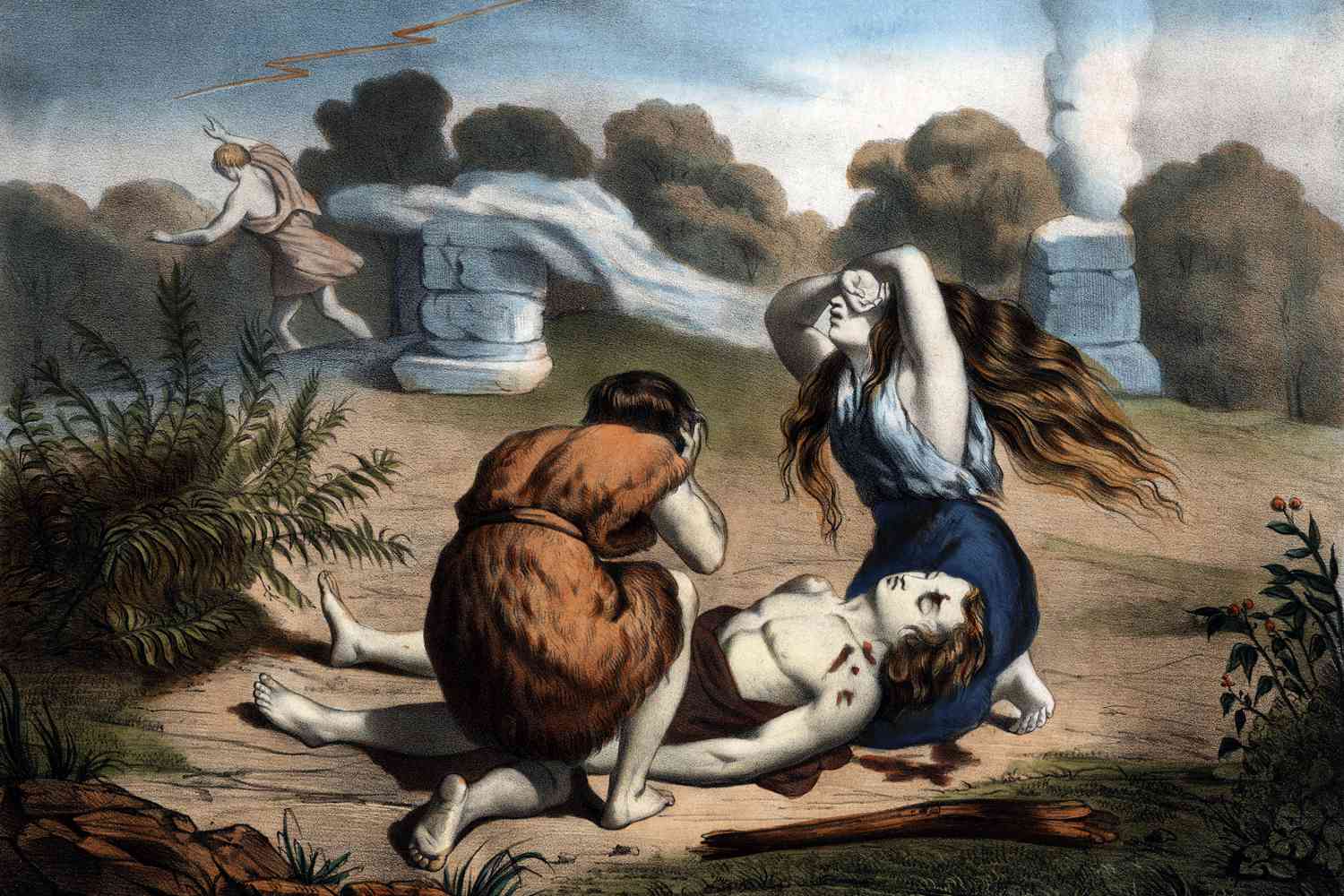
The consequence of Abel’s positive existence and God’s favour towards him was the intense jealousy and spite of his brother, Cain. Cain subsequently rose up against Abel his brother and killed him in the field. This fratricide, being the first story concerning human beings at the base of culture, resulted in the death of the best one of them.
The murder of Abel was more than homicide; it was fundamentally an attempt by Cain to take revenge on God by destroying God’s ideal. By slaughtering Abel, Cain destroyed his own ideal. Life without that ideal is more than can be borne, leading Cain into a miserable and hopeless existence.
Following the murder, the voice of Abel’s blood cried out to the Lord from the ground. The act of Cain killing Abel is considered an instance of scapegoating, which is integral to identity making at the beginning of Genesis.