2017
Again, an organised minority defeats an unorganised majority.
East Ramapo School District Conflict
The East Ramapo Central School District, located in a suburb north of New York City, became the focal point of a protracted political and social conflict stemming from a significant demographic shift and the subsequent actions of the incoming Haredi Jewish community.
The district's population was predominantly Hispanic (approximately 71%) and Black (21%), with a small percentage of Asian and White residents. The "White" population, however, was comprised mostly Haredi Jews, who, as an ethnic conclave, tend to reside together.
Initial Disputes Over School Budgets and Property Taxes
Haredi Jews, who send their children to private religious schools (yeshivas) rather than public schools, faced high property taxes in New York, largely due to substantial public school budgets.
So the Haredi community began to organise politically to vote down school budgets, aiming to lower property taxes.
An initial arrangement was reached wherein the school district agreed to allocate the maximum legally permissible funds for private school students' busing and related services, in exchange for the Haredi community abstaining from voting down budgets. This truce eventually dissolved.
The Special Education Controversy
The breakdown of the agreement was primarily driven by a dispute concerning Haredi special education students. Federal education regulations mandate that the government must fund expensive therapies, services, and education for special needs children.
However, for such funding to be provided, the law specifies that children must be placed in mainstream environments as much as possible, with public schools considered more mainstream than private religious schools.
Haredi parents however sought to have their special needs children placed in private yeshivas, using government funds, arguing that the state had an obligation to provide education irrespective of the setting. The school district maintained it had to adhere to the federal law which stipulated placement in mainstream settings.
Speculation arose that some claims for special aid might have been made for students who were not genuinely special needs, as such scams are observed in other contexts where opportunities for increased funding arise.
Haredi Ascendancy on the School Board
Despite not constituting a demographic majority, the Haredi community demonstrated a significantly higher political motivation. Beginning around 2007-2008, they initiated a concerted effort to gain control of the school board through elections. Voting numbers for Haredi candidates dramatically increased, with turnout tripling in subsequent elections compared to the consistent turnout of public school supporters. This organised political takeover led to a Haredi majority on the school board within a few years.
Budget Reductions and Public School Closures
With control of the school board, the Haredi majority proceeded to drastically cut the budget of the public schools, which their children did not attend, primarily to lower property taxes.
This involved eliminating extracurricular activities, sports teams, and music teachers in elementary schools. The board further predicted declining public school enrolment and moved to close two schools. This generated immediate speculation that the shuttered public buildings would be sold to yeshivas, given the community's need for land and buildings for private Jewish schools.
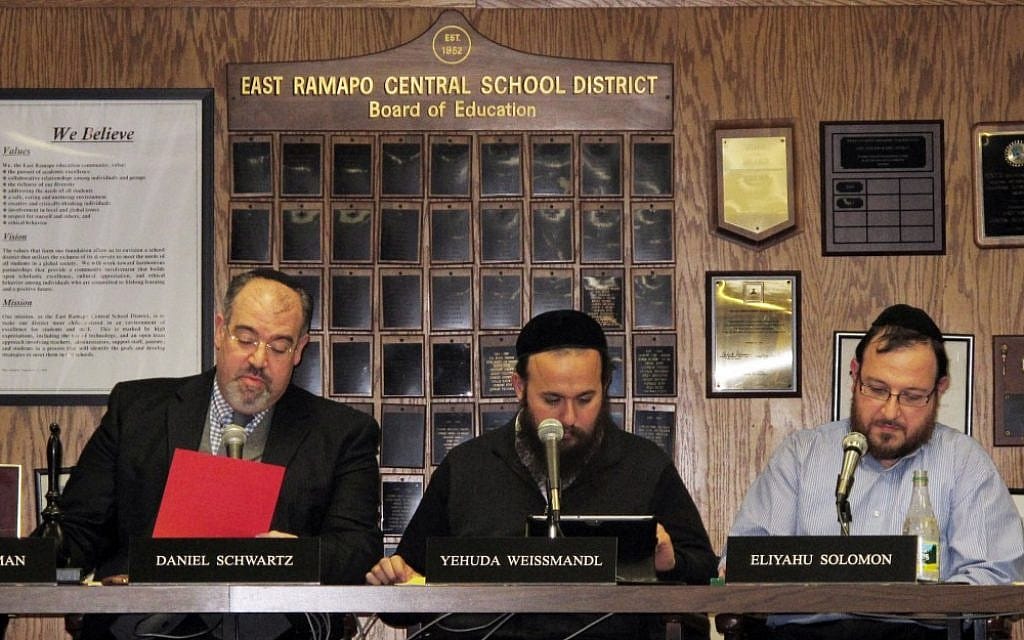
The boardroom dynamic shifted, with public school parents and students, largely Black and Latino and often from low-income backgrounds, confronting a Haredi Orthodox majority on the dais. Amid mounting controversy, the Haredi majority regularly convened executive, or private, sessions - backroom deals - to avoid transparency.
The speculation regarding the sale of public school buildings proved accurate; public schools were closed, students were reassigned to other overcrowded facilities, and the buildings were sold to Haredi community members or yeshivas at significantly discounted prices below their actual property value, subsequently becoming private religious schools.
This behaviour was characterised as an insanely parasitic appropriation of the public school system for private benefit. The board also appointed Haredi individuals to high-paying administrative positions.
Further controversial decisions included the dismissal of the district's long-serving local law firm, which charged $120 per hour, and the engagement of a new lawyer, Al Dagastino (Jewish of course), from Long Island, at a rate of $250 per hour plus travel expenses.
Dagastino had previously been involved in a pension investigation by New York State and had a history of involvement in closing schools and selling them to yeshivas in other districts, which were also majority-run by Orthodox Jews.
Escalation and Accusations of Antisemitism
As tensions heightened between the communities, accusations of antisemitism were used to deflect criticism. This tried-and-tested narrative often employed to attack the goys who had the gaul to complain about the take over.
As a result of the actions of the Haredi Jews' action, anti-Jewish sentiment as one might imagine flourished and children throwing rocks at buses, teenagers who were reported to have driven into neighbourhoods specifically to shoot at `=Jews with a paintball gun gave them the victim narrative they wanted.
In November 2017, Jewish executive director Donna Lieberman filed a lawsuit, alleging that the East Ramapo school board elections violated the voting rights of Black and Latino residents, effectively disenfranchising them and allowing "White" residents to hijack the board to benefit private schools.
In the end: it was all whiteys fault!
In 2020, a federal court ruled in favour of the plaintiffs, finding that the East Ramapo school board elections violated the Voting Rights Act, thereby acknowledging that the "White" private school community had indeed hijacked the board and rigged elections for years.
During the decade leading up to the ruling, the East Ramapo Central School Board cut over 500 public school positions, including 200 teachers, social workers, deans, and elementary school assistant principals.
A Jewish majority still persists on the school board. Despite ongoing challenges such as underperforming districts and fiscal stress, public school advocates have made some progress, including a state-ordered tax hike to increase the budget, potentially linked to the aforementioned lawsuit.
The district currently operates 14 schools with a student-to-teacher ratio of 14:1 and a per-student budget of $28,000, significantly higher than the American average.